

Rising damp is the movement of water that starts from the foundations of a building and travels upwards through the pores of the wall. Common especially on ground-floor and basement walls, this problem leads over time to serious damage such as blistering paint, crumbling plaster, salt efflorescence, mould growth and a musty smell. Although it is often perceived as merely an aesthetic issue, rising damp is in fact a technical problem that harms the structure's load-bearing system and indoor air quality.
In this article we will look in detail at why rising damp occurs, how it causes damage in walls and how a permanent solution is achieved with the Dryvatec DampStop Damp Injection System.
What Is Rising Damp and How Does It Occur?
By its very nature, soil always contains moisture. Rainwater, groundwater and environmental humidity keep the ground around a building's foundations permanently damp. If adequate and correct waterproofing was not carried out when the building was constructed, this moisture enters through the porous structure of the wall.
Building materials such as concrete, brick and aerated concrete contain microscopic pores. Through these pores, water moves upwards by a physical principle called “capillary action”. Just as a sponge draws up water, the wall carries the moisture from the ground upwards.
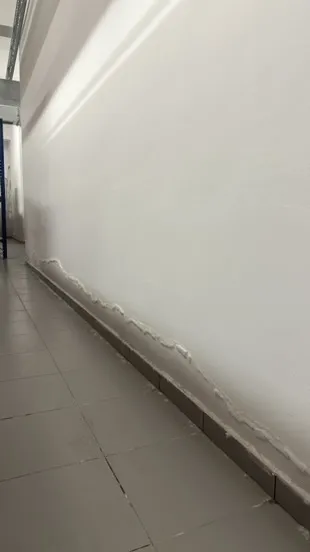
This process is slow but continuous. Over time, moisture accumulates in the lower part of the wall, moves towards the surface and the following symptoms appear:
Rising damp usually travels up to a height of between 50 cm and 150 cm. This causes marked damage, especially on ground-floor walls.
What Damage Does Rising Damp Cause in Walls?
1. Blistering and Peeling Paint
Paint cannot adhere to a damp wall surface. As the water tries to evaporate behind the paint, it creates pressure and the paint begins to blister. Over time the paint peels away, creating an unsightly appearance.
2. Salt Efflorescence
Water coming from the ground does not only carry moisture; it also brings dissolved minerals with it. When these minerals reach the surface, they appear as white crystalline structures. This is noticed as a white, powdery bloom on the wall.
3. Deterioration of Plaster and Mortar
Plaster that stays permanently damp loses its strength over time. Cement-based plasters in particular lose their durability under damp conditions and begin to break apart.
4. Mould and Fungal Growth
Damp environments are ideal conditions for mould growth. Mould spores both damage the building and pose a risk to human health.
5. Musty Smell
The biological activity that develops on damp walls causes a constant musty smell in the space.
Why Must Rising Damp Be Solved Permanently?
Repainting or replastering the surface is only a temporary solution. The source of the problem is the movement of moisture inside the wall. As long as this movement is not stopped, the damage recurs.
Many people think they have solved the problem by hacking off the damp wall and replastering it. But a few months later the same problem reappears, because the real issue continues inside the wall.
For a permanent solution, a barrier that prevents water from rising must be created inside the wall.
How Does the Dryvatec DampStop Damp Injection System Work?
Dryvatec DampStop has a special formula applied by injection through holes drilled at the lower level of the wall. The product spreads inside the wall and forms a chemical barrier.
This barrier:
-
Makes the pores of the wall water-repellent
-
Stops capillary water movement
-
Prevents damp from rising
-
Provides long-lasting protection
One of its most important advantages is that the application requires no external excavation and can be carried out from the inside. This lowers the cost and shortens the application time.
Looking for a solution to your damp problem?
Our expert team is ready to offer you the most suitable solution.