
Solving Rising Damp with Damp Injection: Step-by-Step Application
Rising damp is one of the most common and most damaging problems in buildings. Moisture at ground level rises within the wall by capillary movement, causing paint to flake, mould to form and structural damage. Damp injection is the most effective method offering a permanent solution to this problem. In this guide we look in detail at what damp injection is, when it is needed and how it is applied step by step.
What Is Damp Injection?
Damp injection is the process of filling holes drilled at the base of the wall with a special chemical solution; with DampStop the prepared solution is poured in without pressure using a funnel, and no pump is needed. The injected material fills the pores within the wall to form a waterproof barrier. This barrier prevents moisture in the ground from rising by capillary action and is also known as a damp-proofing injection.
Traditional methods required digging out the base of the wall or mechanically inserting a horizontal insulation layer. Because damp injection can be applied with minimal intervention to the structure, it provides a great advantage in terms of both cost and time. Especially in existing buildings, the fact that it can be applied without cutting the wall or dismantling the foundation makes this method indispensable.
When Is Damp Injection Needed?
The symptoms of rising damp usually start on the ground floor and, if neglected, can spread to the upper floors. If you observe one or more of the following, a rising damp injection application may be needed:
- Blistering or flaking paint at the base of walls: the clearest sign that moisture has reached the wall surface.
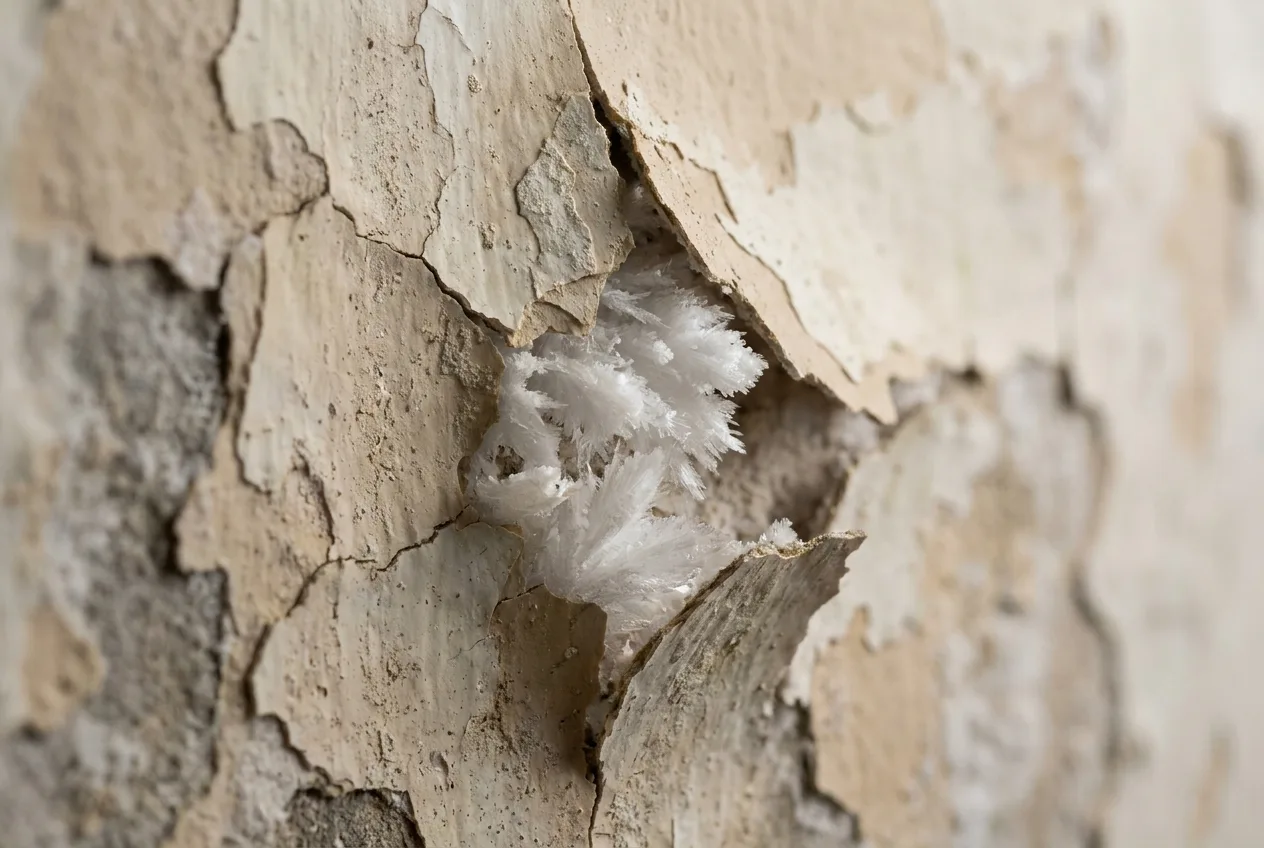
- Salt efflorescence on plaster: white or grey salt deposits show that the moisture is carrying minerals.
- Mould and fungus growth: appears as dark stains, especially on interior walls with poor ventilation.
- A damp zone up to 50-120 cm above the floor: the typical range that capillary rise reaches.
- A persistent feeling of damp in basements and on ground floors: a high ambient humidity causes condensation on the walls.
Once these symptoms are identified, it is important to diagnose the source of the problem correctly. Different causes such as leakage, condensation or a plumbing leak can produce similar signs. For a definitive diagnosis, a professional moisture measurement is recommended. By filling in our quote request form, you can get a free preliminary assessment from our expert team.
How Is Damp Injection Applied?
The damp injection application consists of four basic stages. Carrying out each stage correctly is critical to a long-lasting, permanent result.
Step 1: Stripping the Old Plaster and Applying HydroFix
First, the old, damp plaster in the affected areas of the wall is stripped and replaced with a special damp-resistant plaster. At this stage, using a damp-proofing plaster resistant to the effects of moisture and salt (such as HydroFix), rather than standard plaster, is of great importance. Why plaster first? Stripping plaster can break open the cells of the bricks; if you inject first, the solution runs out through those breaks. If the plaster goes on first, the injection stays inside the brick without overflowing.
Step 2: Drilling
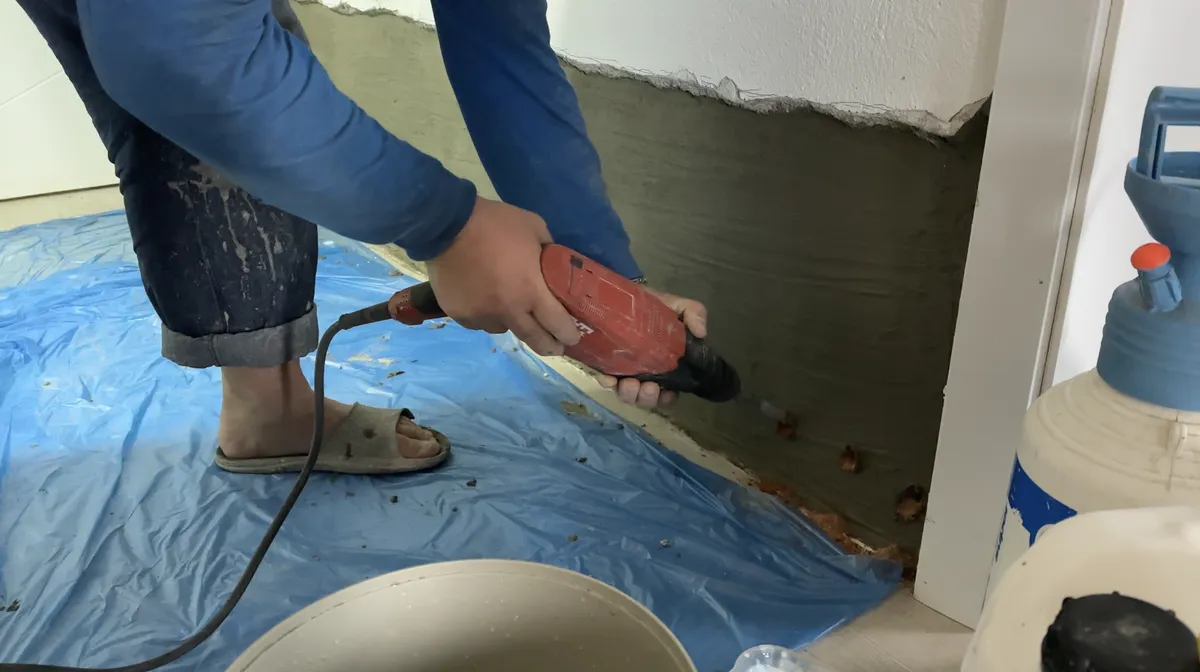
Once the plaster has dried (24–48 hours for HydroFix), holes are drilled about 10 cm above floor level, angled 30–45° downwards. The distance between holes is usually set at 10 cm (at most 15 cm). The hole diameter should be 14 mm (12–14 mm range), and the depth about 80% (4/5) of the wall thickness. If the application is to be carried out from a single side, the hole depth is adjusted according to the wall thickness.
Step 3: Injecting
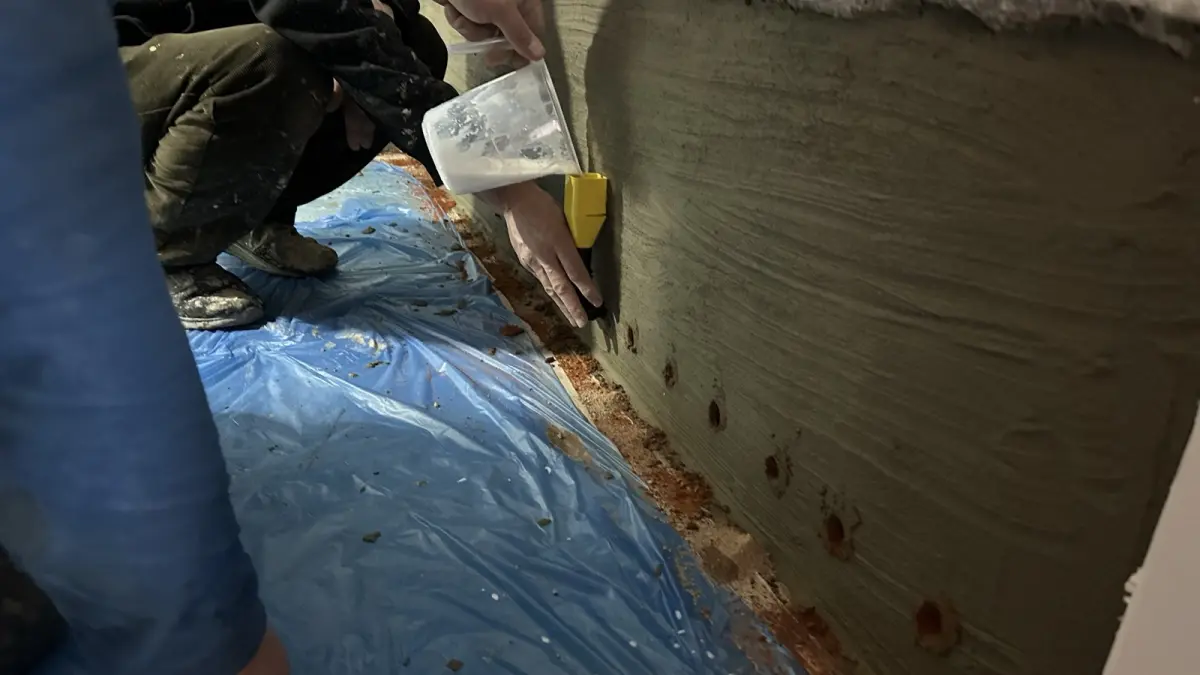
The prepared solution is poured into the holes with the funnel supplied in the kit; no pump is needed. Under its own weight, the solution runs down the angled hole and spreads into the pores of the wall. A low-pressure injection pump is optional and only for professional, fast application; it is not included in the kit. On low-absorbency walls such as aerated concrete or solid concrete, a small amount is poured into each hole, a second round follows 10–20 minutes later, and the rounds are repeated until the wall is saturated.
Step 4: Waiting and Closing the Holes
After injection, a waiting period is needed for the solution to react within the wall and form the waterproof barrier. This period varies between 24 and 72 hours depending on the wall thickness, moisture content and ambient temperature. Ventilating the wall during the waiting period speeds up the drying process. After waiting at least 48 hours, the holes are closed with plaster or mortar; painting comes last.
Damp Injection with DampStop Concentrate
Dryvatec DampStop Concentrate is a high-performance DampStop injection product developed for the rising damp problem. Thanks to its silane and siloxane-based concentrated formula, it is used diluted with water and forms a permanent hydrophobic barrier in the wall pores.
The key advantages of DampStop Concentrate:
- Concentrated formula: 1 part product is used mixed with 9 parts water (1:9). This lowers transport and storage costs and makes it easy to prepare on site.
- Deep penetration: thanks to its low viscosity, it penetrates deep into the pores of different building materials such as brick, stone and breeze block.
- Effective barrier: when applied correctly, it stops moisture rising at the base of the wall.
- Environmentally friendly: it contains no solvents and emits no harmful gases after application.
- Wide compatibility: it can be used safely on all types of masonry walls, in historic buildings and in modern structures.
In different ground conditions or in structures under the effect of pressurised water, a combined application with acrylic gel injection material can be carried out. Acrylic gel expands on contact with water to fill cracks and voids, providing an additional insulation layer.
Before Injection: HydroFix Damp-Proofing Plaster
Re-plastering the wall with a damp-resistant plaster is at least as important as the injection for the integrity of the system. This plaster is applied before the injection, in place of the old plaster that has been stripped; the injection holes are drilled once it has dried. Standard cement or gypsum plaster is not resistant to the effects of moisture and salt and can deteriorate again quickly.
Dryvatec HydroFix Two-Component Damp-Proofing Plaster is specially formulated for use together with damp injection and is applied before the injection, in place of the stripped plaster. The advantages a HydroFix application provides:
- Salt barrier: it prevents the salts within the wall from emerging at the plaster surface, so no efflorescence forms.
- Breathable structure: thanks to its water-vapour permeability, it allows the wall to dry out naturally, yet it does not let liquid water through.
- High adhesion: it provides excellent adhesion even to damp surfaces.
- Easy application: it is prepared by mixing the two components and applied with traditional plastering techniques.
HydroFix is the finishing complement to the horizontal barrier created by injection. Using these two products together forms a complete protection system against rising damp.
Frequently Asked Questions
How long does the wall take to dry after damp injection?
How long the wall takes to dry out completely depends on the wall thickness and the existing moisture content. In general, the wall is observed to dry noticeably 4 to 12 weeks after injection. On thick stone walls this period can extend to as long as 6 months. Barrier formation itself is complete within 24-72 hours.
How many years does damp injection last?
It would not be right to give a fixed number of years; the result depends on the quality of the material, correct application and the condition of the wall. Silane-siloxane-based products such as DampStop Concentrate bond chemically to the wall material and do not wash out easily. When applied correctly, the injection cuts off the source of the damp.
Can you carry out damp injection yourself?
In simple, single-storey buildings, it is possible to carry out the application yourself with the right material and equipment. However, correct diagnosis and determining the appropriate hole spacing and depth require expertise. Incorrect application can lead to both wasted material and the problem persisting. Professional application is recommended especially in historic buildings and over large areas.
Can damp injection be applied to any wall?
Damp injection is applied effectively on porous building materials such as brick, breeze block, natural stone and mortared masonry walls. On reinforced-concrete shear walls, different insulation methods should be preferred. The suitability of the wall structure is determined by an assessment carried out before application.
What does the cost of damp injection depend on?
The cost varies according to the wall length, wall thickness, moisture level and the amount of material to be used. Concentrated-formula products give a more economical result than ready-mixed solutions. DampStop consumption is calculated not per square metre but by the length of the wall in metres and its thickness: with holes 10 cm apart, 1.5 L/m of ready-mixed solution for a 10 cm wall and 2.25 L/m for a 15 cm wall. To get pricing specific to your project, you can fill in our quote request form.
Conclusion
Rising damp is a problem that seriously threatens the health of a building when neglected. Damp injection offers the most permanent and least intrusive solution to this problem. The chemical barrier created with DampStop Concentrate, and the system completed with HydroFix plaster, protect your building from damp for many years.
If you want to solve the damp problem in your building permanently, fill in our quote request form. Our expert team will determine the right solution for your building and get back to you as soon as possible.
Looking for a solution to your damp problem?
Our expert team is ready to offer you the most suitable solution.