
How to Detect Damp in Buildings: Signs and Measurement Methods
If damp problems in buildings are not noticed early, they can lead to serious structural damage and health problems. Yet the question of how to detect damp remains unclear for many building owners. By the time a damp problem becomes visible, it has usually already reached an advanced stage. That is why reading the signs correctly, identifying the source of the moisture and knowing the appropriate measurement methods matter greatly. In this guide we will cover the whole process step by step, from the professional methods used to measure damp in a building to the simple tests you can carry out at home.
Visible Signs of a Damp Problem in Buildings
A damp problem shows itself in different ways. Recognising these signs early is the first step in preventing the damage from growing.
Blistering and peeling paint: Paint bubbling and swelling on the wall surface is the most common indicator that moisture has built up beneath it. As the moisture tries to evaporate beneath the paint layer, it creates pressure and separates the paint from the surface.
Salt efflorescence: The deposits seen as white powder or crystals on the wall surface are caused by water coming from within carrying dissolved minerals to the surface. This sign is seen especially often in rising-damp problems.
Mould and fungal growth: Damp environments create an ideal habitat for mould spores. It appears as black, green or grey stains in wall corners, around windows or in areas where ventilation is inadequate. Mould growth causes serious harm to both the building and human health.
Crumbling and disintegrating plaster: Plaster that stays permanently damp loses its strength. Blistering, cracking and crumbling of the plaster is frequently observed, especially on ground-floor walls.
A musty smell: The mould and bacterial growth that develops through biological activity on damp walls creates a constant, unpleasant smell in the space. This smell sometimes points to the presence of damp even when there is no visible damage.
Identifying the Source of the Damp
Before applying any damp-detection methods, it is critically important to understand which source the moisture is coming from. A wrong diagnosis leads to the wrong solution and a waste of time.
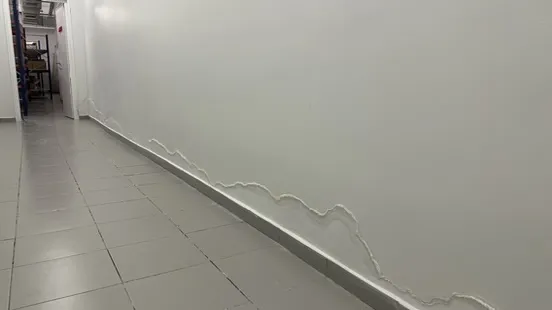
Rising damp: This is water in the ground climbing upwards through the pores of the wall by capillary action. It is usually effective up to a height of 50–150 cm from ground-floor level. A horizontal damp line appearing at the base of the wall is a typical sign of rising damp. This type of damp continues indefinitely and is observed regardless of the season.
Condensation damp: This forms when the humid air indoors condenses on cold wall surfaces. It is frequently seen around windows and on the inner faces of external walls during the winter months. Condensation damp can usually be solved with improved ventilation and insulation.
Leak-related damp: This is damp caused by water ingress from the roof, plumbing or external façade. It spreads out from a specific point and usually appears suddenly. To find the source of the leak, the plumbing and roof connections should be checked.
Distinguishing these three sources from one another is essential in order to choose the right solution method. For a professional assessment, you can request a free online analysis from our expert team by filling out our Request a Quote form.
Professional Damp Measurement Methods
The professional methods used to measure damp in a building reveal the presence, intensity and source of the moisture with scientific data.
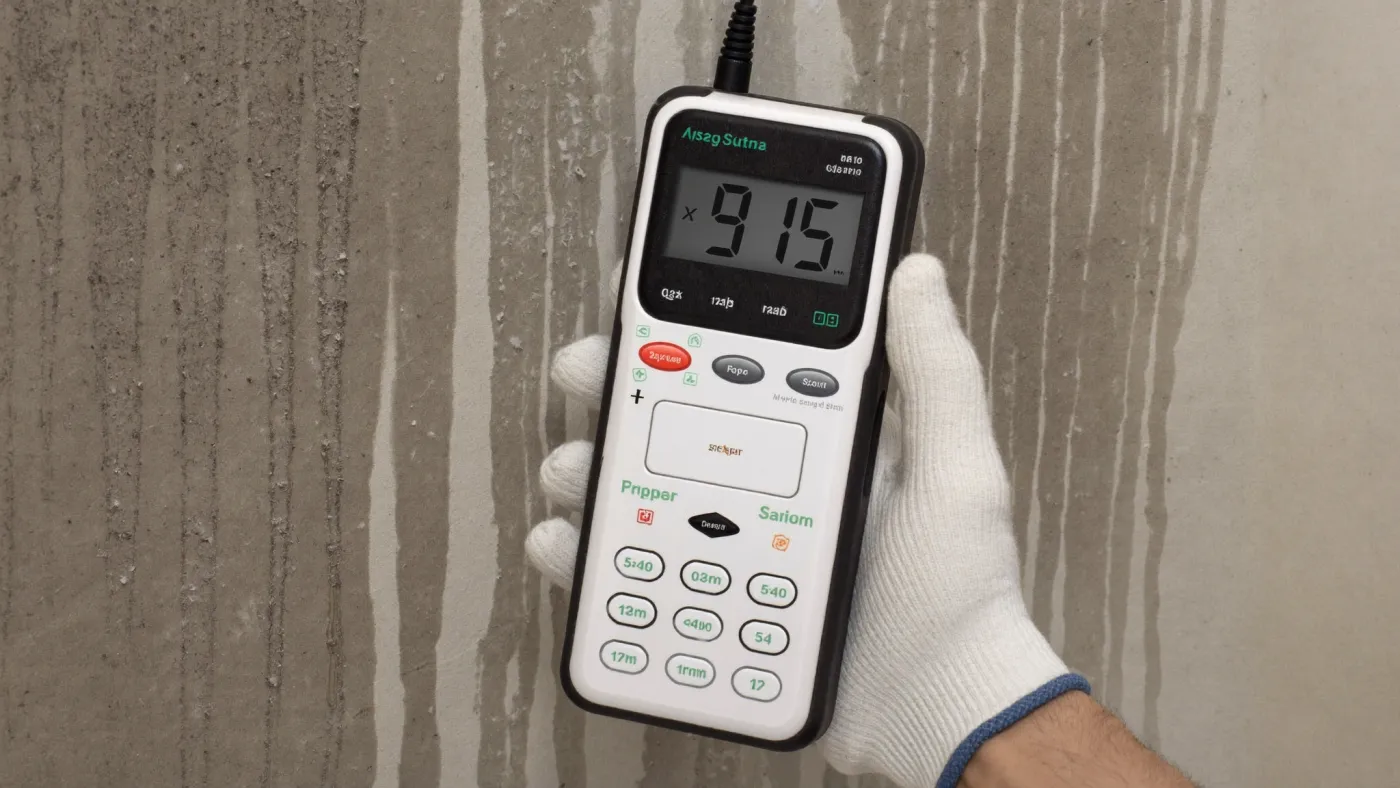
Electronic moisture meters: Moisture meters, used by touching them to the wall surface or inserting them into it, show the material's moisture content as a percentage. Pin-type (resistance-measuring) devices take a reading by inserting two pins into the wall, while pinless (capacitive) devices measure by scanning from the surface. In professional applications, both methods are used together to obtain more accurate results.
Thermal camera: Using infrared imaging technology, it detects temperature differences on the wall surface. Damp areas show up as cold zones. A thermal camera is extremely effective for scanning large areas quickly and for determining the spread of the moisture. It is also used to detect hidden leaks and insulation defects.
Carbide bomb test (CM test): A laboratory method in which a sample taken from the wall is reacted with calcium carbide to measure its moisture content precisely. It is preferred especially for determining the moisture value of the floor base before laying flooring.
Gravimetric method: A reference method in which a core sample is taken from the wall and the moisture ratio is calculated from the weight difference after oven-drying. It gives the most precise result but is a time-consuming technique to carry out.
Simple Damp Tests You Can Do at Home
When professional measurement is not available, you can gain some preliminary information about the damp with a few simple methods.
Plastic-film test: Tape a transparent plastic film of roughly 30×30 cm to a wall surface you suspect is damp. Seal the edges airtight with tape. After 24–48 hours, check whether water droplets have formed on the inner face of the film. If there are droplets, it means moisture is coming from the wall.
Hand-touch test: Press your hand against the wall surface and hold it there for about 10 seconds. If, when you take your hand away, the surface feels distinctly cool and damp, this indicates a build-up of moisture in that area.
Tracking visible damage: Mark the areas of the wall surface where there is paint blistering, salt deposits or discolouration. Tracking whether these areas grow over time helps you understand whether the problem is progressing.
While these simple tests give you an idea, a professional damp measurement is strongly recommended for a definitive result.
What Should Be Done After Damp Is Detected?
After damp has been detected, the most important step is to solve the problem at its source. Surface repairs alone (repainting, replastering) are temporary fixes, and the problem soon returns.
For rising damp: the Dryvatec DampStop injection system
If rising damp has been detected, the Dryvatec DampStop Damp Injection System offers a permanent and effective solution. Injected through holes drilled at the base of the wall, the specially formulated product forms a chemical barrier within the wall that completely stops the capillary rise of water. The application requires no external excavation, is carried out from the inside.
For surface repair: Dryvatec HydroFix damp-proofing plaster
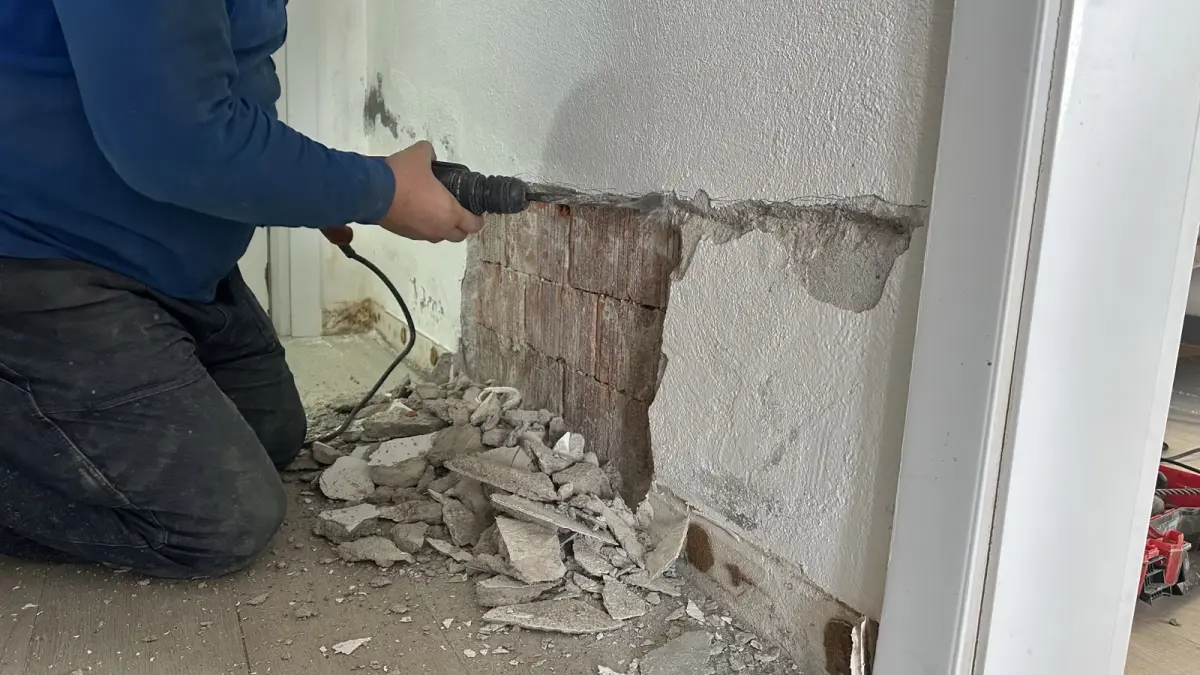
Plaster damaged by damp is stripped before the injection and replaced with a repair plaster. Dryvatec HydroFix Two-Component Damp-Proofing Plaster is a repair plaster developed specifically for surfaces that have been affected by damp, with high water repellency and breathability. It is applied before the DampStop injection, in place of the stripped plaster; the injection is carried out once this plaster has dried (24–48 hours). Why? Stripping plaster can break open the cells of the bricks; if you inject first, the solution runs out through those breaks. If the plaster goes on first, the injection stays inside the brick without overflowing.
Using both products together provides a permanent solution in terms of both stopping the source of the moisture and repairing the visible damage.
Frequently Asked Questions
Which specialist should I consult for a damp measurement?
For a building damp measurement, you can consult firms specialising in civil engineering or building physics. At Dryvatec we offer a free building assessment; you can get in touch with our expert team by filling out our Request a Quote form.
White powder is forming on my wall — is this damp?
Yes, the white powder or crystalline deposit that forms on the wall surface is called “salt efflorescence” and it occurs when moisture coming from within carries minerals to the surface. This sign points especially to a rising-damp problem and requires professional intervention.
What is the difference between condensation damp and rising damp?
Condensation damp forms when humid indoor air comes into contact with cold surfaces and is usually seen around windows and on the inner faces of external walls. Rising damp, on the other hand, travels upwards from the ground by capillary action and forms a horizontal damp line in the lower parts of the wall. While condensation can be seasonal, rising damp is continuous.
Can a damp problem resolve on its own?
Condensation damp can be reduced by improving ventilation. However, rising damp and leak-related damp do not resolve on their own; on the contrary, they increase over time and cause structural damage. Early intervention both lowers the cost and prevents the damage from spreading.
Conclusion
Detecting damp in buildings begins with reading the visible signs correctly and is confirmed with professional measurement methods. Correctly identifying the source of the moisture is the most critical step towards an effective and lasting solution. For structural problems such as rising damp, both the source of the problem and its consequences can be permanently eliminated with the Dryvatec DampStop injection system and HydroFix damp-proofing plaster.
To have the damp problem in your building assessed free of charge, fill out our Request a Quote form now. Our expert team will get in touch with you as soon as possible.
Looking for a solution to your damp problem?
Our expert team is ready to offer you the most suitable solution.