
📌 Quick Answer
Condensation damp occurs when warm, humid indoor air touches a cold surface — a window pane, an external wall or a cold bridge — its temperature drops below the dew point, and the water vapour it carries turns into droplets on the surface. Its source is not water in the ground but moisture in the air; in this respect it is completely different from rising damp. The permanent solution is the trio of regular ventilation + adequate heating + insulation of cold surfaces.
The water droplets that collect on your window panes when you get up in the morning, the fogging of the bathroom mirror, the black mould spots that appear behind cupboards and in ceiling corners… Contrary to what many people think, most of these are caused not by a water leak or rising damp but by condensation damp. In Türkiye, especially during the winter months, condensation damp is an extremely common problem in homes that are not sufficiently ventilated and heated.
In this guide we will look step by step at what condensation damp is, how it is explained scientifically through the concept of the dew point, at what points it differs from rising damp, its symptoms and — most importantly — the permanent solution methods. A correct diagnosis is the first condition of the correct solution — because applying a rising-damp solution to condensation damp, or the other way round, wastes both money and time. If you would like to learn more about the relationship between damp and mould, you can also read our damp and mould difference article.
What Is Condensation Damp?
Condensation damp (also called condensation moisture) is what happens when water vapour in the air comes into contact with a cold surface, turns into liquid and collects on the surface. In everyday life the best-known example is the way the outside of a cold bottle taken from the fridge quickly starts to sweat. The same physical event takes place in winter on the cold window panes, uninsulated external walls and unheated corners of your home.
Depending on its temperature, air can carry a certain amount of water vapour invisibly within it. Warm air holds more water vapour, cold air less. Taking a shower, cooking, drying laundry — even breathing — constantly adds water vapour to the air in a room. When this humid air reaches a surface colder than itself, it can no longer hold all the vapour it carries in gas form, and the excess turns into liquid on the surface. This point of transformation is what we call condensation.
Condensation damp is not merely an aesthetic nuisance. Permanently wet surfaces create an ideal environment for mould and fungus to grow; they cause wooden frames to swell, paint to blister and indoor air quality to deteriorate. That is why recognising condensation early and taking the right measures is important for the health of both the building and the people living in it.
How Does Condensation Damp Form? (The Dew Point)
At the heart of condensation lies the concept of the dew point. The dew point is the temperature at which air of a given humidity reaches saturation with the water vapour it contains. When the air is cooled to this temperature, the relative humidity reaches 100% and the vapour begins to condense. This is exactly why dew forms on the grass on morning lawns in nature.
For condensation to occur indoors, three things must come together:
- Air that is humid enough: Showering, cooking, drying laundry or crowded use raises the relative humidity of the air.
- A cold surface: A single-glazed window, an uninsulated external wall, a reinforced-concrete column or beam (a cold bridge), or an unheated corner.
- The surface temperature dropping below the dew point: When the humid air touches this cold surface, its vapour turns into water droplets.
For example, if the room temperature is 20°C and the relative humidity is 60%, the dew point is around 12°C. That means every point whose surface temperature falls below 12°C — a cold window edge or the inner face of an external wall — is a candidate for condensation. As the humidity rises, the dew point rises too and condensation starts far more easily. This is why some surfaces in the same room sweat while others stay dry: what matters is where that surface's temperature sits relative to the dew point.
Condensation is seen most in the areas of a building known as cold bridges. Cold bridges are the points where the building's insulation is weak or interrupted, heat escapes quickly and the inner surface stays colder than the neighbouring areas: window edges, external wall corners, balcony connections and reinforced-concrete elements are typical examples.
The Difference Between Condensation Damp and Rising Damp
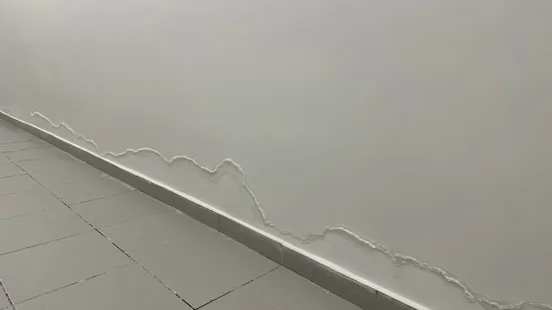
The most common mistake homeowners make is confusing different types of damp with one another. Yet condensation damp and rising damp have completely different mechanisms, and their solutions are separate too. Condensation damp originates from water vapour in the air and starts from the top, at the surface; rising damp, on the other hand, is the climb of water from the ground up through the wall by capillary action. Our rising damp guide, in which we cover the causes, symptoms and permanent injection solution for rising damp in detail, explains this distinction in depth.
The most practical way to tell the two types of damp apart is to look at where on the wall the symptom concentrates. The comparison table below places the two problems side by side:
| Criterion | Condensation Damp | Rising Damp |
|---|---|---|
| Source | Water vapour in the air (indoor humidity) | Water in the ground (capillary suction) |
| Location | Cold surfaces: glass, ceiling corners, external walls, behind cupboards (top-down, at the surface) | Base of the wall, up to ~1–1.5 m from the ground (bottom-up) |
| Symptom | Sweating on glass, fogging, black mould in corners, misted mirror | Damp stains, salt efflorescence, blistering/crumbling plaster |
| Season / course | Becomes pronounced in winter and cold weather, eases with ventilation | Lasts all year; in summer the symptom may ease with evaporation but does not disappear |
| Solution | Ventilation + heating + insulation of cold surfaces | Chemical injection (DampStop) + breathable damp-proofing plaster (HydroFix) |
In short: if you see sweating on the window and mould in the ceiling corner, it is most likely condensation; if you see a stain rising at the base of the wall, white salt and bursting plaster, it is most likely rising damp. In some buildings both problems can occur together — in that case the two are dealt with separately: for condensation, ventilation and heating are corrected; for rising damp, the damaged plaster is first stripped and HydroFix applied, and the DampStop injection is carried out once the plaster has dried (so the injection does not run out through brick cells broken open during stripping).
The Symptoms of Condensation Damp
Recognising condensation damp early gives you the chance to intervene before mould has taken hold. The typical symptoms to watch for are:
Sweating on Windows and Glass Surfaces
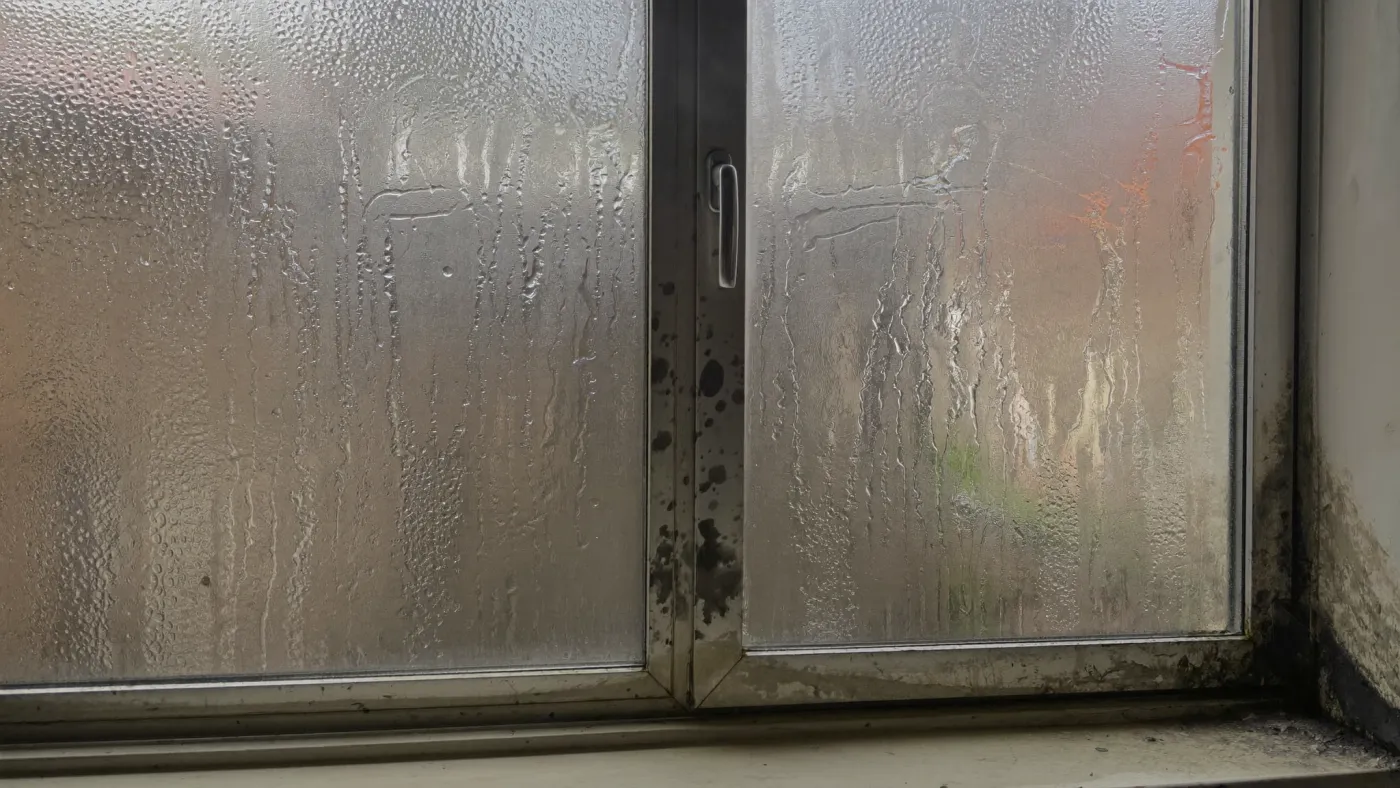
The best-known symptom is the water droplets that collect on the inner face of window panes in the mornings. Because glass is in contact with the outside air, it is one of the coldest surfaces indoors and is usually the first point to fall below the dew point. Sweating is more severe on single-glazed windows or old windows whose seals have failed. Over time, darkening and mould appear on the wooden or PVC frame and the sill at the edge of the window.
Black Mould in Wall and Ceiling Corners
Condensation damp concentrates where air circulation is weakest — external wall corners, ceiling-to-wall junctions, and behind furniture and cupboards. In these areas a damp surface appears first, followed by mould in the form of black, grey or greenish spots. Mould starting especially in the cold corners facing the external façade is a strong sign that the problem is caused by condensation.
Fogging and a Feeling of Damp Air
Fogging of the bathroom mirror, tiles and windows, and a stuffy, damp feeling in the air of the room, are heralds of condensation. This misting, which appears especially after showering and during cooking, turns into pools of water on surfaces if the room is not ventilated enough.
Traces of Damp on Textiles, Wood and Belongings
A musty smell and stains forming on the lower edges of curtains, on clothes inside wardrobes, on leather goods and behind furniture placed against the wall show that the room's humidity is high and condensation is active. The inside of closed, unventilated wardrobes is risky in this respect.
How Is Condensation Damp Prevented? (Ventilation, Insulation, Heating)
Because the source of condensation damp is moisture in the air, its solution too lies in a balance of three things: reducing the humidity in the room, heating the surfaces adequately and insulating cold surfaces so they do not fall below the dew point. When these three are applied together, condensation is largely eliminated.
1. Regular Ventilation
The most effective and cheapest measure is ventilation. Expelling the humid indoor air and letting in drier air lowers the relative humidity of the room and pulls the dew point down. Practical habits:
- Ventilate with a burst of fresh air 2–3 times a day for 5–10 minutes by opening windows on opposite sides (opening the door and windows on two façades is the fastest method).
- Run the bathroom/kitchen extractor fan during and after showering and cooking.
- Where possible, dry laundry not in a closed room but in a well-ventilated place or outdoors.
- Place cupboards and furniture a few centimetres away from external walls to allow air to circulate behind them.
2. Adequate and Balanced Heating
Since cold surfaces are the main candidates for condensation, heating the room in a balanced way keeps surface temperatures above the dew point. Heating only some rooms and closing the doors leads to humid air condensing on cold surfaces in the unheated rooms. Keeping the whole house at a moderate, continuous temperature is more effective than heating it intensely and then switching off.
3. Insulating Cold Surfaces
The structural pillar of the permanent solution is insulation. Insulation raises the inner surface temperature and keeps it above the dew point:
- Windows: Replacing single glazing with insulated (double) glazing and renewing the seal and frame insulation largely prevents sweating.
- External walls and cold bridges: External thermal insulation (external wall insulation) warms the inner surface and eliminates cold bridges.
- Surface choice: Diffusion-open, breathable plasters and paints should be chosen; plastic-based, vapour-tight coatings should be avoided.
Mould on the Wall and the Permanent Solution
The most visible and unpleasant consequence of condensation is mould. Mould does not merely stain the surface; when its spores are inhaled they can cause respiratory irritation, allergies and asthma attacks. That is why simply wiping the mould away is not enough — the real issue is cutting off the moisture that feeds it.
The recommended order for a permanent solution is as follows:
- Clean the existing mould: Wipe the mouldy surface with a suitable mould cleaner and dry it thoroughly. For widespread mould that has penetrated deeply, the surface may need to be opened up down to sound substrate.
- Cut off the source of the moisture: Establish a balance of ventilation, heating and insulation. Any cleaning done without cutting off the source results in the mould returning within a few weeks.
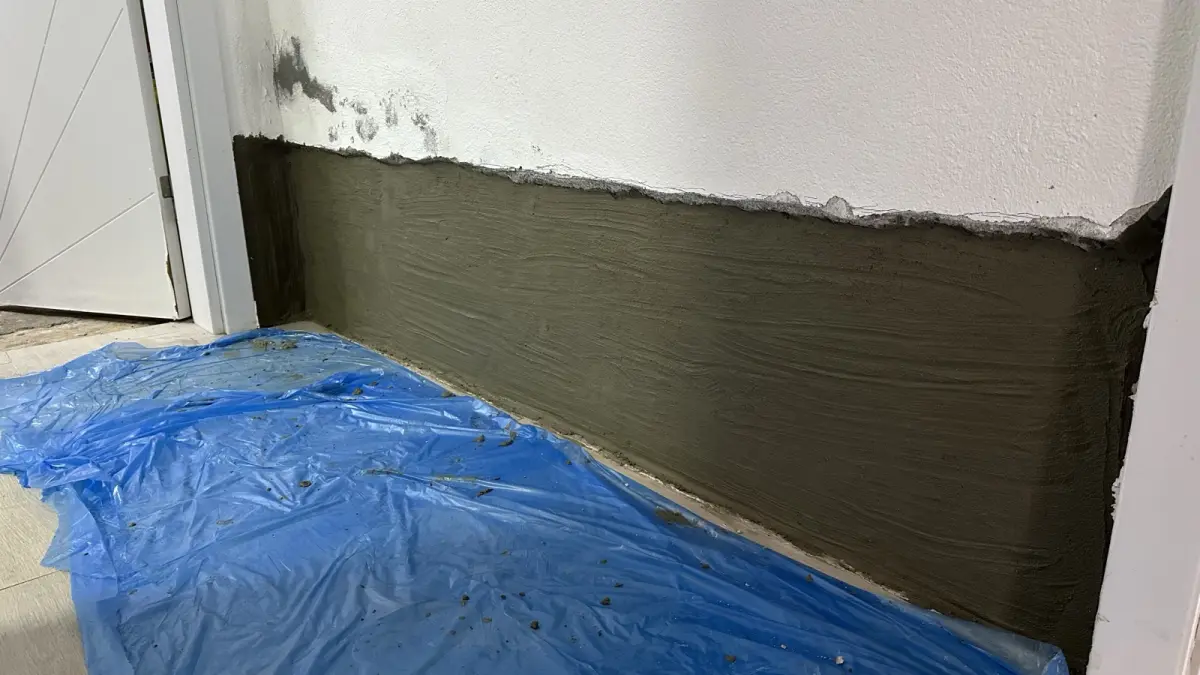
- Create a breathable surface: A diffusion-open, breathable damp-proofing plaster and paint delay condensing moisture becoming trapped at the surface and make the environment less favourable for mould.
At this point, the HydroFix breathable damp-proofing plaster among our DampStop / HydroFix products plays a supporting role: thanks to its highly porous structure it allows the wall to let water vapour through and reduces the risk of mould on condensation-prone surfaces. But one thing must be said clearly — HydroFix is a plaster, not a magic solution; what really solves condensation damp is the trio of ventilation, heating and insulation. The plaster complements these measures; it does not replace them.
An important distinction: DampStop in the product family is a silane/siloxane-based chemical injection product developed for rising damp, used to cut off the capillary moisture coming from the ground. In other words, DampStop is for rising damp, while HydroFix is aimed both at replacing the stripped plaster before the injection in cases of rising damp and at condensation-prone surfaces. Clearly identifying which problem you have on your wall is the precondition for choosing the right product.
If you are wondering how much material your project will need, you can request a tailored assessment via our Request a Quote form; and if you are not sure which type of damp you have, you can consult our expert team through our contact page to find the right solution for your building.
Frequently Asked Questions
Why do my windows sweat on the inside?
The glass surface is colder than the air inside the room. When the warm, humid air in the room touches the cold glass, its temperature drops below the dew point and the water vapour it carries condenses into droplets on the glass. Sweating is especially noticeable in the mornings on single-glazed or old PVC windows, in bedrooms and in the kitchen. The problem is largely reduced by balancing ventilation and heating.
How can I tell whether it is condensation damp or rising damp?
Condensation damp appears from the top down, on cold surfaces (ceiling corners, external walls, window edges, behind cupboards) as mould and sweating, and it eases with ventilation. Rising damp, on the other hand, works from the ground upwards, showing itself as a damp stain, salt efflorescence and blistering plaster rising to roughly 1–1.5 metres from the base of the wall. The part of the wall where the symptom concentrates is the most important clue for telling them apart.
Is condensation damp harmful to health?
The water itself is not directly harmful, but the mould it causes is. Mould spores that grow on permanently damp surfaces can cause respiratory irritation, allergic reactions and asthma attacks. Children, the elderly and people with weakened immune systems are especially at risk. The World Health Organization identifies damp indoor environments as a significant health risk.
Does a dehumidifier solve condensation?
A dehumidifier temporarily reduces condensation by lowering the humidity level in the room, but on its own it is not a permanent solution. For a lasting result you need regular ventilation, adequate heating and insulation of cold bridges. The device can be used as a supporting aid alongside these measures.
Which paint or plaster should be used against condensation damp?
Plastic-based paints that are closed to diffusion increase condensation because they stop the wall from breathing. Instead, breathable, mineral-based plasters and paints that let water vapour through should be chosen. Breathable damp-proofing plasters such as HydroFix reduce the risk of mould on condensation-prone surfaces by delaying the build-up of condensing moisture on the surface; however, the real solution is a balance of ventilation, heating and insulation.
Looking for a solution to your damp problem?
Our expert team is ready to offer you the most suitable solution.