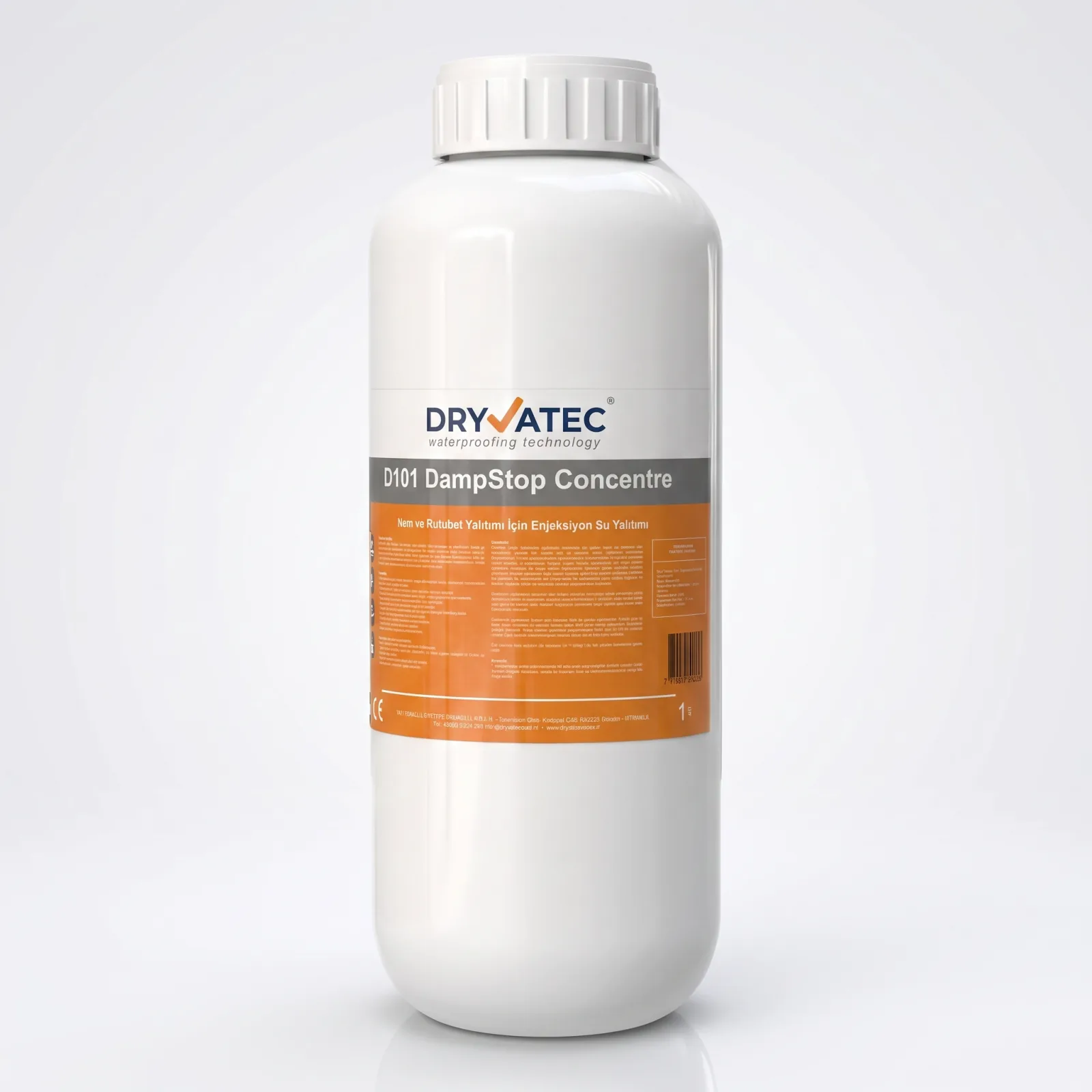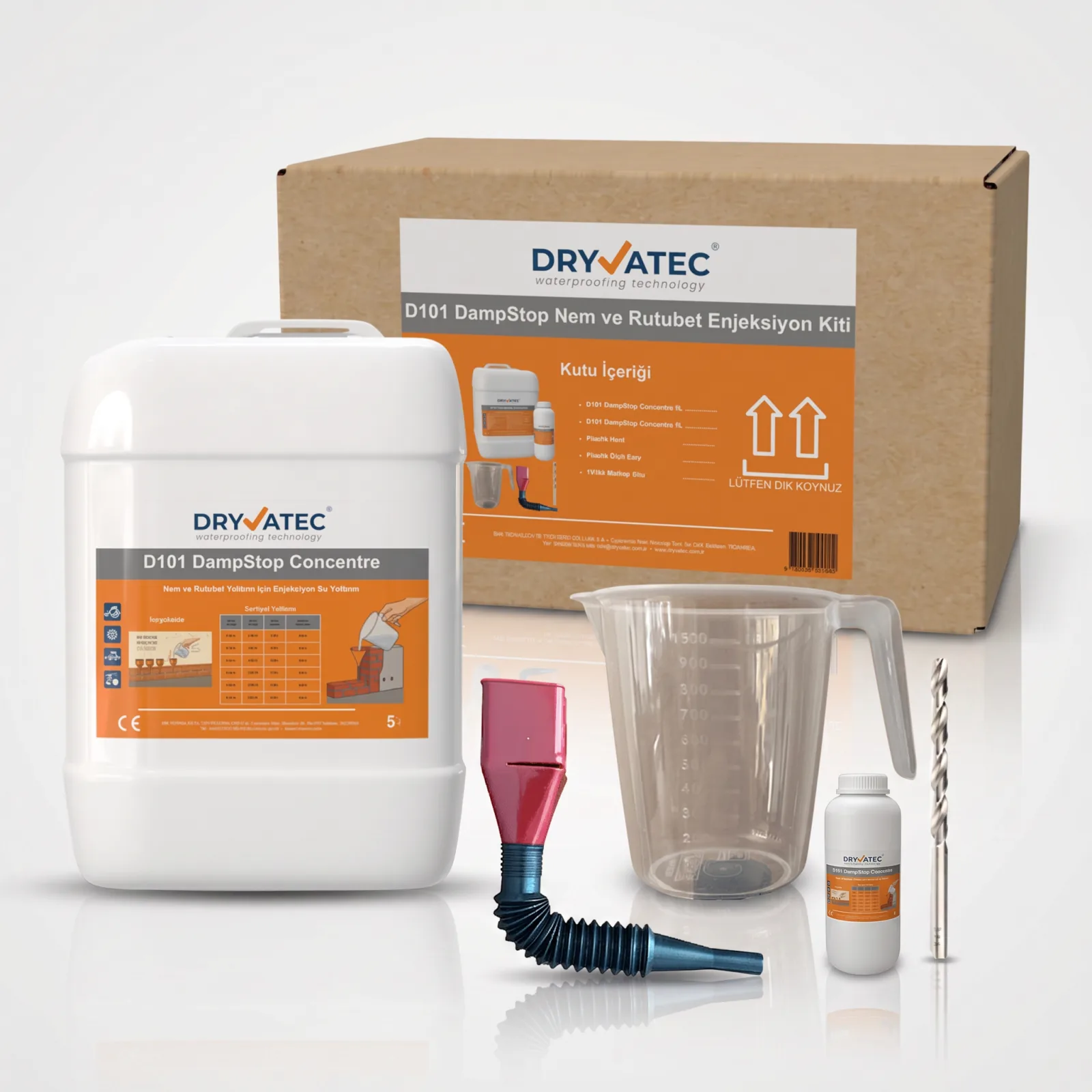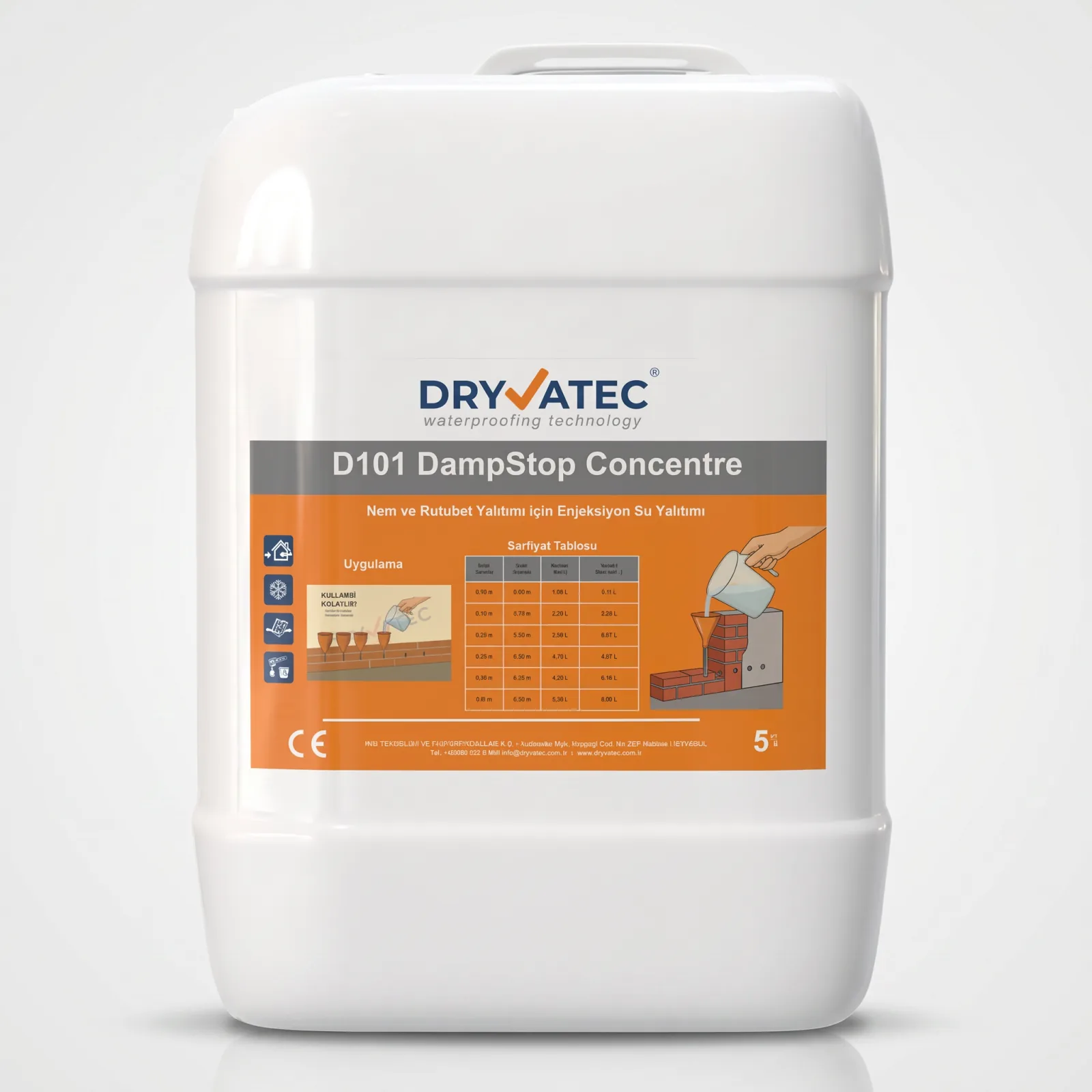
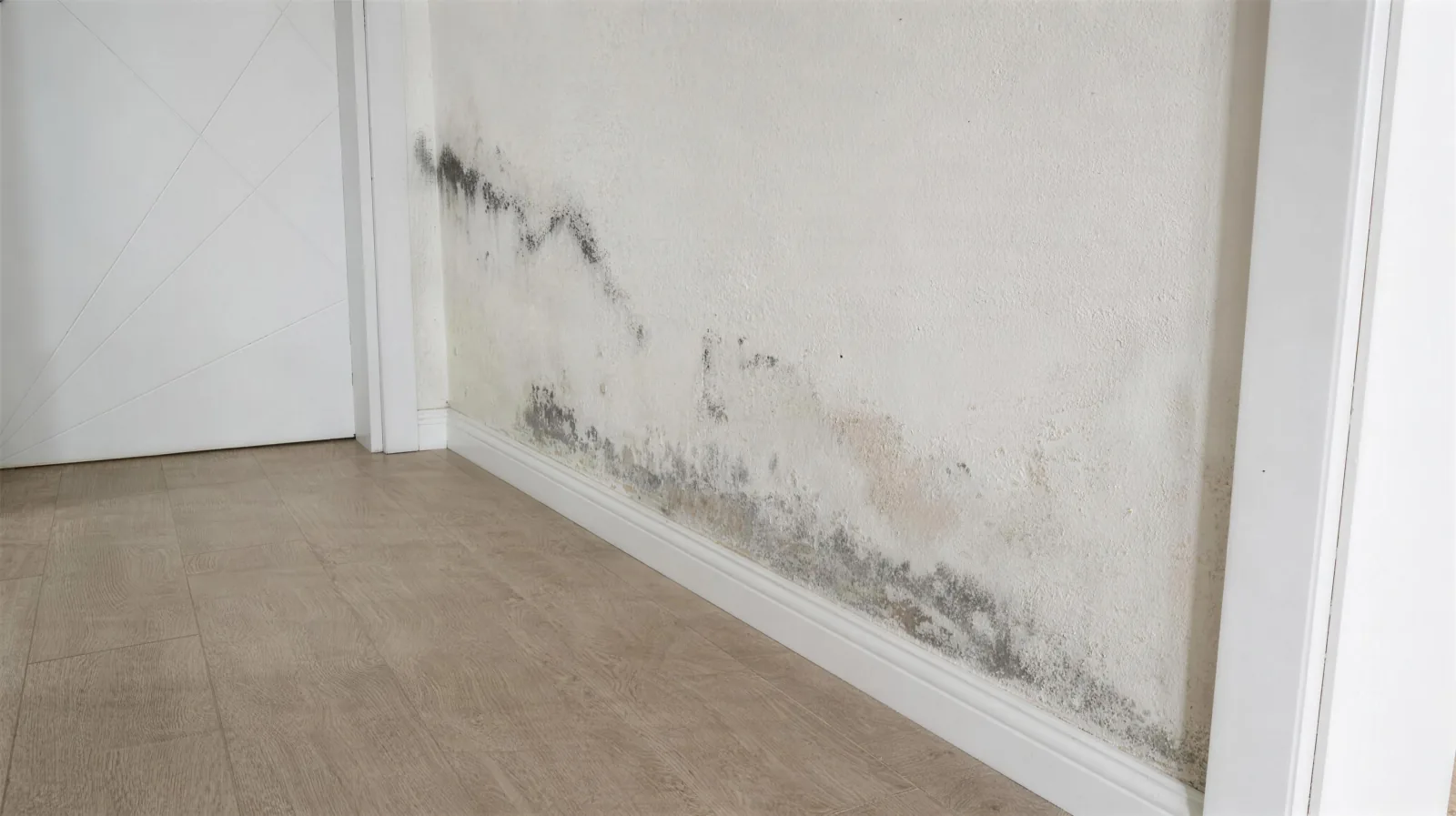
Silane/siloxane-based concentrated damp-proofing injection material. Diluted 1:9 with water it yields 50 litres of ready-to-use injection solution. Permanently stops rising damp within 48 hours.
DampStop is an injection-based waterproofing solution applied to stop rising damp and moisture in buildings. The guide below covers every step required to prepare and apply the system correctly.
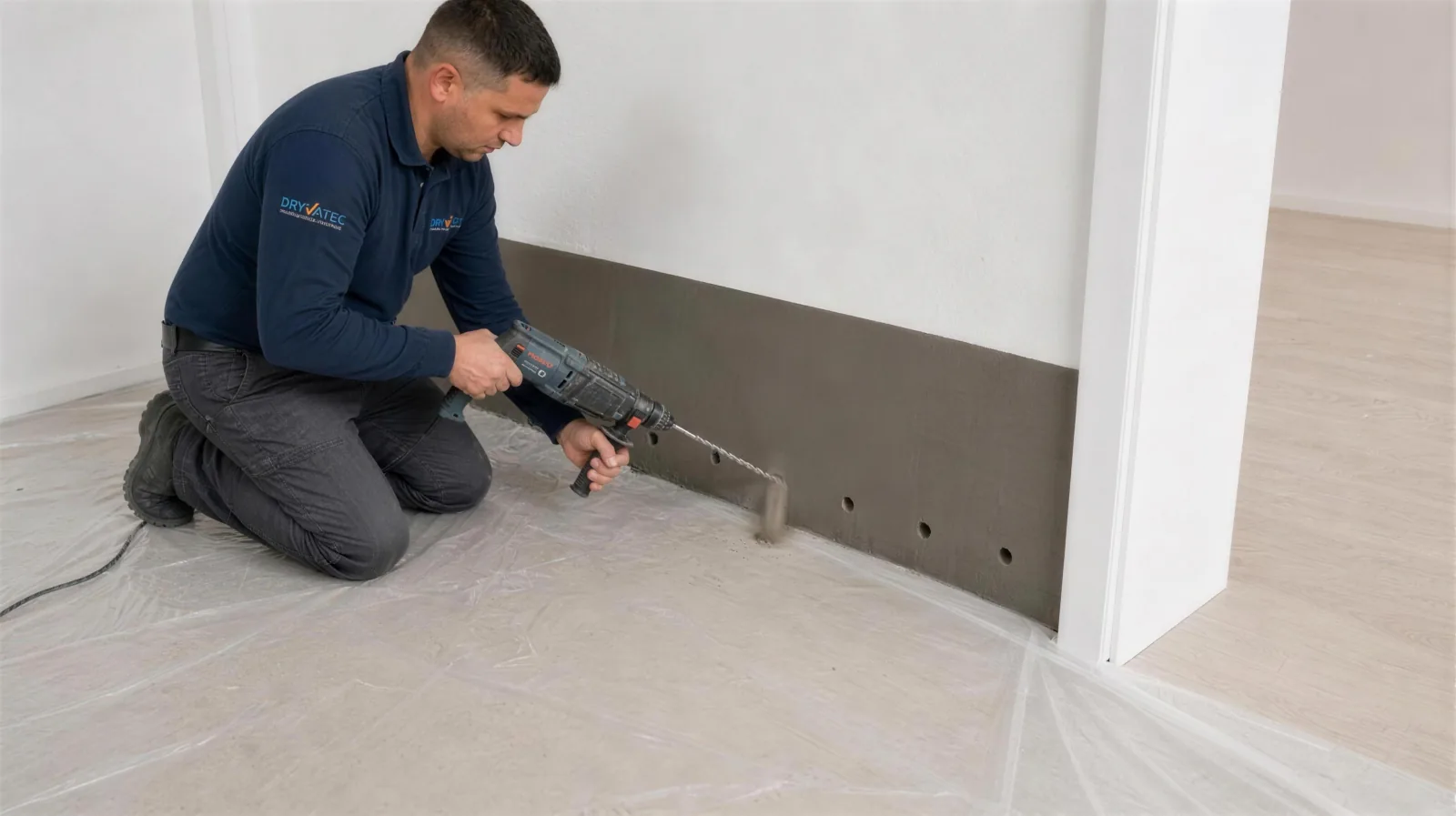
The following equipment and materials should be at hand for a successful application. It is important to clean the area and take safety precautions before starting.
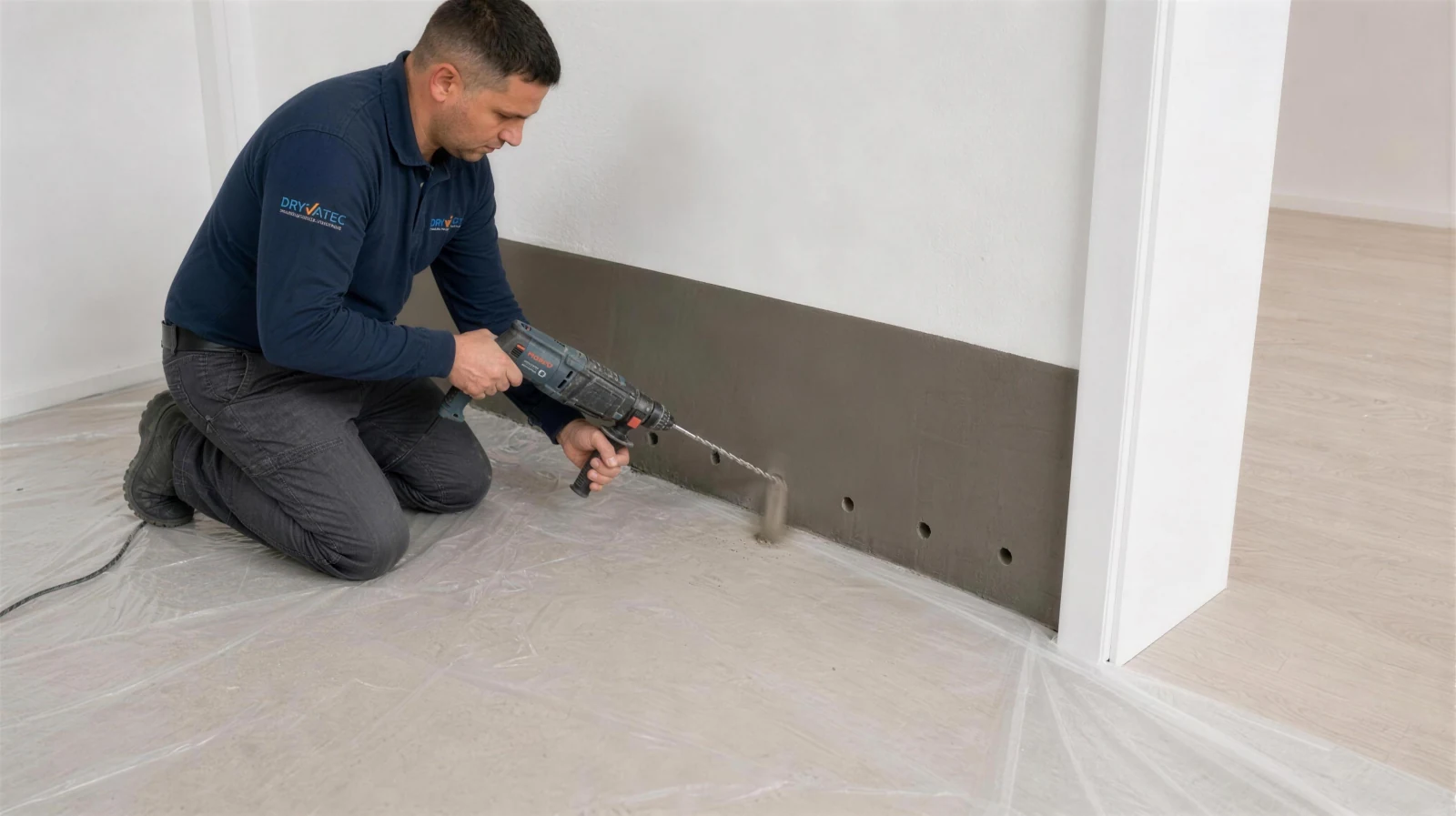
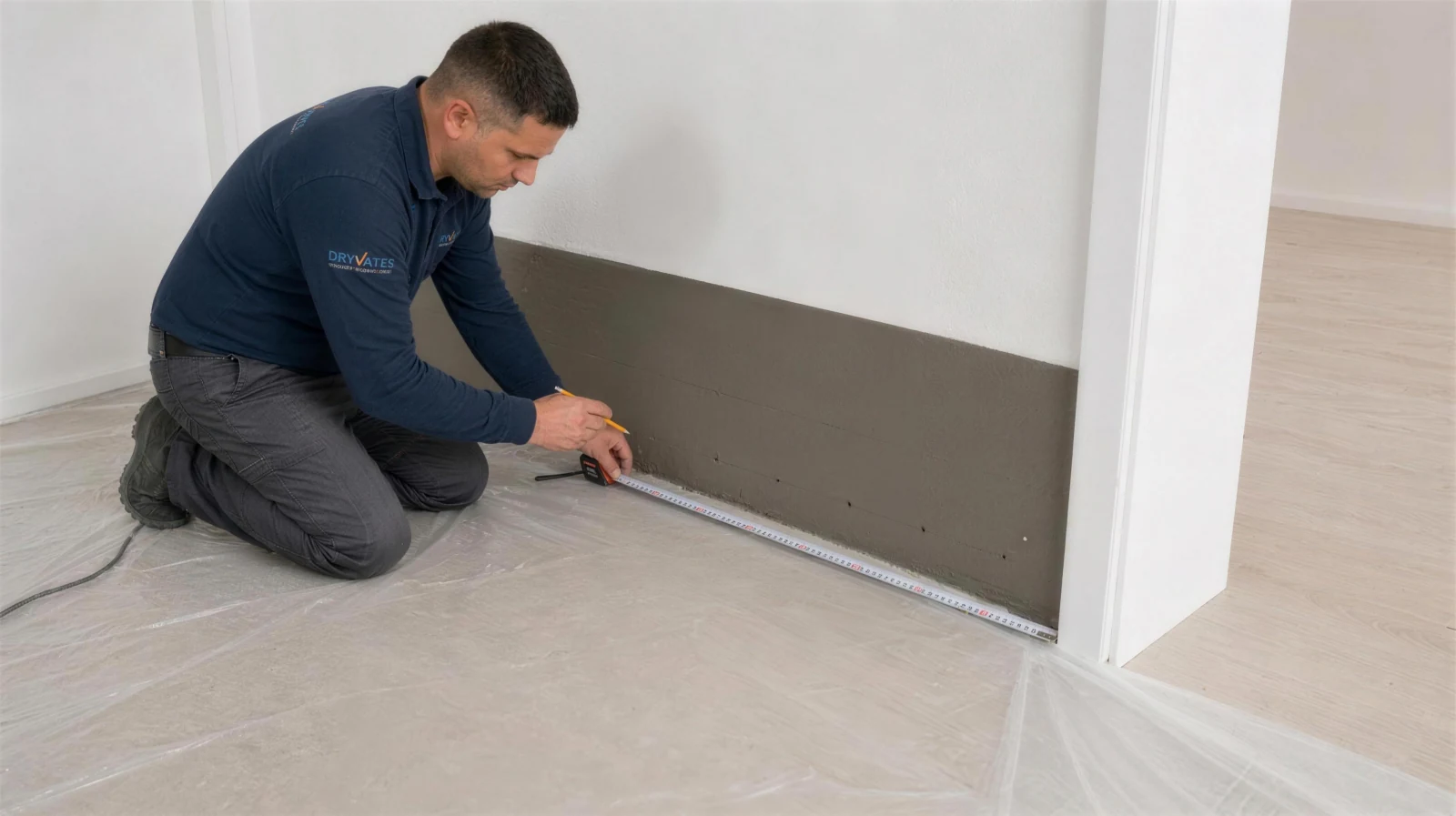
Warning: Injection carried out without removing the screed concrete or skirting board prevents the material from reaching the required level and from fully stopping the damp from rising.
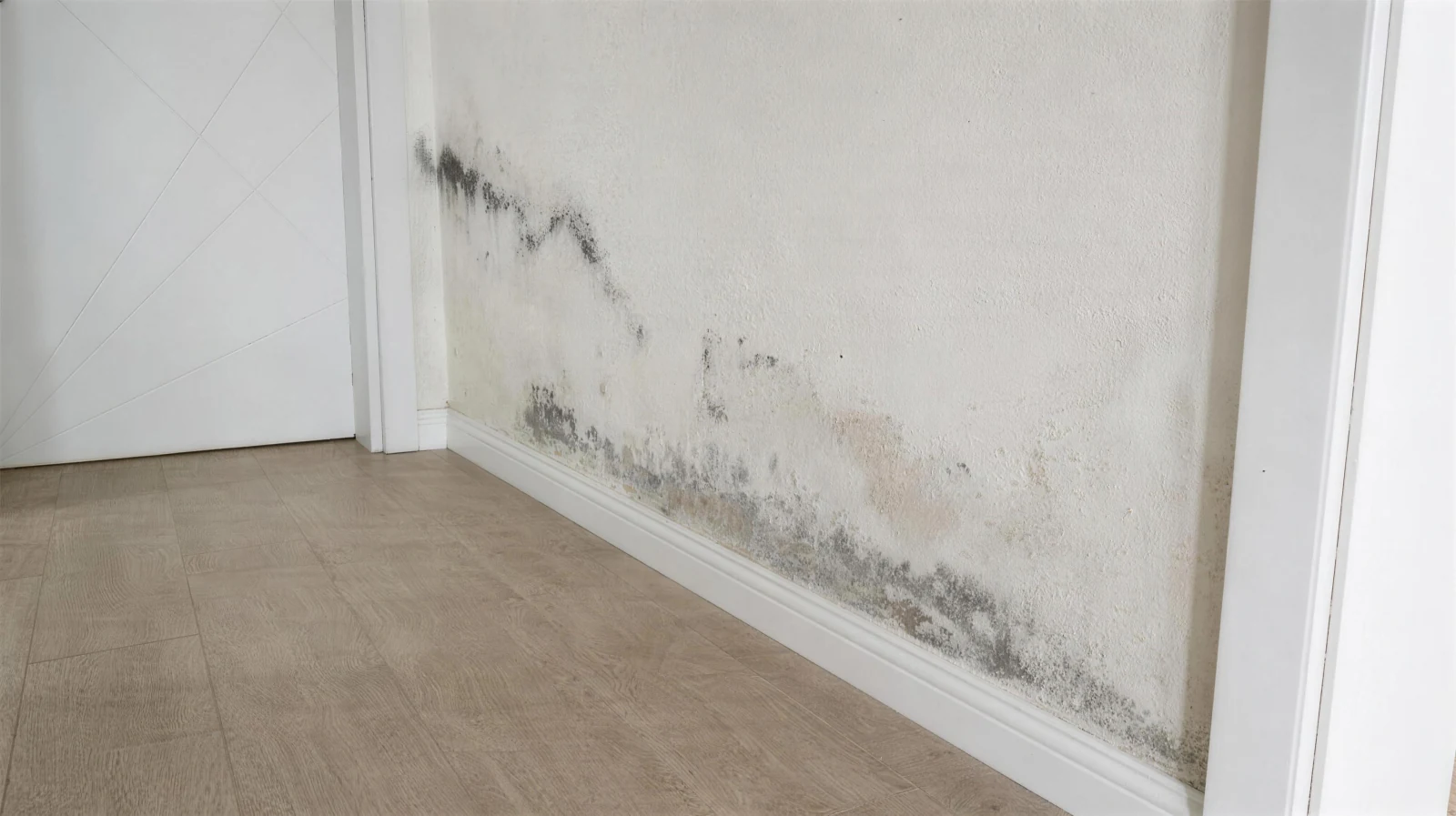
The application sequence is critical, especially on walls built with hollow brick:
Why this order? Stripping plaster can break open the cells of the bricks; if you inject first, the solution runs out through those breaks. If the plaster goes on first, the injection stays inside the brick without overflowing.
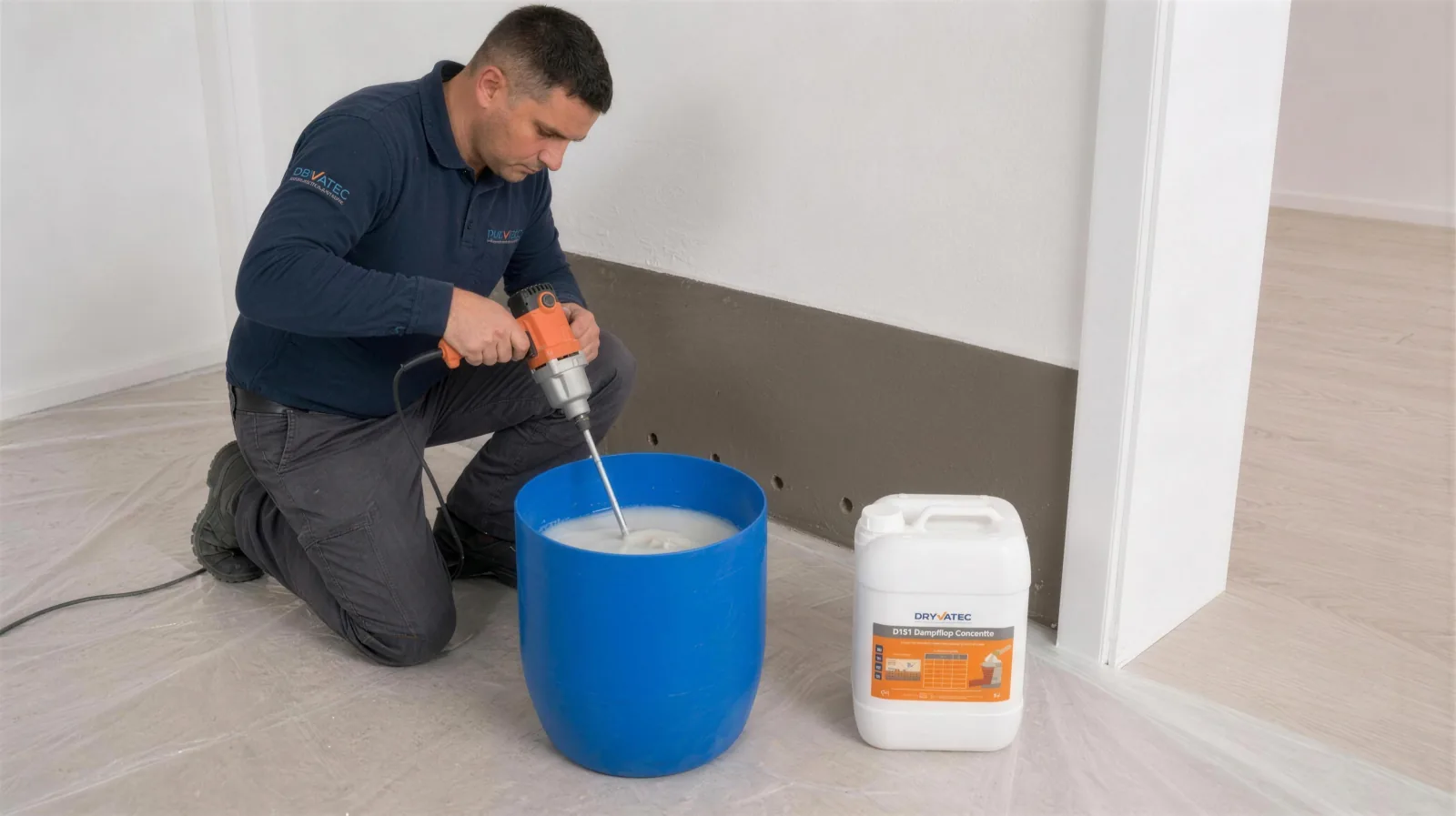
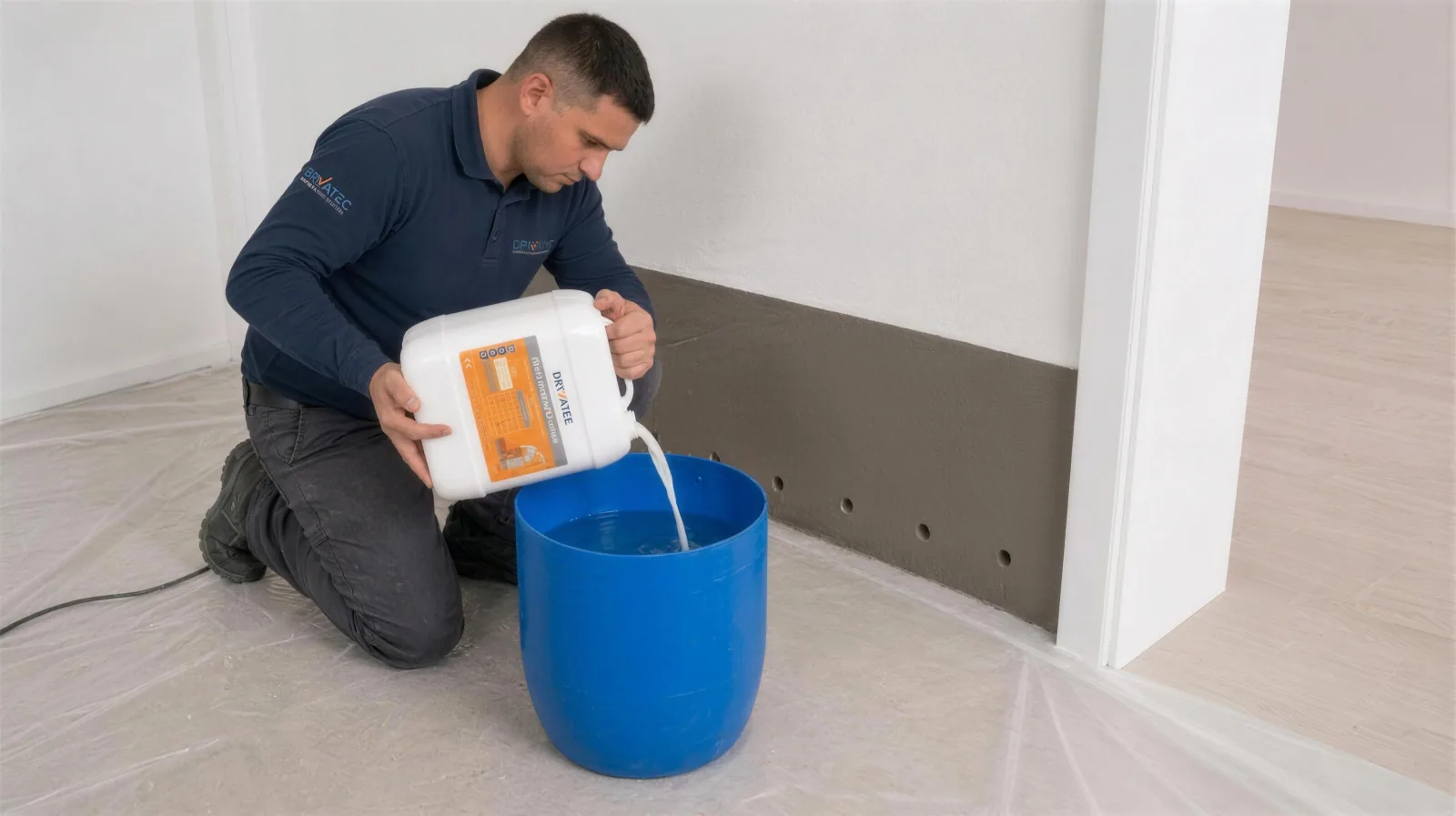
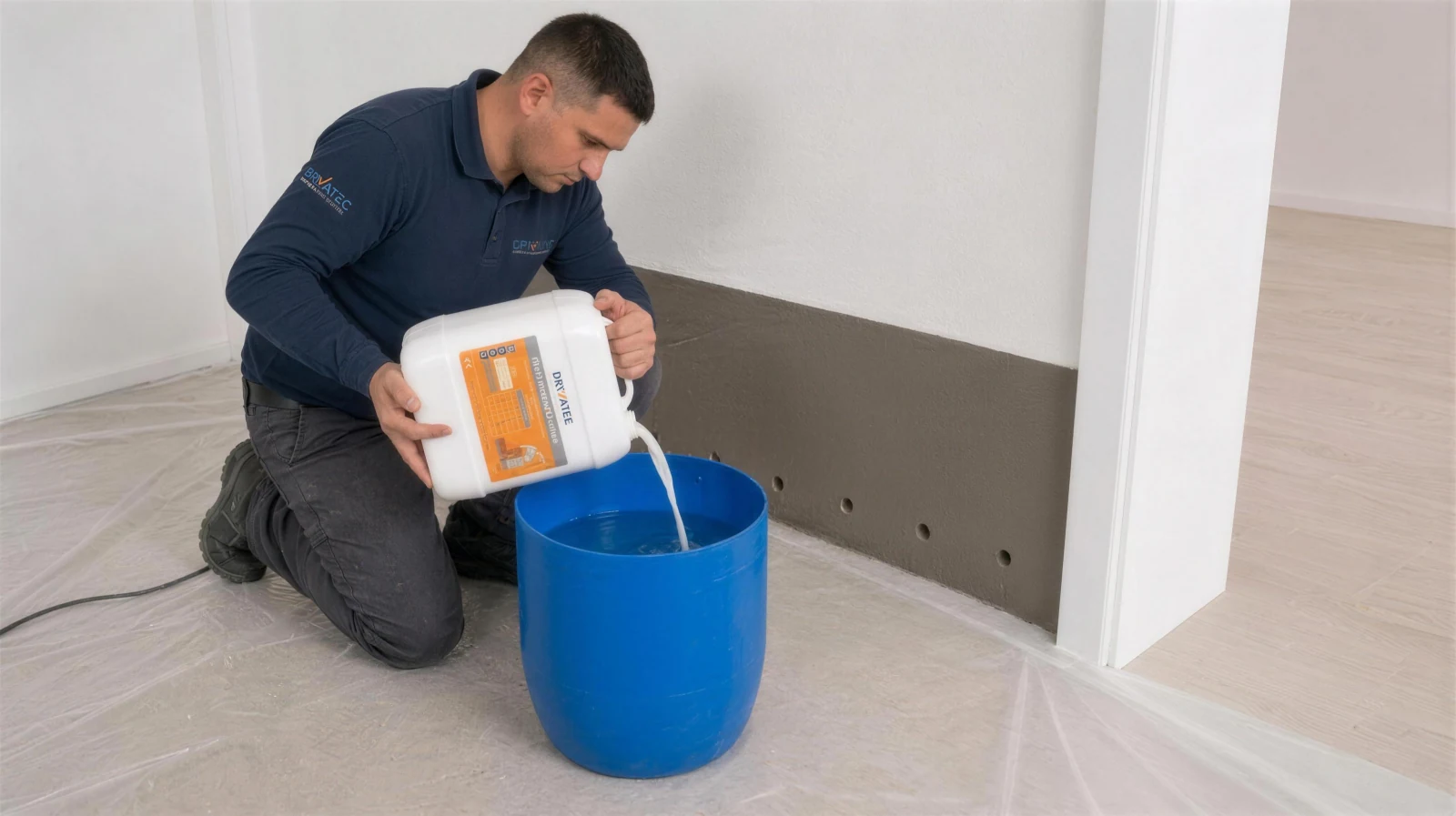
Important: The mix must be prepared in a clean plastic container, stirred until homogeneous and used immediately afterwards.
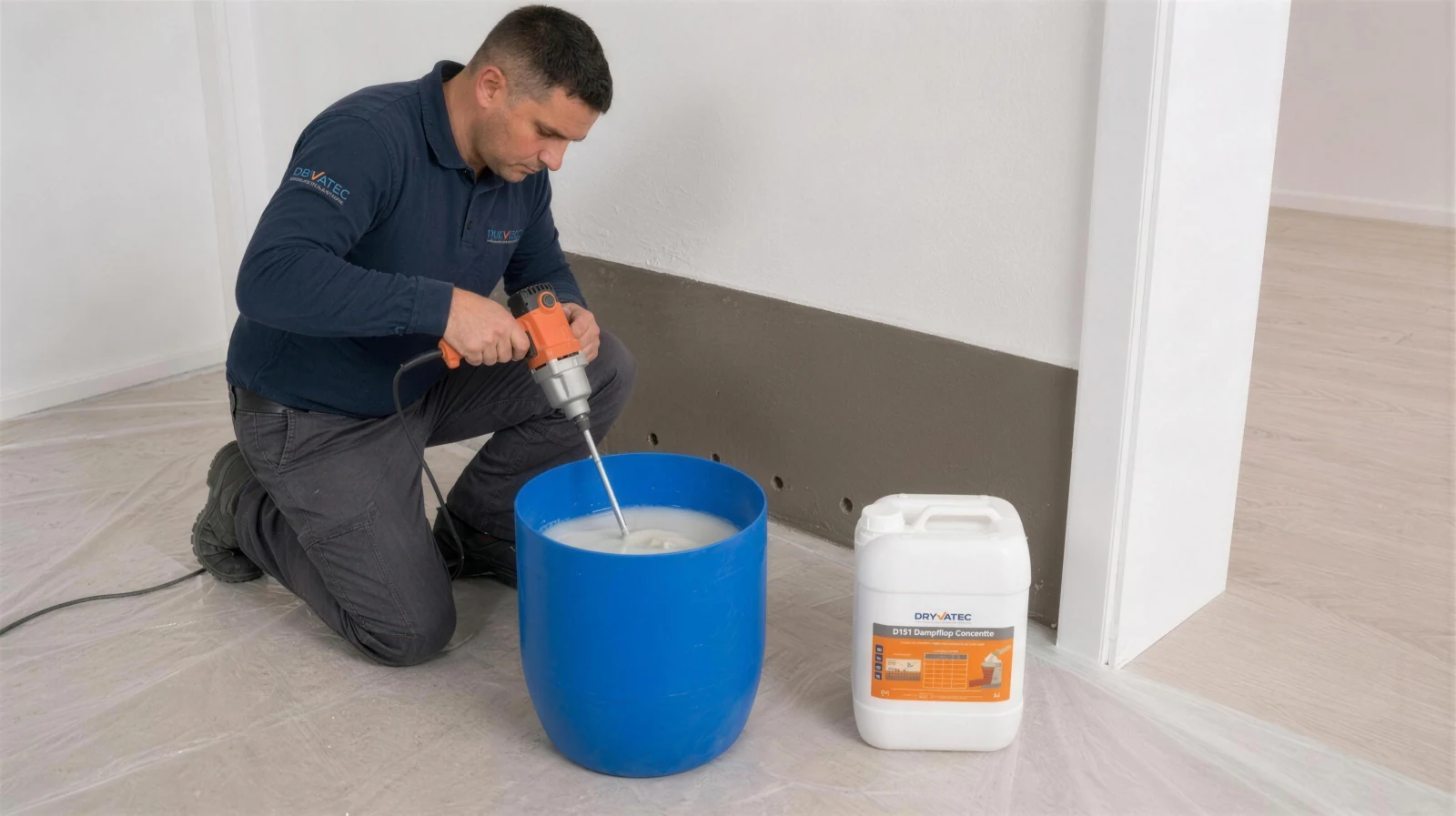
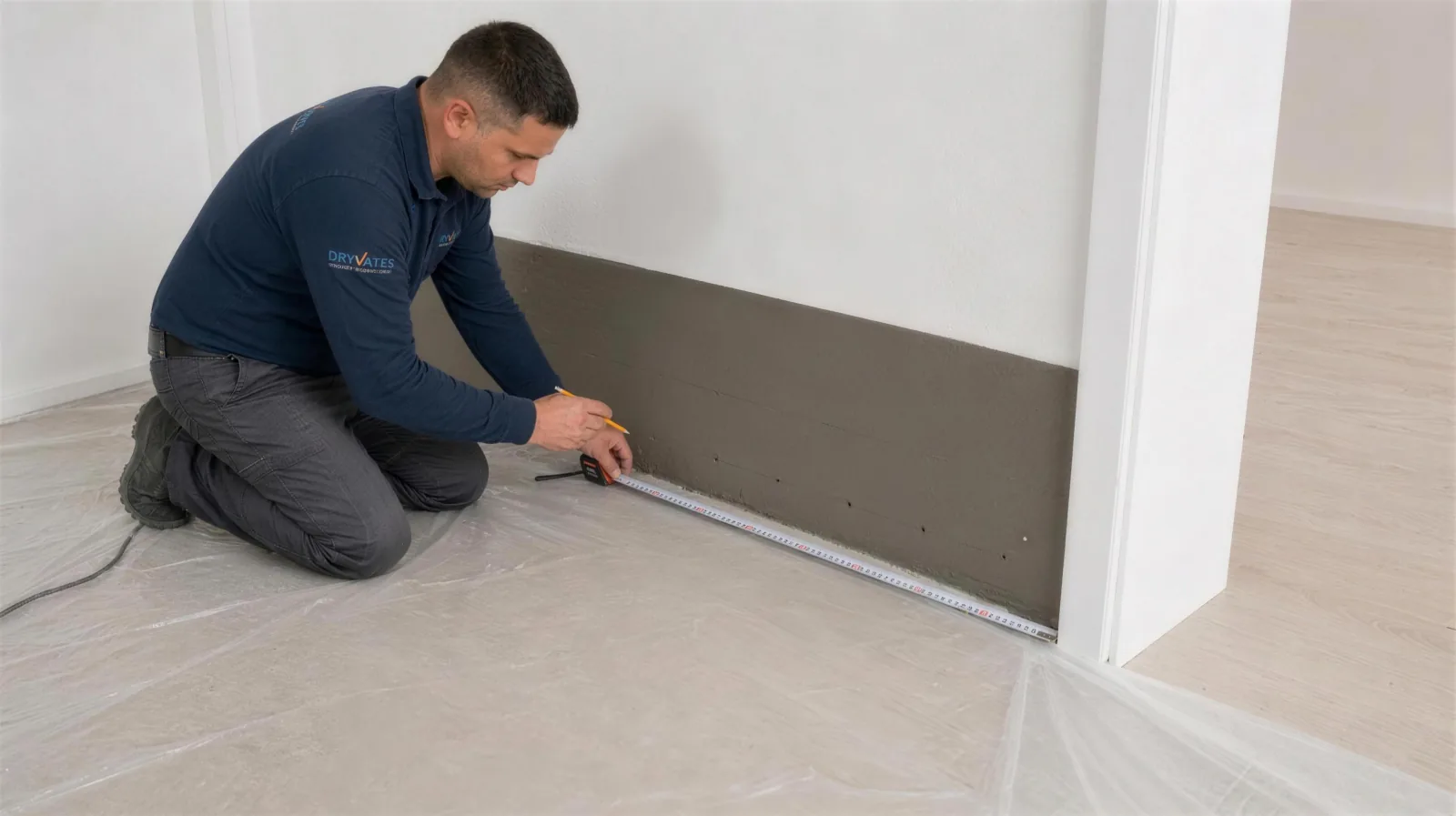
Consumption is calculated based on wall thickness and length in metres. Example values (assuming 10 cm hole spacing and a wall of standard density):
On low-absorbency substrates such as aerated concrete and solid concrete, the material should be applied in several passes until saturation is reached. Remember that the product is a concentrate when ordering.
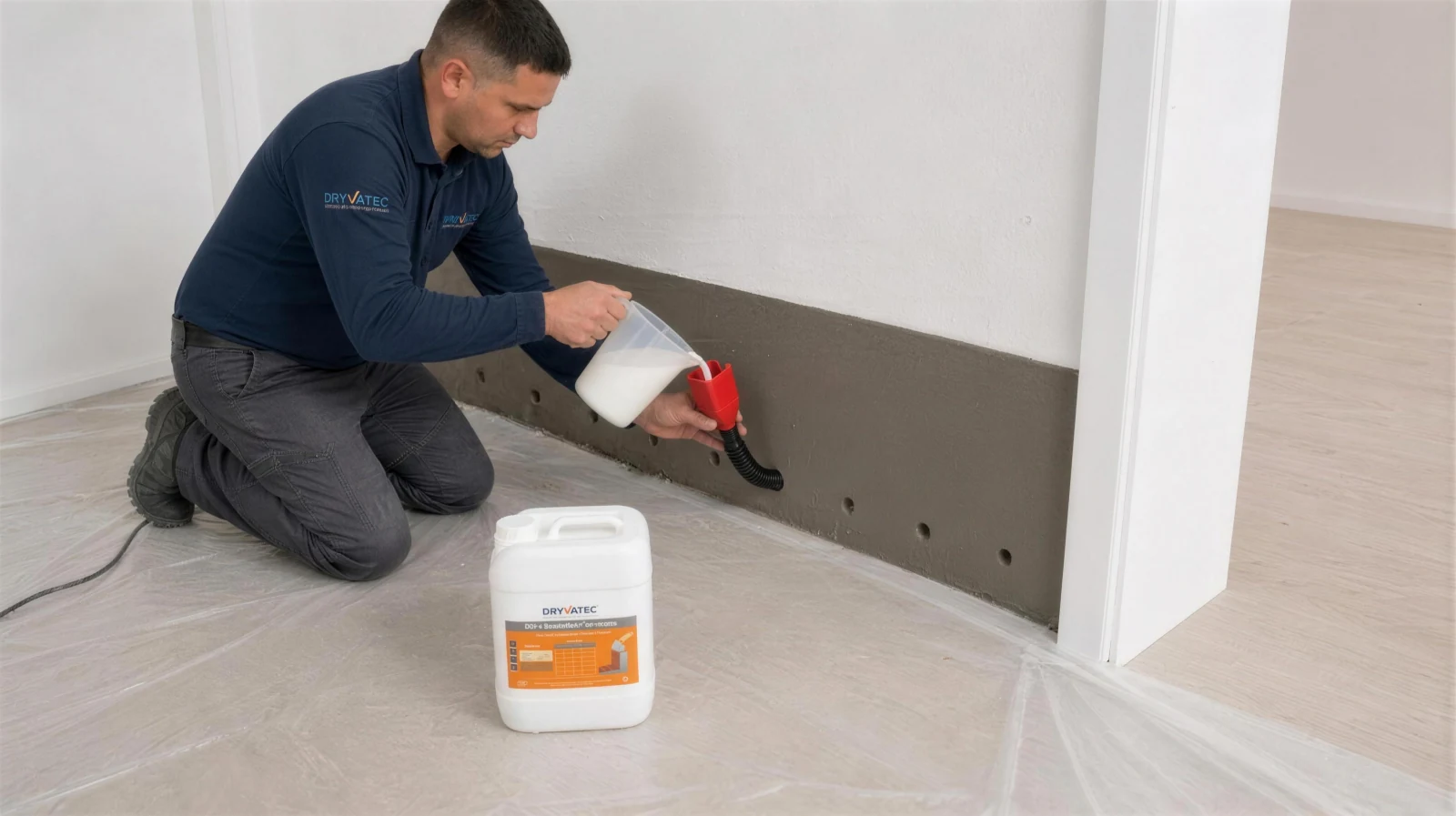
1 litre of DampStop concentrate + 9 litres of clean water = 10 litres of ready-to-use injection material. This 5 L drum gives a total of 50 L of ready solution.
After application, the injection material inside the wall should be left for at least 48 hours.
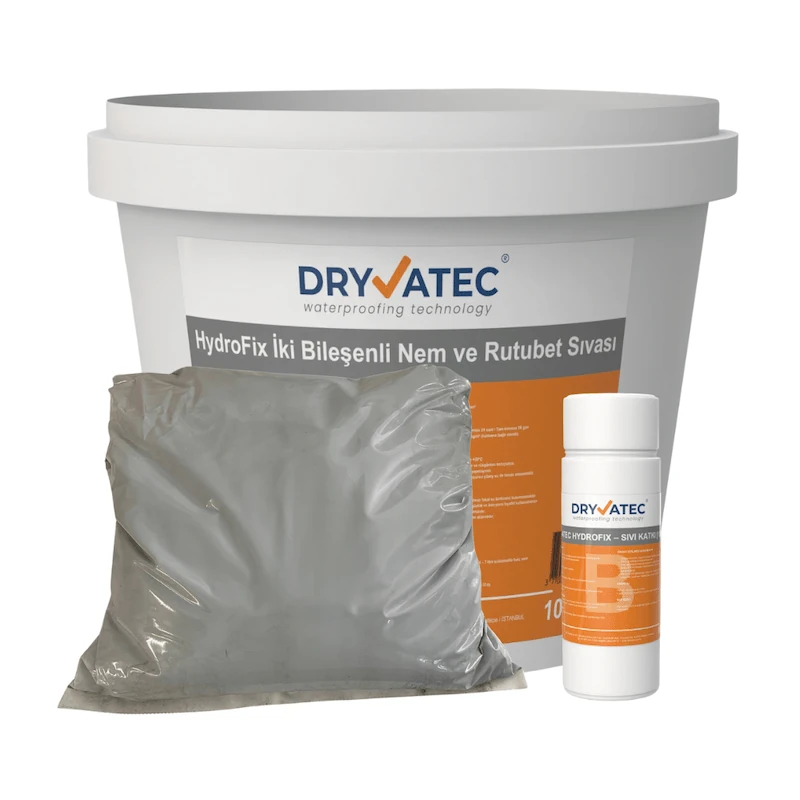
Yes. On hollow brick walls the old, damp plaster is first stripped and Dryvatec HydroFix damp-proofing plaster is applied; once the plaster has dried (24–48 hours), the DampStop injection is carried out. Without HydroFix, complete drying and insulation cannot be achieved.
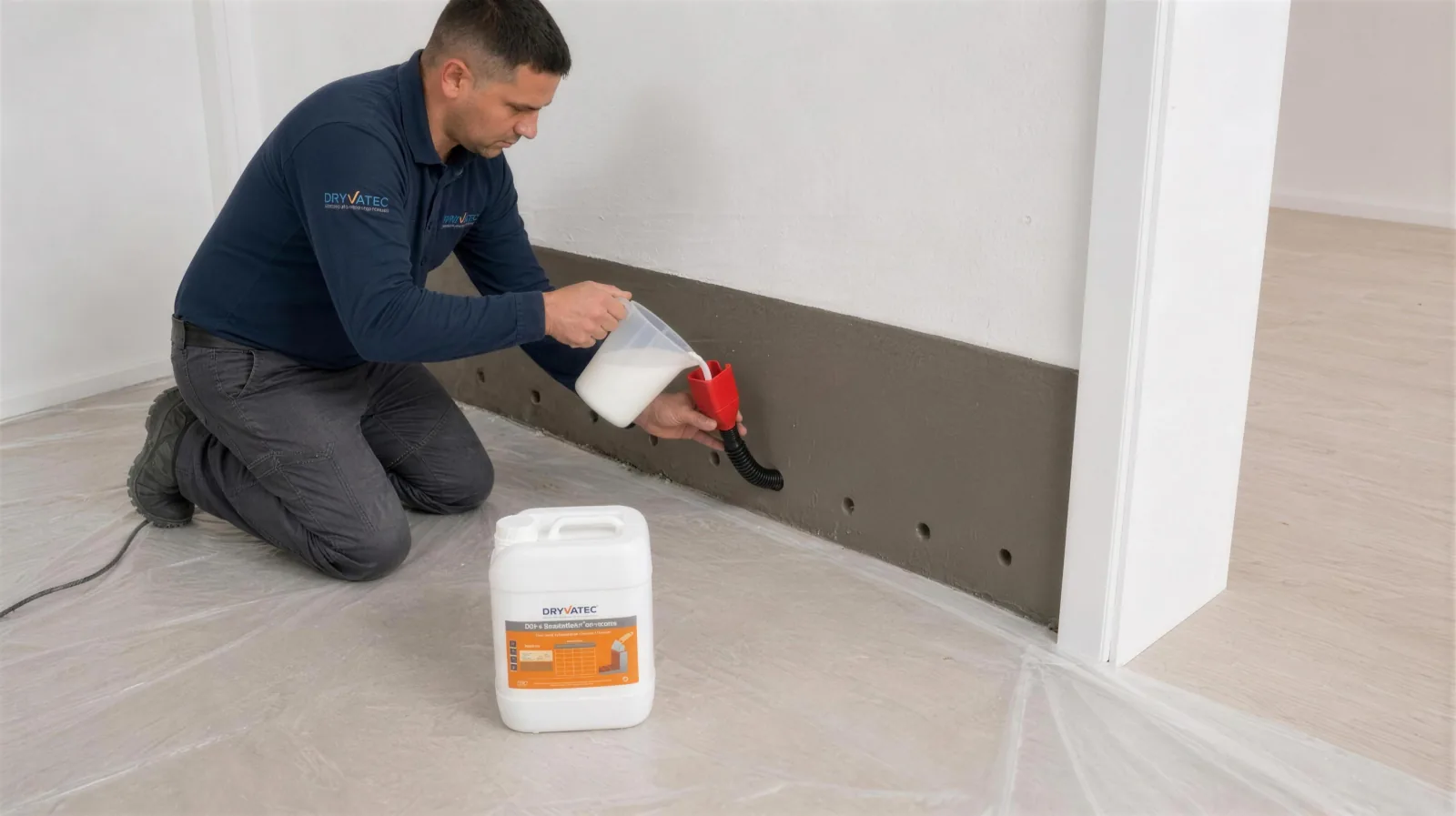
Yes, individual users can also carry out the application with the help of a funnel. For professional applications, controlled injection with a low-pressure pump is recommended.
On internal walls facing external walls, the screed concrete should be chased out to a width of about 10–15 cm so the application reaches down to the main concrete floor. On internal partition walls, removing only the skirting board is sufficient.
The calculation is based on wall thickness and length in metres. For example, a 10 cm wall needs 1.5 L per metre and a 15 cm wall 2.25 L. 5 L of concentrate is enough for roughly 30–35 metres of a 10 cm wall or 20–25 metres of a 15 cm wall.
The documents are PDFs and can be attached to specifications and tender files. · Product code: D101
Let our expert team help you choose the right product for your project.