
Why Do Real Results Matter?
When home and building owners suffering from rising damp look for a solution, the question they most want answered is 'does it really work?' And that question is entirely fair. Dozens of different products and methods are promised on the damp-solution market; but how many of them actually deliver a lasting result? That is precisely why sharing real user experiences and concrete results matters so much.
In this article, we share the experiences of three different customers who solved their rising damp problem using Dryvatec HydroFix and DampStop products. Each story involves a different building type, a different severity of problem and a different application scenario. Our aim is to help you find an example similar to your own building and to form a realistic expectation.
Note: Basements (below ground) are outside the scope of this article. In a basement, water enters from outside, from the soil; such structures need PU injection and crystalline waterproofing. For details, read our article on basement damp.
Story 1: Historic Building Restoration in Istanbul
Building Details
- Location: Istanbul, Kadıköy
- Building type: A masonry apartment block from the 1940s, ground floor
- Wall material: Brick, 39 cm thick
- Affected area: 2 walls, 14 metres in total
- Damp height: Up to 120 cm in places
The Problem
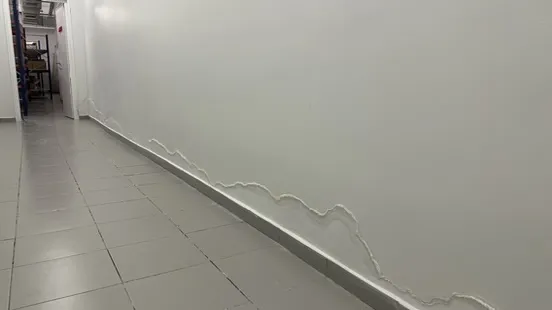
The ground-floor flat had been struggling with rising damp for years. There were widespread damp stains, salt efflorescence and peeling paint in the lower parts of the walls. The owner had had it repainted 3 times in the last 5 years but had faced the same problem again each time. There was heavy mould growth in one corner of the living room and a damp smell had spread throughout the home.
Photo Before Treatment
The Application Process
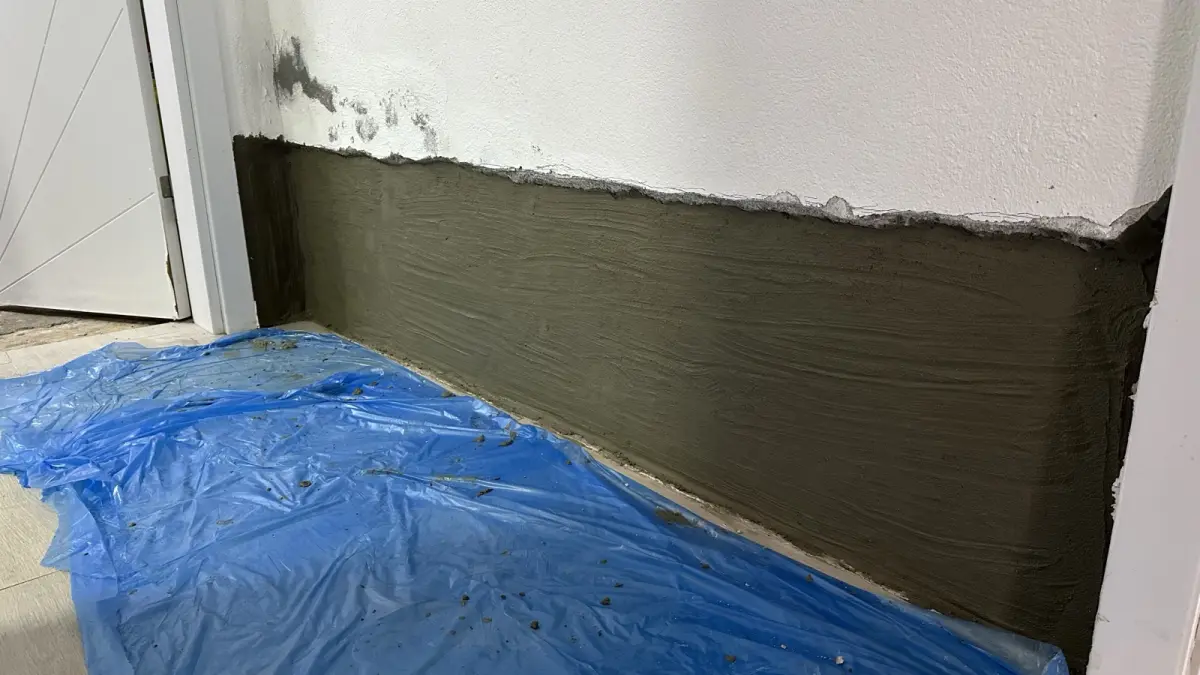
The owner bought Dryvatec DampStop and HydroFix. Following our application guide, he did the work himself: first he stripped the old, damp plaster, then applied HydroFix damp-proofing plaster; once the plaster had dried, he drilled the holes and carried out the DampStop injection. The total working time was about 8 hours. Because the wall is thick (39 cm), DampStop consumption per metre was higher than for thinner walls; DampStop consumption is calculated not per square metre but by the length of the wall in metres and its thickness.
The Result (8 Weeks Later)
At an inspection 8 weeks after the application, the damp stains had visibly faded and the salt formation had stopped. The musty smell had completely disappeared. By week 12 the wall had dried sufficiently and was painted. Although 6 months had passed since painting, no peeling or staining had appeared.
Photo After Treatment (8 Weeks)
Customer Review
"I'd been paying decorators for years. When they told me to apply HydroFix myself, I didn't believe it, but it really is very simple. I got everything done in one weekend. The walls have been spotless for 6 months now. I only wish I'd discovered it sooner."
— Ahmet B., Istanbul
Story 2: Detached House in Bursa
Building Details
- Location: Bursa, Nilüfer
- Building type: A detached house built in 2005
- Wall material: Pumice block, 25 cm thick
- Affected area: North façade, 8 metres
- Damp height: 60–80 cm
The Problem
Although it was a relatively new building, the inside of the wall on the north façade stayed permanently damp. The plaster had softened and the paint had blistered. There was a bedroom in this part of the house and the family was worried about the children's health. A quote obtained from an insulation firm involved excavating the external façade and re-waterproofing it, and a high cost was involved.
The Application Process
The owner first worked out the amount of material she needed by filling out our Request a Quote form. She ordered DampStop and HydroFix. First the old plaster was stripped and HydroFix was applied; once the plaster had dried, the DampStop injection was carried out. Thanks to the porous structure of the pumice-block wall, the DampStop solution was absorbed quickly. The application took 5 hours in total.
The Result (6 Weeks Later)
The porous structure of the pumice-block wall allowed both good penetration of the DampStop solution and rapid evaporation of the existing moisture. After 6 weeks the wall had completely dried. It was then painted. There have been no problems for 4 months.
Customer Review
"We were about to have external insulation done — we've been spared a big expense. HydroFix turned out to be a far more economical and practical solution. The musty smell in the children's room is completely gone, and we're relaxed now."
— Elif K., Bursa
Story 3: Stone Building in Trabzon
Building Details
- Location: Trabzon, Ortahisar
- Building type: A stone building from the 1960s, ground floor
- Wall material: Natural stone (andesite), 50 cm thick
- Affected area: 3 walls, 18 metres in total
- Damp height: 100–140 cm
The Problem
Because of the Black Sea region's heavy rainfall pattern and high groundwater level, the ground floor of the stone building was facing a chronic damp problem. The thick stone walls were drawing up large amounts of water by capillary action. There was heavy salt build-up on the surface, erosion of the wall finish and constant mould growth. Due to the historic value of the building, destructive interventions were not wanted.
The Application Process
The 50 cm-thick stone wall required a different approach from the standard application. It was recommended to drill the holes from both sides (the inner and outer faces). This ensured that the DampStop solution penetrated as far as the middle of the thick wall. Because of the irregular porous structure of the natural stone, some holes needed extra solution. The order was the same: first the old plaster was stripped and HydroFix was applied, and the injection was carried out once the plaster had dried. The application took 3 days in total.
The Result (16 Weeks Later)
The thick stone wall took slightly longer than expected to dry, about 16 weeks. But the results were striking: the salt formation had stopped completely and the damp stains had largely faded. Having come through the Black Sea winter without trouble, the walls were painted in the spring. No sign of damp has been observed for 10 months. A permanent solution had been achieved without any damage to the historic fabric of the building.
Customer Review
"In our old stone house we used to fight the same battle every winter. HydroFix solved the problem without cutting into the wall or damaging the stone. It works even in a damp climate like Trabzon's — I can't believe it."
— Hasan Y., Trabzon
Comparison of Application Times
The application times of the three different projects vary according to the size and complexity of the building. To give a general summary, DIY application time usually depends on the following factors:
- Wall length: A 10-metre wall requires 5–8 hours of application time on average.
- Wall thickness: Thick walls require deeper holes and more DampStop solution; the time increases.
- Wall material: Drilling into brick and pumice block is faster than into natural stone and concrete.
- Experience: The first application may be a little slower; from the second wall onwards the time shortens.
The correct order: first the old, damp plaster is stripped, then HydroFix damp-proofing plaster is applied; once the plaster has dried (24–48 hours), the holes are drilled and the DampStop injection is carried out. Why? Stripping plaster can break open the cells of the bricks; if you inject first, the solution runs out through those breaks. If the plaster goes on first, the injection stays inside the brick without overflowing.
DampStop consumption is calculated not per square metre but by the length of the wall in metres and its thickness: ready-mixed solution, holes 10 cm apart — 1.5 L/m for a 10 cm wall, 2.25 L/m for a 15 cm wall. The Complete Kit (5 L concentrate = 50 L of solution) is enough for about 30–35 m of 10 cm wall or 20–25 m of 15 cm wall. For thicker walls, use the Consumption Calculator.
Drying time, on the other hand, is independent of application time and usually varies between 4 and 16 weeks. Drying is faster in well-ventilated areas.
Support Information
Dryvatec products are formulated to provide long-term protection under correct application conditions. As a sign of our confidence in our products, we offer comprehensive support:
- Technical advice: Free technical support before and after application. You can reach us via our contact page.
- Application guide: A detailed step-by-step guide and video instructions.
- Material estimate: Order the right amount of product with the help of our Request a Quote form.
Your Story Could Be Here Too
Every building is different, and every damp problem has its own dynamics. But as the stories above show, the HydroFix + DampStop system offers an effective solution for different building types, different wall materials and different damp levels. Whether it is a historic masonry building from the 1940s or a modern detached house built in the 2000s; whether the wall is brick, pumice block or natural stone; the DampStop chemical barrier has produced effective results in every building type.
The common points that stand out in the stories above are these: all the customers had previously tried temporary solutions and failed. Methods such as repeated painting, waterproof coatings and ventilation had a masking effect in the short term, but the problem came back every time. After the HydroFix + DampStop application, no customer reported the problem recurring.
Another common point is the cost advantage. All three of our customers chose DIY application and saved considerably compared with professional alternatives. The application times remained reasonable even for inexperienced users. For detailed cost information, you can read our Damp Treatment Cost Guide article.
To determine the most suitable solution for your building, you can fill out our Request a Quote form or get in touch with our technical team. To understand better what rising damp is, you can also read our What Is Rising Damp? article.
Put an End to Your Damp Problem Too
Request a solution tailored to your wall and order now.