

Factors That Affect the Cost of Damp Treatment
The cost of solving a rising damp problem varies depending on a few key factors. Understanding these factors is important for planning your budget properly. Many homeowners, not knowing how much they need to spend to solve a damp problem, either worry by setting aside an excessive budget or attempt half-finished solutions on an inadequate one. This guide aims to set out the cost of damp treatment transparently, using current 2026 prices.
Wall Length
The most important factor determining the cost is the length of wall affected by the damp problem. DampStop injection is calculated per metre of wall, while HydroFix damp-proofing plaster is calculated per square metre of plastered surface; the longer the wall, the more of both you need. Usually the problem appears on a single wall of a room or on one façade of the building; however, if more than one wall is affected, a separate calculation should be made for each wall.
Wall Thickness
Wall thickness determines the depth of the holes (80% of the thickness) and therefore how much DampStop solution the wall takes. The official consumption values are about 1.5 L of ready solution per metre for a 10 cm wall and 2.25 L per metre for a 15 cm wall; thicker walls need more. Wall thickness does not change the HydroFix quantity, which depends only on the plastered area.
Level of Damp
The wall's current moisture level affects the drying time and the need for any additional work. Where water reaches the wall from outside (for example a leaking pipe or poor drainage), that source has to be dealt with as well, which adds to the cost. However, for medium and low-level damp problems, the HydroFix + DampStop combination is usually sufficient.
Wall Material
Different wall materials such as brick, natural stone, breeze block and concrete have different porosity rates. Porous materials absorb more DampStop solution, dense materials less. On low-absorbency substrates such as aerated concrete and solid concrete, the solution is injected in several rounds until the wall is saturated.
Product Prices: HydroFix, DampStop and the Kit
The Dryvatec product range offers various package options for different needs. Current product prices are listed on our shop page. Here we provide a general price structure and comparison.
HydroFix Damp-Proofing Plaster
HydroFix is a cement-based, two-component damp-proofing plaster sold as 10 kg powder + 100 ml liquid additive for 1.500₺ (incl. VAT). It is applied to the wall surface with a trowel, not injected, so it is calculated per square metre: one pack covers about 4.5–5 m² in a single coat or 2–2.5 m² in two coats (two coats of 2–2.5 mm are recommended).
DampStop D101 Injection Concentrate
DampStop is the injection product. It is diluted 1:9 with water, so 1 L of concentrate gives 10 L of ready-to-use solution. It is available as 1 L (2.200₺) and 5 L (8.000₺).
DampStop Complete Kit
The DampStop Complete Kit (8.700₺) contains 5 L of DampStop concentrate (50 L of solution), a funnel, a measuring jug and a 14 mm drill bit. An injection gun or pump is not included; a low-pressure pump is optional. HydroFix is not included and is bought separately. Prices shown are incl. VAT at the time of writing; current prices are on the shop page.
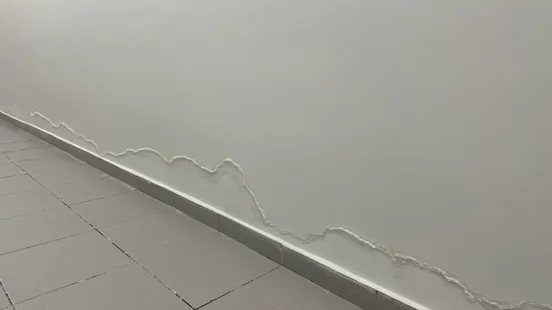
DIY vs Professional Application Comparison
One of the most decisive choices in the cost of damp treatment is whether you will carry out the application yourself or have a professional team do it. The advantages and costs of the two options are different.
| Criterion | DIY Application | Professional Application |
|---|---|---|
| Material cost | HydroFix + DampStop (kit or concentrate) | Usually included in the contractor's price |
| Labour cost | Zero (your own effort) | Charged by the contractor |
| Equipment | Hammer drill + 14 mm bit (bit included in the kit) | Company equipment |
| Total cost | Material only + minimal equipment | Material + labour, as quoted locally |
Do It Yourself (DIY)
HydroFix and DampStop are designed so that homeowners can apply them without professional equipment. The cost components of DIY application are as follows:
- Material cost: HydroFix (per m²) + DampStop (per metre of wall)
- Equipment cost: Hammer drill (zero extra cost if you have one), drill mixer, trowel and bucket; the 14 mm bit, funnel and measuring jug come with the kit
- Labour cost: Zero (your own effort)
- Total: Material only + minimal equipment cost
With DIY you pay only for materials and any tools you do not already own. Step-by-step instructions are in our HydroFix application guide and our damp injection application guide.
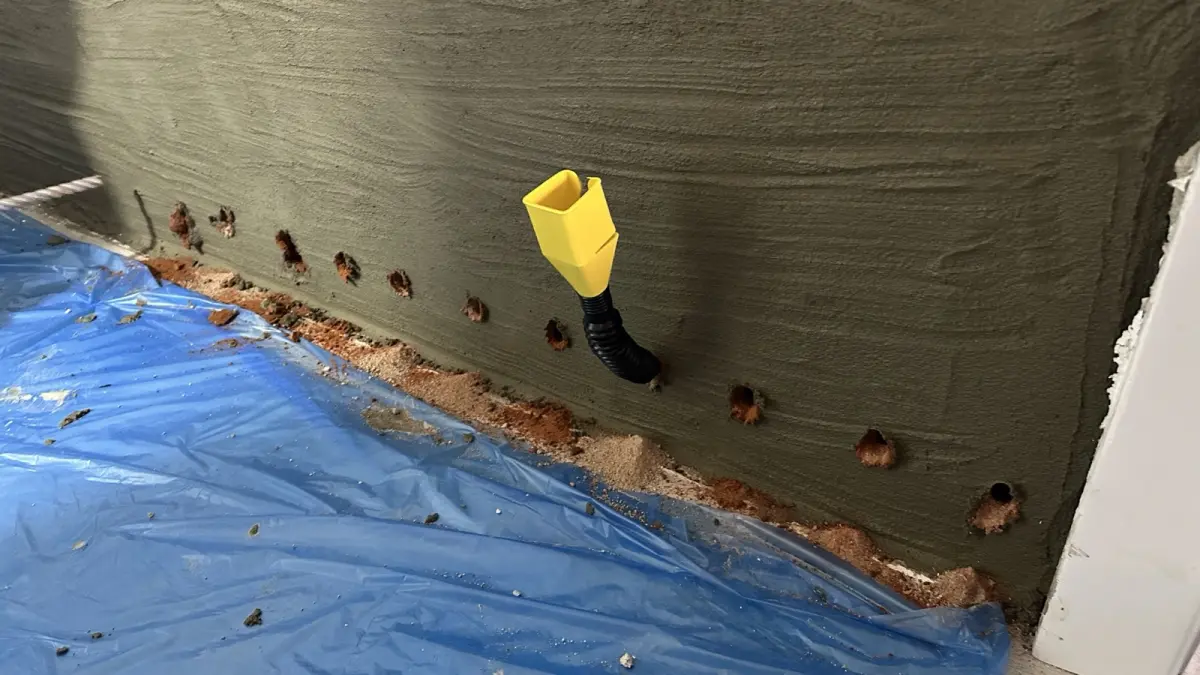
Professional Application
If you hire a contractor, labour, transport and any workmanship guarantee are added on top of the material cost. These prices vary by region and contractor, so ask for a written quote. Dryvatec itself does not provide on-site application.
Professional application should be preferred in the following situations:
- Very large areas
- Hard-to-reach areas (basement external wall, below-ground sections)
- When a structural problem is also present (cracks, deflection)
- When there is a time constraint and the work needs to be completed quickly
Get an Estimate for Your Building
Share your wall dimensions and photos through the quote form for a free online analysis with a material quantity and cost estimate.
Worked Consumption Example: A 10-Metre Wall
To give a concrete idea of cost, let us work through a typical scenario using the official consumption values: a 10-metre long, 15 cm thick brick wall whose damaged plaster reaches 1 metre above the floor.
Wall Details
- Wall length: 10 metres (1,000 cm)
- Wall thickness: 15 cm
- Height of plaster to be renewed: 1 metre (10 m²)
- Wall material: Brick
Hole Calculation
When the hole spacing is 10 cm, about 100 holes need to be drilled for a 10-metre wall (1,000 cm / 10 cm = 100). The hole depth will be about 80% of the wall thickness, that is about 12 cm.
DampStop Quantity (Injection)
For a 15 cm wall the official consumption is about 2.25 L of ready solution per metre. For 10 metres that is about 22.5 L of solution, i.e. about 2.25 L of concentrate at 1:9. Three 1 L bottles (6.600₺) are enough; the Complete Kit (8.700₺) adds the funnel, measuring jug and 14 mm bit and leaves concentrate for roughly another 10–15 metres of a 15 cm wall.
HydroFix Quantity (Plaster)
HydroFix is calculated by area, not per hole: 10 m long × 1 m high = 10 m². With the recommended two coats, one 10 kg pack covers 2–2.5 m², so you need 4–5 packs; plan for 5 packs (7.500₺).
Total Material Cost
In this example the material cost is about 14.100₺ (three 1 L DampStop bottles + five HydroFix packs), or about 16.200₺ if you choose the Complete Kit instead of the bottles. Thicker walls need more DampStop; a taller plaster area needs more HydroFix. For current prices, visit our shop page, or request a quote for a calculation specific to your wall.
Long-Term Saving Analysis
When assessing the cost of damp treatment, looking only at the product and application cost is not enough. The recurring costs that arise when no solution is applied, or when the problem is managed with temporary fixes, must also be taken into account.
Repainting and replastering a wall that is still damp has to be repeated again and again; a permanent solution is paid for once.
Recurring Paint and Plaster Costs
Paint and plaster applied without solving the rising damp problem soon flake off again, because the cause is still there. Each round of repainting or replastering costs materials and labour, and over the years these repeated costs add up.
Risk of Structural Damage
An unresolved damp problem damages the building's load-bearing elements over time. Problems such as crumbling bricks, eroding mortar and rusting steel reinforcement require far more costly repairs later on. Structural repairs are usually far more expensive than treating the damp early.
Health Costs
Living in a damp environment leads to various health problems, particularly asthma, allergies and respiratory illnesses. When indirect costs such as doctor visits, medication costs and loss of working time are considered, a permanent solution to the damp problem is also an investment in health. For detailed information on this, we recommend reading our article on health risks in damp environments.
Loss of Property Value
A property with a damp problem is valued below its market worth. During a sale or letting, damp stains, a musty smell and crumbling plaster deter potential buyers or tenants. A permanent damp solution protects your property's market value and can even increase it.
10-Year Cost Comparison
| Method | One-Off | 10-Year Total | Result |
|---|---|---|---|
| Temporary fix (recurring paint/plaster) | Low | Repeated paint/plaster costs | The problem continues |
| Permanent solution (HydroFix + DampStop) | One-off investment | Only the initial application | The problem is permanently solved |
Free Shipping and Order Advantages
Dryvatec offers free shipping within Türkiye; deliveries are made within Türkiye only. This is a real saving on heavy products such as 10 kg HydroFix packs.
Additional advantages:
- Fast delivery: Your order reaches your door within 1-3 business days.
- Secure payment: Credit/debit card (Ziraat 3D Secure) or bank transfer (EFT); no cash on delivery.
- Technical support: Free technical advice by phone on +90 850 532 6 999, before and after application.
- Right of return: 14-day right of return on unused, unopened products.
Get an Estimate for Your Own Wall
Every wall is different, and the exact cost depends on the specific characteristics of your wall. By sharing your wall length and thickness through our Request a Quote form, you can receive a tailored estimate of the material quantity and cost. The form is completely free and requires no registration.
The information you will need when requesting a quote is as follows: the total length of your wall (in metres), the wall thickness (in cm), the wall material (brick, aerated block, natural stone or concrete) and the height of the damaged plaster. With these details, our technical team can determine the amount of HydroFix and DampStop you need and the total estimated cost.
Once you have your estimate, you can add the appropriate products to your cart directly from our shop page. You can request a separate quote for more than one wall to determine your total material requirement.
For a more personalised assessment, you can reach our technical team through our contact page. Dryvatec does not carry out site visits; by sharing photographs and measurements of your building online, you can receive a tailored solution proposal. Our technical team will recommend the most suitable product combination and application strategy for your wall type.
In conclusion, although the cost of damp treatment may look like an outlay at first glance, once you consider recurring paint/plaster expenses, the risks of structural damage and health costs, it becomes clear that a permanent solution is far more economical. DIY application with DampStop injection and HydroFix damp-proofing plaster keeps that permanent solution affordable.
Find Out Your Cost Now
Request a quote for a free online analysis of the material quantity and cost for your wall.