
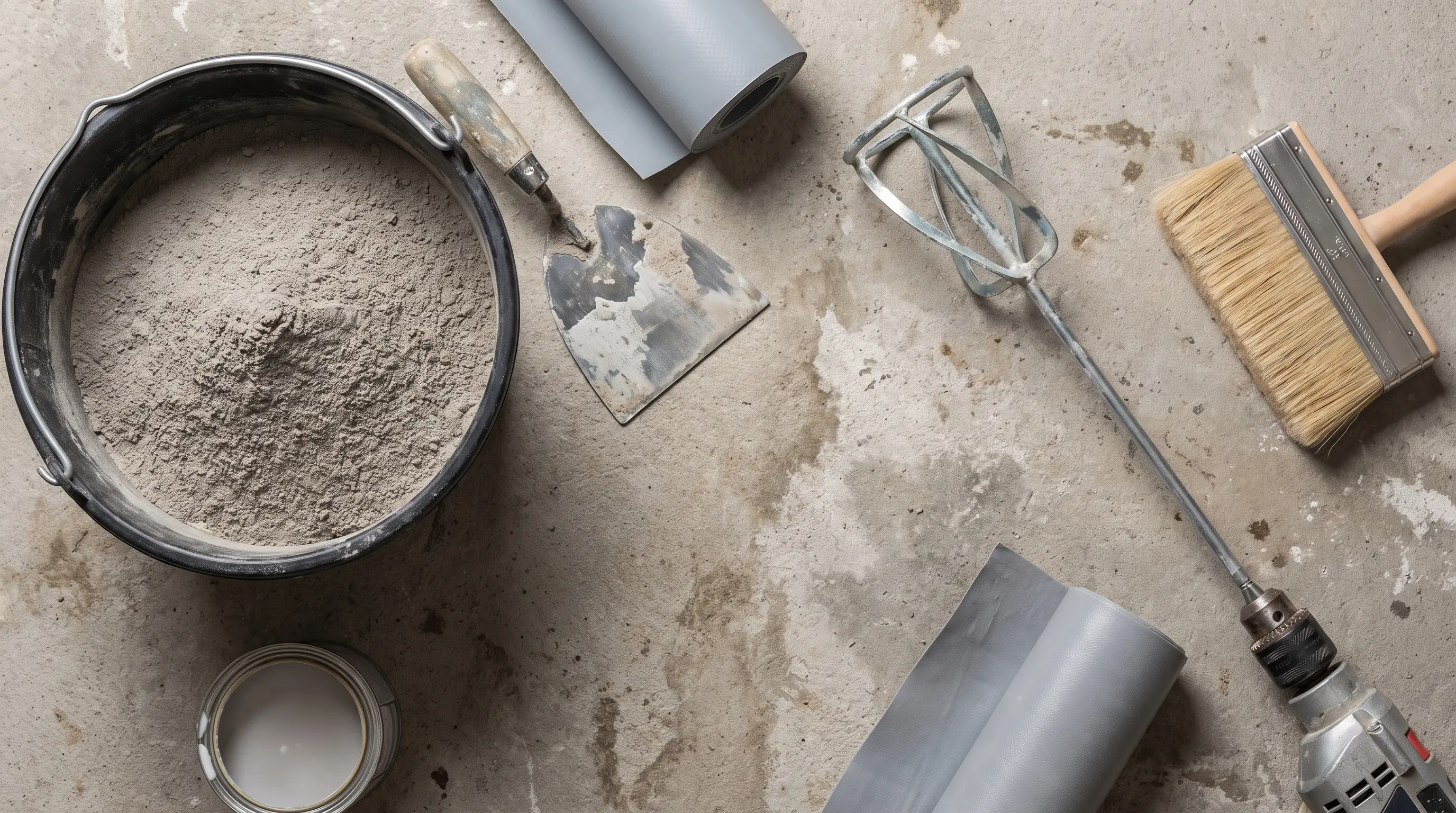
There is no single correct answer to the question "Which is the best waterproofing material?" — because the best material varies according to the problem you are trying to solve. Pressurised water in basement concrete and rising damp on an interior wall require completely different solutions. The wrong material wastes both your money and your time. In this guide we explain step by step the types of waterproofing material, which one is used in which situation, and how to make the right choice.
📌 Short answer: which is the best waterproofing material?
- Basement, concrete retaining wall, water tank (concrete surface): crystalline waterproofing — Crystal 2K
- Water running or gushing through concrete: rapid-setting water plug — N111 Stop
- Damp rising from the base in the lower part of the wall: injection barrier — DampStop Complete Kit
- Blistered, salt-efflorescent plaster on an interior wall: damp-proofing plaster — HydroFix
- Water leaking through cracks and joints: polyurethane injection — PUR-IN (E101)
First ask the right question: where and how is the water coming from?
Before choosing a material, you need to determine three things:
- Source and direction: is the water coming from the positive side (the surface it arrives at) or from the negative side (the opposite side)?
- Surface type: concrete, brick, aerated concrete, existing plaster?
- Type of problem: is it rising damp, an active water leak, condensation or pressurised groundwater?
Once you have clarified these three answers, the right material category emerges on its own.
Types of waterproofing material and their applications
1. Crystalline waterproofing materials
These are cement-based materials that penetrate the pores of the concrete to form a crystal structure and permanently block the passage of water. They are ideal on concrete surfaces such as basements, retaining-wall concrete, water tanks and foundations. They withstand negative and positive water pressure. Product: the Dryvatec Crystal range. Detail: what is crystalline waterproofing.
2. Rising damp injection materials
These are chemical barriers injected into the wall to stop the capillary damp that moves upwards from the base. They are used for rising damp in the walls of old buildings and in ground-floor walls with no contact with the soil; they are not the solution for basement walls set into the soil (there, PU injection and crystalline waterproofing are needed). Product: DampStop Concentrate.
3. Polyurethane and acrylic gel injection
Used for active water leaks, cracks and joint seepage. Polyurethane injection expands on contact with water to fill the void; acrylic gel forms a flexible curtain on surfaces behind retaining walls and in contact with the soil. Products: PU injection, acrylic gel.
4. Damp-proofing plasters
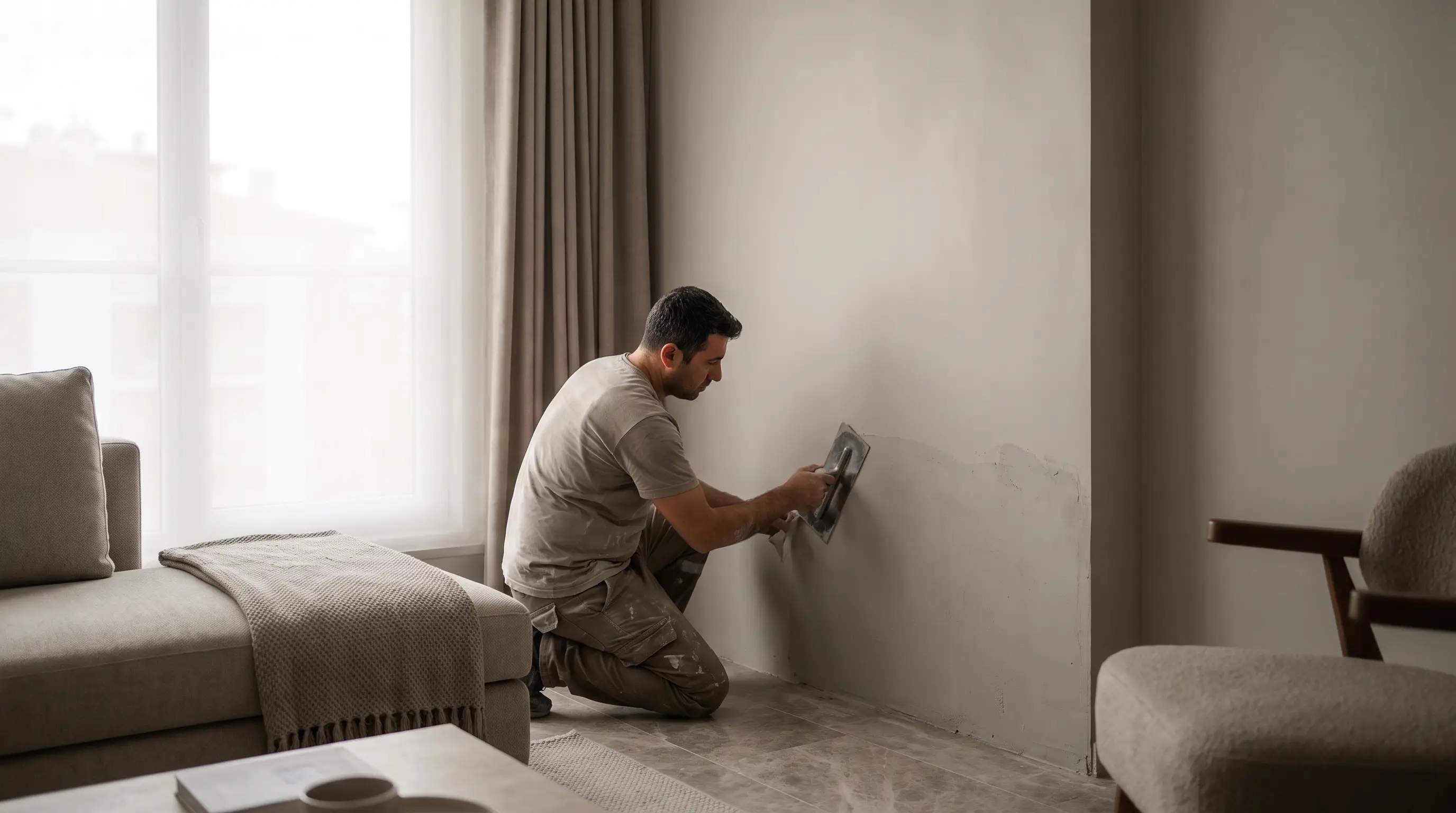
Used for the breathable drying and restoration of interior walls that are damp and showing salt efflorescence. Product: HydroFix Damp-Proofing Plaster. For its difference from paint, see our article on damp-proof plaster or paint.
5. Technical repair mortars and concrete
Used for surface preparation before waterproofing, for repair and for levelling. Product: repair mortar and concrete materials.
Which material for which problem? Quick table
| Problem | Correct material type | Dryvatec product |
|---|---|---|
| Waterproofing in basement concrete | Crystalline | Crystal 2K |
| Rising (capillary) damp in a wall | Injection barrier | DampStop |
| Water running / gushing through concrete | Rapid-setting water plug | N111 Stop |
| Active water leak / crack | Polyurethane injection | PUR-IN (E101) |
| Behind retaining wall / soil contact | Acrylic gel | Gel Injection |
| Interior damp wall | Damp-proofing plaster | HydroFix |
How do I calculate the amount of material?
For surface-applied materials (crystalline waterproofing, HydroFix), determine the surface area (m²). DampStop consumption, however, is calculated not per square metre but by the length of the wall in metres and its thickness: ready-mixed solution, holes 10 cm apart — 1.5 L/m for a 10 cm wall, 2.25 L/m for a 15 cm wall. With these measurements you can find out the amount of material you need within minutes by requesting a quote. If you cannot decide, fill in the Building Information Form; our team will recommend the most suitable material and quantity for your building.
Conclusion
The best waterproofing material is the one most suitable for your problem. First determine the source, direction and surface type of the water; then choose the right category according to the table above. Dryvatec's Triple System approach was designed for exactly this: detect, cut off the source, protect the surface. For support in choosing the right material, get in touch with us.
Not sure which material to choose?
Browse our product range or get a recommendation specific to your building.