
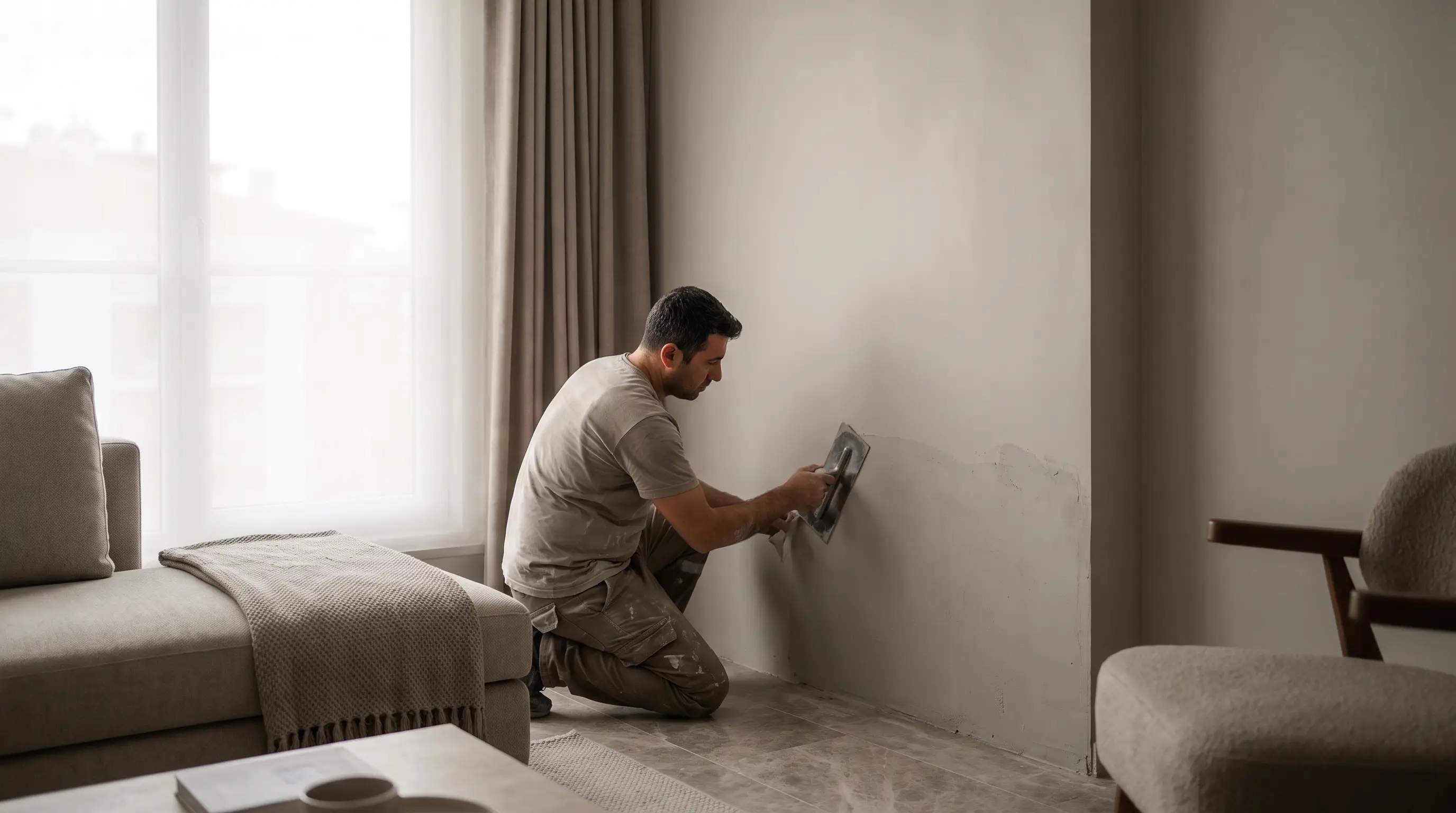
Are your walls suffering from blistering, damp stains, peeling paint and salt efflorescence? When you search for a solution online, two products keep coming up: damp-proof paint and damp-proof plaster. They may sound similar, but what they actually do is completely different. The wrong choice means the same problem returns within a few months, worse than before. In this guide we clearly explain the difference between the two, which one really works and how a permanent solution to wall damp is achieved.
The short answer: paint covers, plaster solves
Damp-proof paint forms a thin film on the wall's surface and tries to keep water outside. But the source of wall damp is usually on the inside; rising damp travels upwards from the ground, while condensation collects on the surface. Moisture whose source has not been cut off becomes trapped behind the paint and, under pressure, blisters and peels it away. In other words, paint hides the problem but does not solve it.
Damp-proof plaster works on a different principle: thanks to its porous, breathable structure it allows the moisture in the wall to evaporate in a controlled way, while trapping harmful salt crystals within itself. This keeps the surface healthy, lets paint adhere and stops the stains from returning. In short, plaster manages the problem, while paint merely covers it over.
If you are looking for a damp-proofing plaster
- HydroFix damp-proofing plaster 10 kg — replaces blistered, salt-efflorescent plaster; a breathable, salt-resistant repair plaster
- DampStop Complete Kit — injection concentrate and application equipment in one box for rising damp at the base of the wall (HydroFix sold separately)
Pay by card or bank transfer/EFT · Free shipping within Türkiye · 14-day returns · Find out how much you need with the consumption calculator.
Damp-proof paint versus plaster: a comparison
| Feature | Damp-Proof Paint | Damp-Proof Plaster (HydroFix) |
|---|---|---|
| Function | Coats the surface | Manages moisture + restores the surface |
| Breathability | Low (forms a film) | High (porous structure) |
| Salt efflorescence | Builds up behind it and lifts the paint | Traps it within itself |
| Durability | Months, if the source continues | Permanent (once the source is cut off) |
| Application layer | Decorative top coat | Load-bearing intermediate layer |

So is damp-proof paint never used?
It is — but not on its own. Paint is the very last and most decorative step of the process. Once the surface has been restored with a breathable plaster and the source of the moisture has been cut off, a breathable interior paint can be chosen as the top coat. If you reverse the order (paint first), both money and effort go to waste.
The permanent solution for wall damp: the right 2-step order
1. Strip the old plaster and apply a breathable plaster
First the blistered, salt-laden old plaster is stripped; in its place, HydroFix Damp-Proofing Plaster is applied so that the moisture remaining in the wall is released in a healthy way. This two-component, polymer-reinforced, cement-based plaster breathes thanks to its porous structure, traps salt and ensures that the paint applied over it lasts. For application details, take a look at our how to apply HydroFix guide.
2. Once the plaster has dried, cut off the source of the moisture
If the problem is rising damp (moisture that climbs from the base and concentrates in the lower 1–1.5 metres of the wall), no matter what you do to the surface, the source continues. This is where the DampStop injection barrier comes in: injected through holes drilled into the wall once the plaster has dried (24–48 hours), it stops the capillary rise of moisture with a chemical barrier. Why this order? Stripping plaster can break open the cells of the bricks; if you inject first, the solution runs out through those breaks. If the plaster goes on first, the injection stays inside the brick without overflowing. You can find out whether the damp really is rising damp in our what is rising damp article and on our Triple System page.
How much material do you need?
To estimate the quantity you need, measure the wall area (m²) for the plaster, and the length of the wall in metres and its thickness for the injection. If you are not sure, fill out our Request a Quote form and our technical team will recommend the right product and quantity for your specific structure.
Conclusion
Damp-proof paint and damp-proof plaster are not alternatives to one another — they are different layers of the same solution. For a lasting result the order is clear: first strip the old plaster and restore the surface with a breathable plaster (HydroFix), cut off the source of the moisture once the plaster has dried (DampStop), and finally apply the decorative paint. Painting alone does no more than postpone the problem by a few months. For a root-and-branch solution to the damp in your walls, get in touch with us.
You may also find these useful: How to paint a damp wall? · What is capillary plaster and does it work?
Looking for a permanent solution to your damp problem?
Dry your walls out for good with HydroFix and DampStop.