
📌 Quick Answer
A damp smell is caused by the MVOC gases released by the mould and bacteria that grow on damp surfaces. Ventilation, bicarbonate of soda, vinegar and desiccants reduce the smell temporarily; but for a permanent solution you must find and eliminate the source of the smell (rising damp, condensation or a water leak). For rising damp, the damaged plaster is first stripped and breathable HydroFix damp-proofing plaster applied; once it has dried, the DampStop chemical injection is carried out, which cuts the smell off at its source.
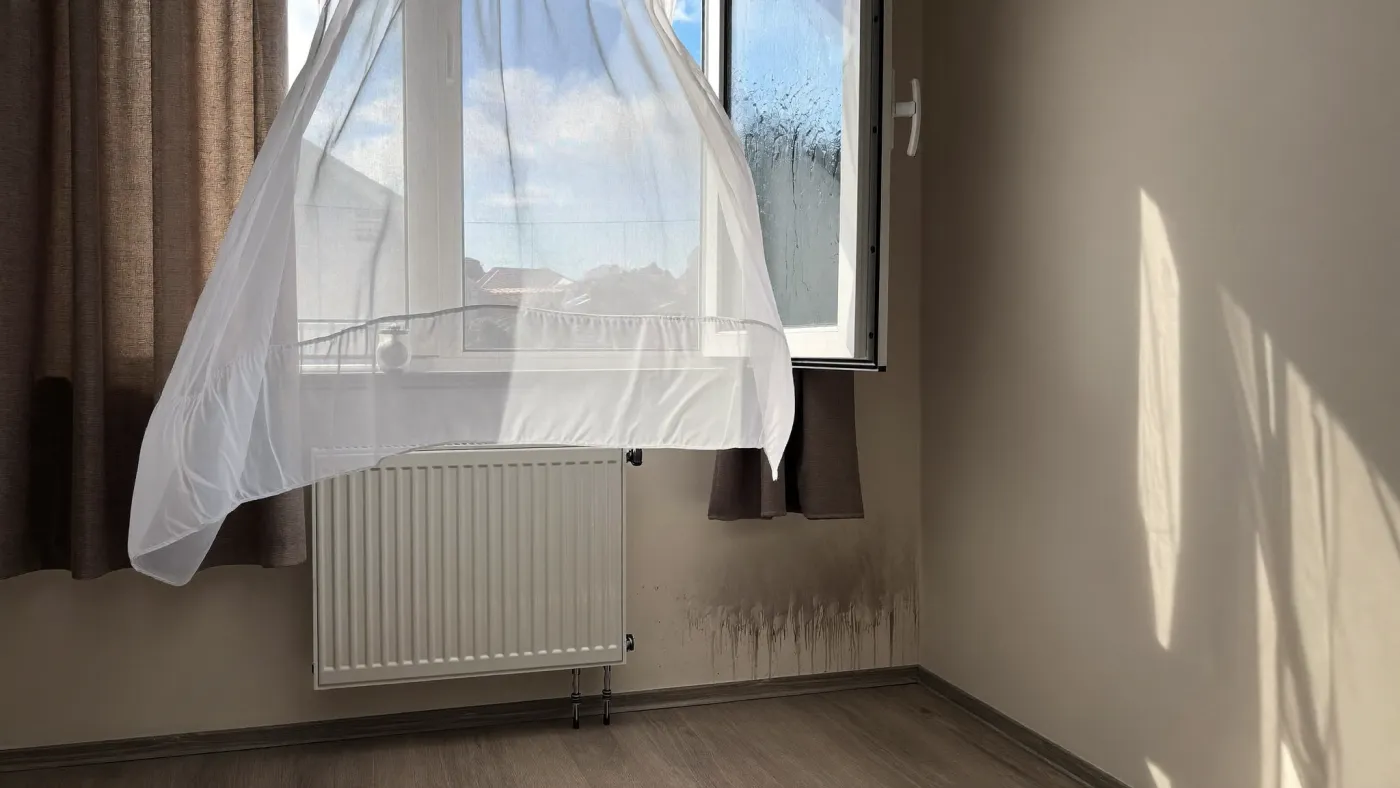
We all know that sharp, musty "basement smell" that hits your nose the moment you walk in the door. Whether it has soaked into your clothes when you open the wardrobe, passed into the towels, or grown stronger as you enter a closed room, this smell is not just unpleasant — it is also the clearest sign of an active damp problem in your home. There is a reason it comes back a few days later no matter how much odour spray you use or how often you open the window: the smell is a symptom, not the problem itself.
In this guide we will explain, step by step, exactly why a damp and musty smell occurs, how to diagnose its source, which temporary fixes work (and why they fall short) and, most importantly, how to get rid of the smell for good. Our aim is to give you both the practical tips you can apply straight away and the permanent solution that means you never smell it again, all in one place.
What Is a Damp/Musty Smell and Why Does It Occur?
A damp smell is a heavy odour, commonly known as a "musty smell" or "mouldy smell", reminiscent of a mix of earth and mould. This smell appears when the humidity in the air rises and surfaces stay constantly damp. But the smell does not come directly from the "water" — water itself is odourless. What creates the smell is the micro-organisms that multiply rapidly in a damp environment.
When a wall, carpet, wooden skirting board or the back of a cupboard stays constantly damp, it creates an ideal habitat for the mould spores, bacteria and fungi in the environment. As these organisms feed and multiply, they release volatile gases as metabolic waste. What our nose perceives as a "musty smell" is a mixture of these gases. So when you notice a damp smell, you are in fact facing an invisible biological activity.
The intensity of the smell depends on the humidity, the lack of ventilation, the temperature and the size of the source. In enclosed spaces that get no sunlight and have poor air circulation, the smell is felt far more strongly. This is why basements, wardrobes, bathrooms and rooms kept closed in winter are the places the smell is most complained about.
The Source of the Mouldy Smell (MVOCs and Mould Spores)
The scientific name for the musty smell is MVOCs — that is, "Microbial Volatile Organic Compounds". As mould and bacteria grow, they release dozens of volatile compounds such as geosmin, 1-octen-3-ol (known as mushroom alcohol) and various aldehydes and alcohols. These gases mix into the air and create that typical "mouldy, earthy" smell.
The most important characteristic of MVOC gases is that the human nose is extremely sensitive to them. That means you can pick up the smell even before the mould is visible or a stain has formed on the wall. In this respect the smell works like an early warning system: it means "there is a hidden damp problem here".
The mould spores themselves also mix into the air and, when inhaled, can cause respiratory irritation, allergic reactions, headaches and asthma attacks. The World Health Organization identifies damp indoor spaces as a significant public health risk. Getting rid of the smell for good also means eliminating these health risks. You can also read our article on health in damp environments, where we cover the subject in detail.
Where Does a Damp Smell Come From? (Rising Damp, Condensation, Water Leaks)
The first requirement for getting rid of the smell for good is to correctly diagnose where the damp is coming from. The source of the damp usually falls into three main categories, and the solution for each is different:
1. Rising Damp
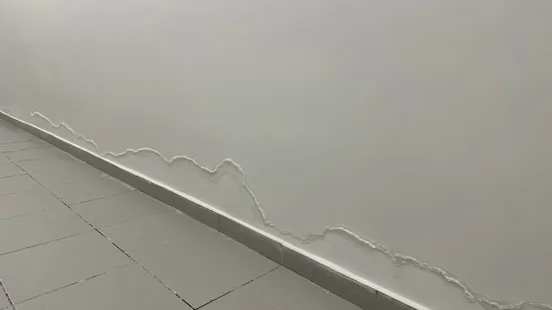
This is where water in the ground rises up through the pores of the wall by capillary action. It usually shows itself on ground and basement floors, in the lower 1-1.5 metres of the wall, as damp stains, blistering plaster, salt efflorescence and an intense mouldy smell. If you see a distinct damp line and salt deposits at the base of the wall, the source is most likely rising damp. For detailed information, see our rising damp guide.
2. Condensation
Warm, humid indoor air turns into water droplets when it touches a cold wall or glass surface. It is seen especially in winter, in the bathroom after a shower, in the kitchen while cooking and around window edges in bedrooms. With condensation, the damp starts from above and from the corners; misting on the glass and black mould at the window edge are typical. The source is excess indoor humidity and poor ventilation.
3. Water Leaks and Ingress
A burst water/drainage pipe, a leaking roof, defective waterproofing or lateral water ingress from outside the building also create localised but intense damp and smell. This type of smell is usually concentrated at a particular point, where an expanding wet stain appears on the floor, ceiling or wall.
Correct diagnosis is critical because the solution varies with the source: injection for rising damp, ventilation and insulation for condensation, and always a repair for a water leak. Even the right method applied to the wrong source produces no result.
Temporary Fixes and Why They Fall Short
Most people who encounter a damp smell first turn to practical, quick fixes. These reduce the smell for a while and are very useful once the source has been solved — but on their own they give no lasting result as long as the source continues to feed the wall. Here are the most common temporary methods:
- Ventilation: creating a through-draught by opening windows on opposite sides several times a day pushes indoor moisture and MVOC gases outside. It is the most effective free method for smells caused by condensation; it is beneficial in all cases but cannot stop a source that continuously feeds water.
- Bicarbonate of soda: bicarbonate of soda placed in small containers absorbs some of the moisture and smell in the space. It works in cupboards and drawers; it needs to be replaced every few weeks.
- Vinegar: white vinegar is used both to clean mould off the surface and to neutralise the odour molecule. It is effective for surface cleaning but does not cut off the moisture inside the wall.
- Desiccant (dehumidifier / silica): electric dehumidifiers or moisture-absorbing containers lower the humidity in the air and slow mould growth. They are very useful in closed rooms and in winter; but they require electricity/maintenance and do not eliminate the source.
- Cupboard measures: not packing the wardrobe too full, not putting clothes away before they are completely dry, keeping the back of the cupboard a few centimetres away from the wall and placing moisture-absorbing sachets reduce the cupboard smell.
What these methods have in common is this: they all manage the symptom, not the source. This is why, even when you think the smell has "gone", it returns within a few days or weeks. For a lasting result, these tips must be applied together with the real solution that eliminates the source. For surface stains, the steps in our article on cleaning mould on walls also help.
How to Get Rid of a Damp Smell for Good
The only way never to smell it again is to stop the mechanism that lets the moisture into the wall. This requires an intervention specific to the source:
If there is rising damp: DampStop injection
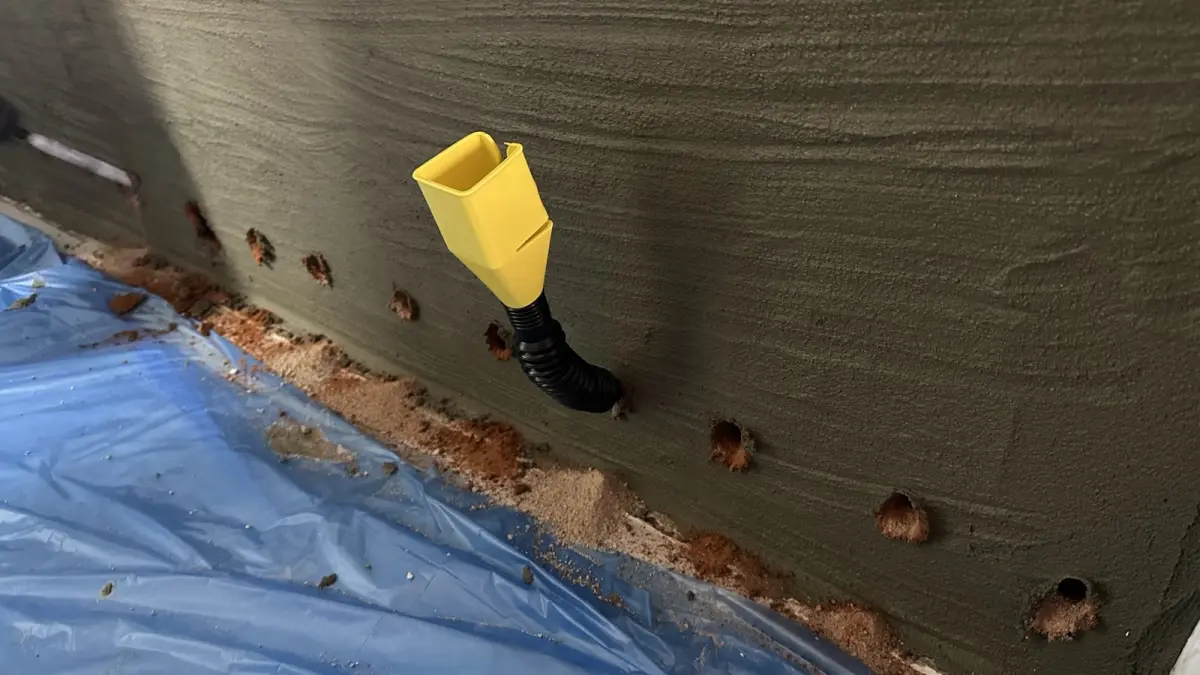
If the source is rising damp, once HydroFix plaster has been applied and has dried, DampStop chemical injection is applied into holes drilled in the lower part of the wall. This silane/siloxane-based chemical forms a water-repellent barrier in the pores of the wall and cuts off the water coming from the ground. Because the source is cut off, the mould cannot feed, it dries out and the smell is gone at the root.
If there is condensation: ventilation and insulation
If the source is condensation, the solution lies in lowering indoor humidity and eliminating cold surfaces: regular ventilation, using an extractor fan in the bathroom/kitchen, thermal insulation where needed and dehumidifiers. These measures prevent water condensing on the cold surface, so mould and smell do not form.
If there is a water leak: repair
If the source is a pipe or roof leak, no surface treatment will be permanent — the leak must be repaired first. Once the leak is fixed, the area is dried out and the plaster renewed if necessary.
Surface restoration: breathable HydroFix plaster
The plaster damaged by salt and moisture is stripped and replaced with HydroFix damp-proofing plaster. With rising damp this step comes before the injection; the holes are drilled once the plaster has dried (24–48 hours). Why? Stripping plaster can break open the cells of the bricks; if you inject first, the solution runs out through those breaks. If the plaster goes on first, the injection stays inside the brick without overflowing. Thanks to its breathable (diffusion-open) structure, it lets the moisture remaining in the wall evaporate without trapping it and protects against salt crystallisation. In this way the wall dries out healthily and the surface is restored aesthetically. As a top coat, a breathable paint should be chosen rather than a plastic-based one.
If you would like to find out how much product your project will need, you can request a quote, and for a diagnosis you can send us photos through the same form; our technical team will assess them online.
Damp Smell Room by Room (Basement, Bathroom, Wardrobe)
Basement and Ground Floor
Because basements are set into the ground, water reaches their walls actively from outside; add poor ventilation and this is why the most intense smell is felt here. DampStop injection is not the solution on a basement wall; stopping the water ingress requires works such as PU injection and crystalline waterproofing, while ventilation and a dehumidifier support the drying period. More detail: Moisture and water ingress in basements.
Bathroom
In the bathroom the smell is mostly caused by condensation and poor ventilation. Running an extractor fan after a shower, leaving the door open for a while and keeping the grout and silicone maintained so they do not harbour mould largely solve the smell. If there is a water leak from the floor or an adjoining wall, the waterproofing should be reviewed.
Wardrobes and Cupboards
The mouldy smell that soaks into clothes is usually caused by the cupboard being up against an external wall with no air circulating behind it. Move the cupboard a few centimetres away from the wall, do not hang clothes that are not completely dry, place a moisture-absorbing sachet or a container of bicarbonate of soda, and if there is damp/mould on the back wall, always investigate the source. If there is rising damp in the external wall, the permanent solution is again injection.
Frequently Asked Questions
Is a damp and musty smell harmful to health?
The smell itself is a warning signal. The mould spores and MVOC gases that cause the smell can lead to respiratory irritation, headaches, allergic reactions and asthma attacks. Children, the elderly and those with allergies are particularly at risk. If the smell is constantly present, there is active damp and biological decay in the environment.
Do bicarbonate of soda, vinegar or coffee get rid of a damp smell?
These methods only mask the smell temporarily or absorb some of the moisture/odour molecules. As long as the source of the moisture persists in the wall, the smell returns within a few days. Bicarbonate of soda, vinegar and desiccants only give a lasting result once the source has been cut off.
Why does a damp smell keep coming back again and again?
Because the smell is a symptom, not a cause. Ventilation, paint or an odour remover only suppress the symptom. Because a source such as rising damp, condensation or a water leak continues to feed the wall, the mould grows again and the smell returns. The permanent solution is to cut off the source.
How long does a damp smell take to go once the source has been cut off?
Once the source of the moisture is cut off (e.g. rising damp by injection) and the affected plaster is repaired, the smell gradually diminishes as the wall dries out. Depending on the wall thickness and ventilation, it can take from a few weeks to a few months; a dehumidifier and regular ventilation shorten this time.
Does ventilation alone get rid of a damp smell?
Ventilation is very effective for mild smells caused by condensation and is beneficial in all cases. However, if there is a source that continuously feeds water, such as rising damp or a water leak, ventilation alone is not enough; the source must also be dealt with.
Want to eliminate the damp smell at the root?
We are here to help you correctly diagnose the source and reach a permanent solution.