
What Is Rising Damp?
Rising damp is a chronic damp problem that arises when water in the ground is drawn upwards through the porous structure of the wall by capillary action. This problem is encountered frequently, especially in old buildings and in buildings without adequate waterproofing. In Türkiye, a significant proportion of buildings have to contend with rising damp because they lack an effective damp barrier between the ground and the foundations.
Rising damp is not a simple aesthetic problem. Over time it damages the internal structure of the wall, reduces the durability of load-bearing elements and causes unhealthy mould growth in living spaces. Diagnosing the problem correctly and solving it permanently both extends the life of the building and protects the health of its occupants.
In this guide, we will look in detail at what rising damp is, how it forms, its symptoms and the most effective solution methods. If you are struggling with wall damp in your home or workplace, this article will offer you concrete ways to solve it.
The Mechanism of Capillary Action
The fundamental physical mechanism behind rising damp is capillary action, also known as capillarity. Capillary action is the phenomenon whereby a liquid moves upwards, against gravity, within a narrow channel or a porous material. It occurs when the adhesion force between the liquid molecules and the channel wall is greater than the cohesion force between the liquid molecules themselves.
Building materials such as brick, mortar, natural stone and concrete have a porous structure at the micro level. These pores form thousands of tiny channels through which water molecules can move upwards. Water in the ground can rise within the wall through these channels. The smaller the diameter of the pores, the greater the capillary rise.
In a typical brick wall, capillary action can draw water up to a height of 1 to 1.5 metres. However, this height can vary depending on factors such as evaporation, salt build-up and the porosity of the material. For more detailed information, you can read our article What Is Capillary Action?.
Trees also use capillary action to carry water from their roots to leaves tens of metres above. The same physical principle applies in walls.
The Symptoms of Rising Damp
It is important to distinguish rising damp from other types of damp, because the solution method depends directly on the source of the moisture. The typical symptoms of rising damp are as follows:
Wall Stains and Discolouration
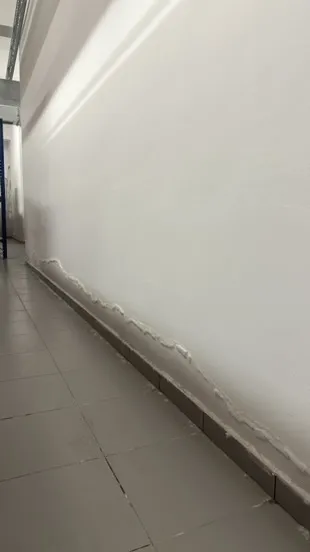
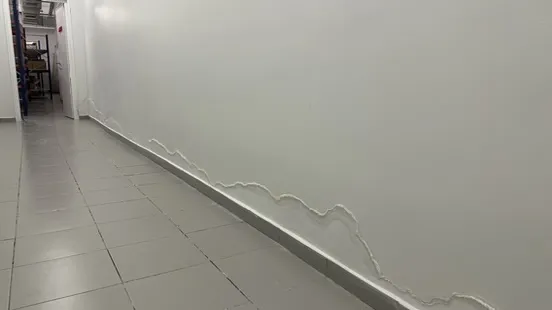
The most obvious sign of rising damp is the damp stains that form at the base of the wall. These stains usually start at ground level and extend up to a certain height (typically between 50 cm and 150 cm). The stains are usually bounded by a horizontal line; this line marks the maximum level to which the moisture can rise. Over time the stains darken and cause permanent discolouration of the wall surface.
Salt Formation (Efflorescence)
Water in the ground dissolves various mineral salts from the soil and carries them within the wall. When the water evaporates, these salts remain on the wall surface as a white, powder-like layer. This phenomenon is called efflorescence (salt efflorescence). Over time the salts erode the wall's plaster and paint, contributing to structural deterioration.
Mould and Fungal Growth
Wall surfaces that stay permanently damp create an ideal environment for mould and fungi to grow. Mould growth is common especially in corners with inadequate air circulation, behind furniture and in basements. Mould can cause serious harm to both the building and human health. We recommend reading our detailed article on the health effects of living in a damp environment.
Peeling Paint and Plaster
Damp prevents paint and plaster from adhering to the wall surface. Over time the paint blisters, cracks and begins to peel. The plaster softens, swells and falls away in pieces because of the damp. This is not just an aesthetic problem; the exposed wall surface is subjected to more moisture, accelerating the problem.
Musty Smell
Damp walls give off a characteristic smell of mould and moisture. This smell becomes especially noticeable when doors and windows are closed. The smell is a reliable indicator that there is active damp and biological growth in the space.
The Causes of Rising Damp
There are several causes that lead to rising damp. Understanding these causes is critically important for choosing the right solution.
High Groundwater Level
A high groundwater level on the land where the building is constructed exerts constant water pressure on the foundations. This is common especially by rivers, in stream beds and on low-lying land. Seasonal rainfall and snowmelt can raise the groundwater level even further. In many regions of Türkiye, especially in the coastal areas of the Black Sea, Marmara and Aegean, a high groundwater level is a serious source of the problem.
Inadequate or Damaged Waterproofing
In modern buildings, a damp barrier called a DPC (Damp Proof Course) is placed between the foundations and the wall. In older buildings, however, this barrier may be absent or may have been damaged over time. In the vast majority of buildings constructed in Türkiye before 1990, no adequate DPC was installed. In addition, it is a common problem for existing DPC materials to lose their function due to ageing, cracking or chemical degradation.
Drainage Problems
Inadequate rainwater drainage around the building causes water to accumulate at the foundations and penetrate into the wall. Blocked gutters, faulty underground drainage, incorrectly graded ground surfaces and plants at the edge of the foundations are the main causes of drainage problems.
Ground Level Differences
When the external ground level of the building is higher than the internal floor level, water from outside penetrates into the wall under pressure. Landscaping carried out over time, raised pavements or soil fills can worsen this situation.
How Much Material Does Your Wall Need?
Tell us your wall dimensions and our technical team will work out exactly how much HydroFix and DampStop you need.
Temporary Solutions and Why They Don't Work
The methods homeowners first turn to when faced with rising damp are usually temporary solutions aimed at hiding the symptoms. These solutions mask the problem in the short term but can make the situation worse in the long run.
Waterproof paints or plastic coatings cause the moisture to become trapped inside the wall and to seek a way out through other points of the structure.
Repeated Painting and Plastering
Painting or plastering a damp wall is one of the most common temporary solutions. But as long as the source of the moisture is not removed, the new paint and plaster will also peel within a short time. Moreover, each new layer of plaster stops the wall from breathing, causing moisture to build up inside the wall and structural damage to increase. The cost of repainting once or twice a year eventually exceeds the cost of a permanent solution. For a detailed cost comparison, take a look at our cost guide.
Waterproof Paint and Coatings
Although waterproof paints or plastic coatings appear to stop moisture reaching the wall surface, they do not actually solve the problem at its root. The moisture becomes trapped inside the wall and seeks a way out through other points of the structure. This can lead to more serious damage within the wall and to damp leaks appearing in unexpected places.
Ventilation Alone
Good ventilation can help surface damp to dry out, but it does not remove the source of rising damp. As long as the constant supply of water from the ground continues, ventilation alone cannot be a solution.
The Permanent Solution: the DampStop + HydroFix System
A permanent solution to rising damp requires stopping the capillary rise of moisture physically or chemically. The DampStop + HydroFix system offered by Dryvatec solves this problem at its root using modern chemical barrier technology.
HydroFix Injection Fluid
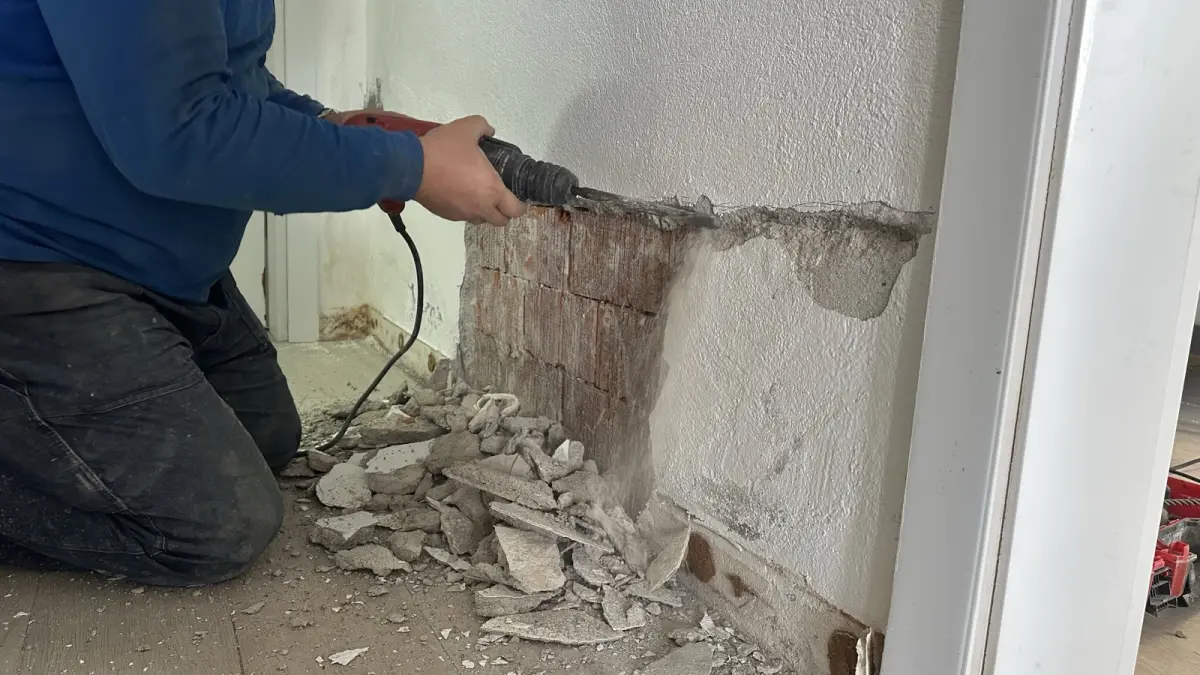
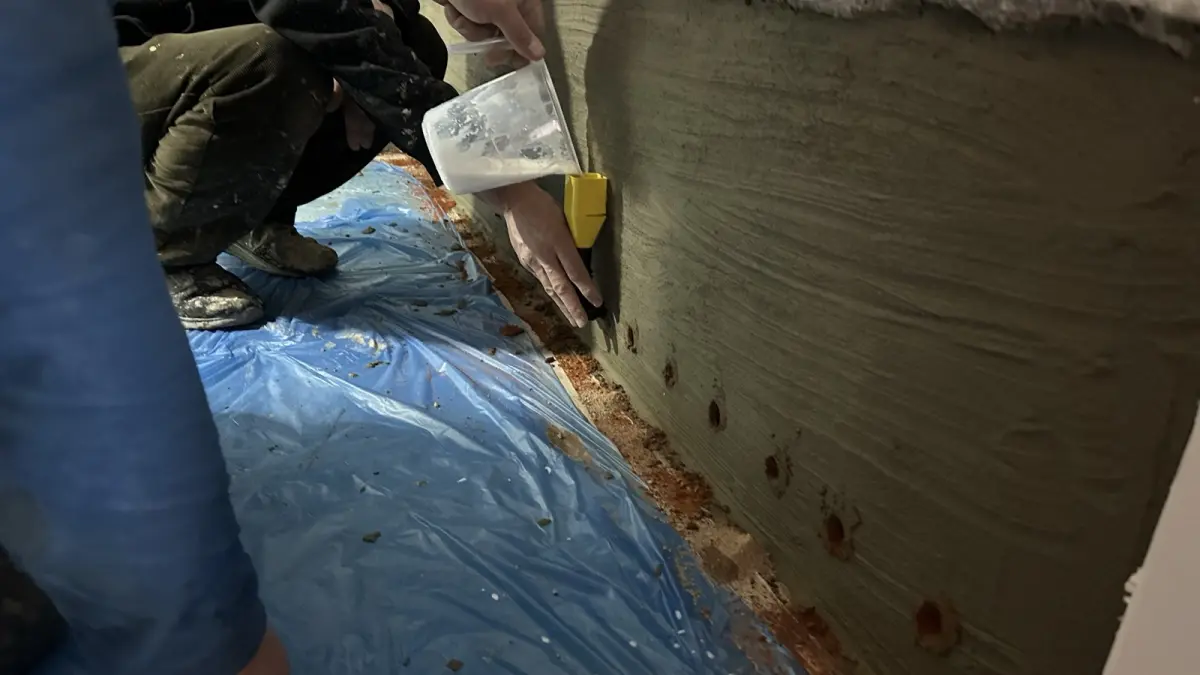
HydroFix is a silane/siloxane-based chemical injection fluid that penetrates the pores within the wall. Injected into holes drilled at regular intervals in the lower part of the wall, HydroFix forms a water-repellent (hydrophobic) layer on the inner surfaces of the pores. This layer blocks the progress of water rising by capillary suction and creates an effective chemical DPC (Damp Proof Course).
The advantages of HydroFix:
- Applied without damaging the wall structure
- Does not clog the pores, allowing the wall to breathe
- Provides long-lasting protection
- You can apply it yourself (DIY)
For step-by-step application details, take a look at our How to Apply HydroFix guide.
DampStop Damp Barrier
DampStop is a surface protection product used after the HydroFix application. It protects the part of the wall above the damp barrier, allows the remaining moisture to evaporate quickly and keeps the surface clean. When the two products are used together, you get a comprehensive solution that both cuts off the capillary path and protects the surface.
Why DampStop + HydroFix?
This two-part system offers significant advantages over traditional mechanical DPC methods: there is no need to cut into or demolish the wall during application, the intervention to the structure is minimal, the application time is much shorter and it is far more economical in cost. It is also simple enough for you to apply yourself. Using our Request a Quote form, you can easily get the amount of material needed for your wall.
When Should You Call in an Expert?
It is important to point out that rising damp requires professional support in some cases. We recommend consulting an expert in the following situations:
- If the source of the damp is unclear: If you cannot tell rising damp, condensation and leaks apart, a professional damp survey is needed.
- If there is structural damage: If there is visible cracking, crumbling or bowing in the wall's load-bearing elements, an engineer's opinion should be sought.
- If large areas are affected: If more than one wall or floor is affected, a comprehensive assessment should be carried out.
- If previous interventions have failed: If solutions applied in the past have not worked, the source of the problem should be reassessed.
The Dryvatec technical team can offer you a tailored solution via our contact page or by filling out our Request a Quote form.
Frequently Asked Questions
Does rising damp go away on its own?
No. Rising damp does not go away on its own unless its source is removed. Its severity may decrease seasonally, but the problem persists. As long as the capillary action mechanism is active, water will continue to rise within the wall.
Does rising damp only occur in old buildings?
No. Rising damp can also occur in new buildings due to inadequate DPC installation, damaged waterproofing or a high groundwater level. Statistically, however, the problem is more common in buildings over 30 years old.
What is the difference between rising damp and condensation?
Rising damp moves upwards from the ground and is usually seen up to a certain height in the lower part of the wall. Condensation, on the other hand, forms when moisture in the air condenses on cold surfaces and is usually seen on windows, external walls and upper areas. Salt formation and a distinct damp line are the distinguishing features of rising damp.
Put an End to the Damp in Your Walls
Request a tailored assessment of the material your wall needs, or browse our products now.