
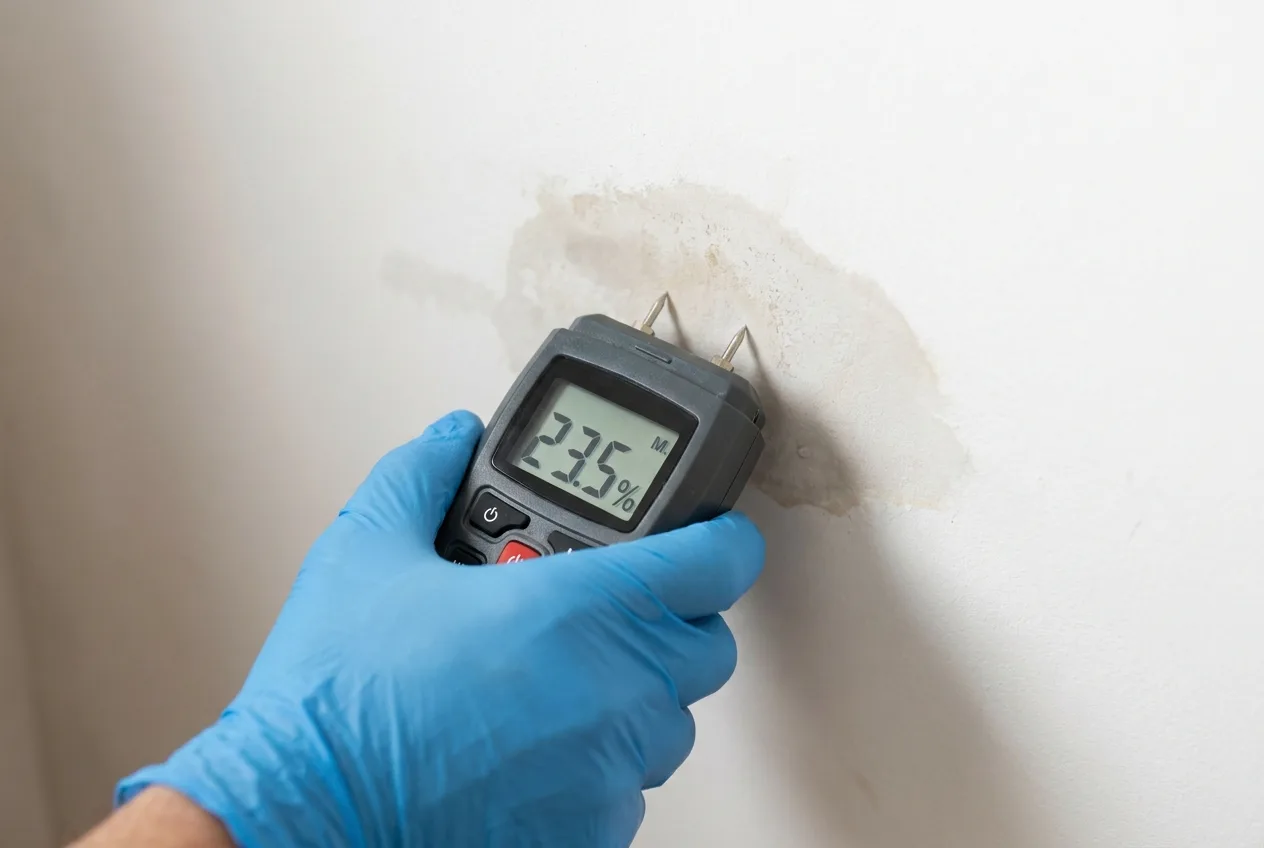
Short answer: The Damp Box (Nem Kutusu) is a drying device that uses a very-low-frequency electromagnetic wave to carry capillary moisture in the wall back into the ground. It needs no chemicals and no breaking open, consumes 3–5 watts, covers about 900 m² and is made in Türkiye. Its main job is to carry water reaching the building's foundations and rising in the columns back into the ground. DampStop injection and HydroFix damp-proofing plaster work only in the wall elements (brick, Ytong/aerated concrete, concrete block); they cannot reach the foundations and columns. Used together, the three resolve rising damp in the walls, the foundations and the columns.
The name "damp box" is often misunderstood: some take it for an injection method, others for a device that pulls moisture out of the air. It is neither. In this article we explain in plain terms what the Damp Box is, which part of the building it works on, how it works together with DampStop and HydroFix, how it is installed and when to expect results.
What is the Damp Box?
The Damp Box is a small electronic device that is mounted on a load-bearing wall of the building and runs permanently plugged into a socket. It emits a very-low-frequency electromagnetic wave; this wave weakens the upward climb of water in the capillaries and lets the water sink back into the ground by gravity. No chemicals are used, no holes are drilled and no plaster is stripped.
- Power consumption: 3–5 watts
- Coverage: about 900 m², building-wide
- Installation: hung on a load-bearing wall with 2 screws and wall plugs; the adapter is plugged into a socket
- Maintenance: none; no water tank, filters or consumables
- Production: made in Türkiye, CE marked
Which part of the building does the Damp Box work on?
Rising damp travels through a building along two different routes. The first is the wall elements: brick, Ytong/aerated concrete and concrete block. The second is the reinforced concrete structure: the foundations and columns. The foundations, resting on the ground, take up water; the water also rises in the columns.
DampStop injection and HydroFix damp-proofing plaster work in the wall elements. Neither of them can reach the foundations and columns. That part is the Damp Box's job: it carries water reaching the foundations and rising in the columns back into the ground.
| Product | Where does it work? | What does it do? |
|---|---|---|
| HydroFix damp-proofing plaster | Wall elements (brick, Ytong/aerated concrete, concrete block) | Applied in place of the stripped old, damp plaster; renews the wall surface with a waterproof yet breathable layer. |
| DampStop injection | Wall elements | Cuts the capillary damp path at the base of the wall. |
| Damp Box | Foundations and columns (building-wide, about 900 m²) | Carries water reaching the foundations and rising in the columns back into the ground. |
Together, the three make up the Dryvatec triple system. If only the walls are treated, damp coming from the foundations and columns can persist. That is why all three are applied together for a definitive solution: HydroFix and DampStop in the wall elements, the Damp Box for the foundations and columns.
First the old, damp plaster is stripped, then HydroFix damp-proofing plaster is applied; once the plaster has dried (24–48 hours), the holes are drilled and the DampStop injection is carried out. Why? Stripping plaster can break open the cells of the bricks; if you inject first, the solution runs out through those breaks. If the plaster goes on first, the injection stays inside the brick without overflowing. Installing the Damp Box does not depend on this order; the device is hung on the wall and plugged in.
How does the Damp Box work?
A water molecule has a positive and a negative end. In the fine capillaries inside walls and concrete, this electrical attraction lets water climb upwards against gravity. The very-low-frequency wave emitted by the Damp Box weakens this attraction. Once the force that keeps the water climbing weakens, gravity takes over and the water sinks back into the ground. As it goes, it also carries away part of the dissolved salts that cause salt stains.
As long as the device is running, new water is also prevented from rising. That is why the Damp Box is never unplugged: when the field stops, drying stops.
How it differs from a dehumidifier
The Damp Box is not a dehumidifier. A dehumidifier pulls moisture out of the room air, collects water in a tank and does not touch the damp inside the wall; when it is switched off, the damp returns. The Damp Box deals not with the air but with the building itself.
| Feature | Dehumidifier | Damp Box |
|---|---|---|
| What does it target? | Moisture in the room air | Water reaching the foundations and rising in the columns; capillary moisture in the structure |
| Water tank | Yes, has to be emptied | None |
| Power consumption | 200–500 W | 3–5 W |
| Coverage | One room | About 900 m², building-wide |
Installation rules
No tradesperson is needed. The device is hung on the wall with the 2 screws and wall plugs supplied in the box, and its adapter is plugged into a socket. For best results, follow these rules:
- Central area of the building: the device is placed in the central area of the building so that its field covers the whole building.
- Load-bearing wall: it is mounted directly on a load-bearing wall; a non-load-bearing partition wall is not suitable.
- Height: it is placed between 25 cm and 1 m above the floor.
- Away from electronics: it must be at least 1.5 m away from electronic devices such as televisions, routers and household appliances.
- Always plugged in: the device stays connected to power at all times; it is not unplugged at night or during holidays.
- Do not move it: the mounting position is not changed later; check occasionally that the LED indicator is lit.
In the box: 1 Damp Box device, 1 accessory box, 1 × 12V / 1A adapter, 2 screws and wall plugs, user manual and CE declaration of conformity.
When will you see results?
The Damp Box does not deliver instant results. The effect can be tracked with moisture measurements from the first weeks; complete drying takes 6–12 months depending on wall thickness. It is normal for the damp stain on the surface to remain visible for a while in the first months; what matters is the downward trend in the measurements.
- Take moisture readings at a few points before installation, and repeat them at the same points in months 3, 6 and 12.
- Ventilate the room regularly so that the moisture released from the wall does not stay in the room.
Is the Damp Box enough in a basement?
No, in a basement it is not a stand-alone solution. In basements, semi-basements and walls buried in the ground, water does not rise from below but enters actively from outside, usually at the joint where the concrete wall sits on the foundation. Stopping this water requires works such as PU injection and crystalline waterproofing. We explain this in detail in our article on basement damp and water ingress.
The Damp Box is also not the solution for damp caused by an active leak, a plumbing fault or condensation; the source must be dealt with first.
The Damp Box and the triple system

Dryvatec Damp Box
Carries water reaching the foundations and rising in the columns back into the ground. No chemicals, no breaking open; 3–5 W, about 900 m².
50.000₺ incl. VAT View Product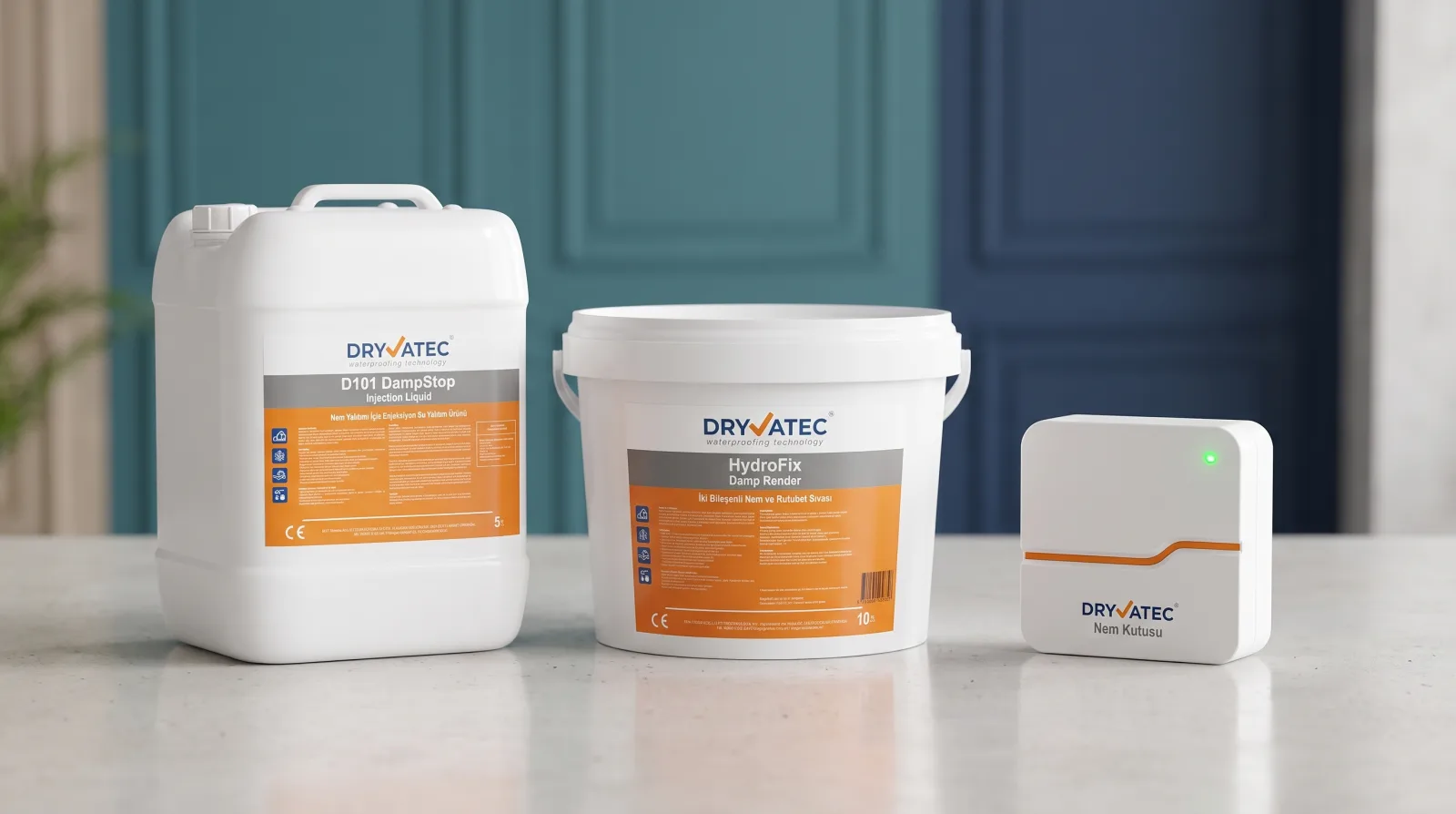
Dryvatec Triple System
HydroFix damp-proofing plaster and DampStop injection in the wall elements, the Damp Box for the foundations and columns: one combined solution to rising damp.
Explore the Triple SystemPay by card (Ziraat 3D Secure) or bank transfer/EFT — for bank transfer call 0850 532 6 999 · No cash on delivery or instalments · Free shipping within Türkiye · 14-day right of return
Frequently Asked Questions
Is the Damp Box an injection method?
No. The Damp Box is an electromagnetic drying device that works without drilling holes in the wall and without chemicals. The injection is DampStop, which is applied to the wall elements. The Damp Box carries water reaching the foundations and rising in the columns back into the ground.
Is the Damp Box enough on its own?
The Damp Box deals with damp in the foundations and columns. If there is also rising damp in the wall elements (brick, Ytong/aerated concrete, concrete block), it is applied together with HydroFix damp-proofing plaster and DampStop injection as the triple system for a definitive solution.
How many square metres does the Damp Box cover?
It covers an area of about 900 m² and acts across the whole building. To make the most of this coverage, it is mounted on a load-bearing wall in the central area of the building.
How long does the Damp Box take to show results?
The effect can be tracked with moisture measurements from the first weeks. Complete drying takes 6–12 months depending on wall thickness; the device must stay plugged in throughout.
How much electricity does the Damp Box use?
It consumes 3–5 watts. The device must stay plugged in at all times; it needs no maintenance, filters or water tank.
Can the Damp Box be used in a basement?
In basements and walls buried in the ground, water enters from outside, so the Damp Box alone is not the solution there. PU injection and crystalline waterproofing are needed. Send your photos with the free building information form and our technical team will assess them.
Related Guides
- Basement damp and water ingress: why is injection not enough?
- Dryvatec Triple System: HydroFix + DampStop + Damp Box
- How to apply HydroFix: step-by-step guide
- What is damp injection? Step-by-step application guide
- Which damp remover actually works?
Where is the damp in your building coming from?
Send photos of the base of the walls, the base of the columns and the damp areas; we will assess free of charge which product is needed where.