
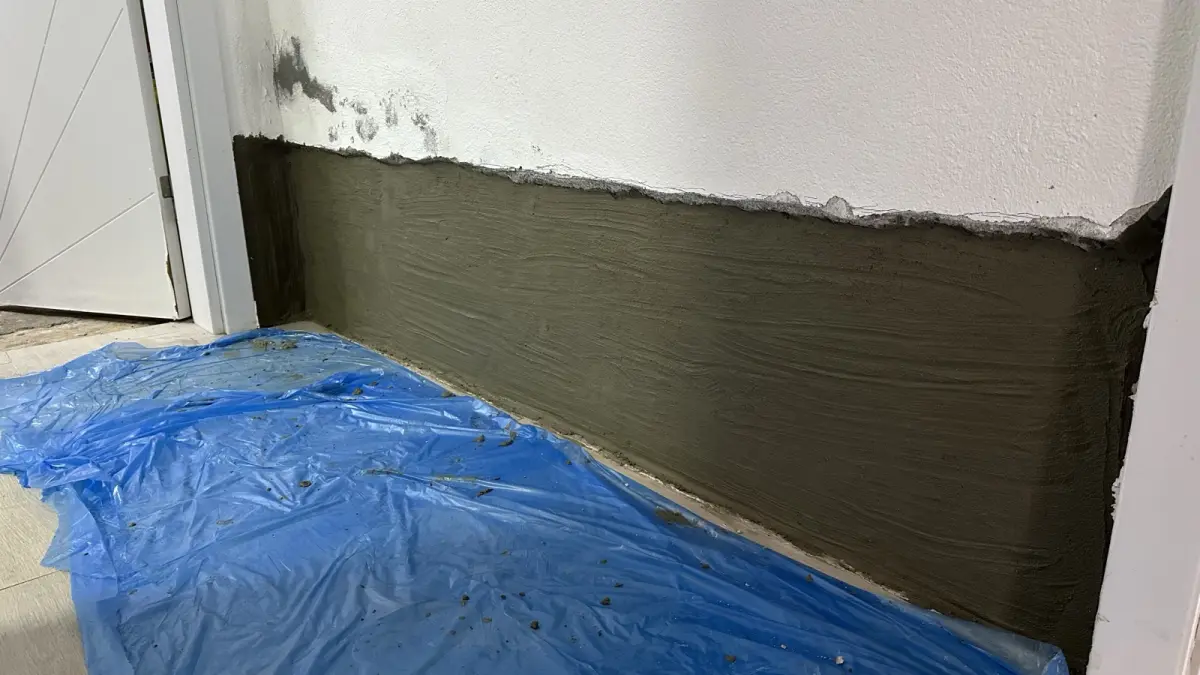
Short answer: "Capillary plaster" is the name given to cement-based damp-proofing plasters that stop water in the wall from reaching the surface by capillary action. Applied to the right surface at the right thickness, it keeps the wall surface dry and protects the paint. However, it does not stop moisture rising inside the wall: the moisture may show itself above the level where the plaster ends or on neighbouring walls that have not been plastered. That is why, for damp rising from the base of the wall, capillary plaster gives the most lasting result together with an injection damp-proof course.
Most people who call in a tradesman about a damp problem hear the suggestion "let's do capillary plaster". The same sentence came up in two separate conversations with our chat assistant: "Capillary plaster was applied to the wall; there are no marks left on our side, but it continues in the flat next door." So what exactly does capillary plaster do, and where is it enough?
What is the capillary effect?
Materials such as brick, concrete and plaster contain fine channels invisible to the eye. Water moves through these channels upwards and sideways against gravity, just as a paper napkin soaks up water. This is the basic mechanism of damp rising from the ground into a wall. A detailed explanation: What is capillary action?
The difference between ordinary plaster and capillary plaster
| Ordinary plaster / gypsum | Capillary damp-proofing plaster (HydroFix) | |
|---|---|---|
| Capillary water transfer | Absorbs water and carries it to the surface | Stops capillary water transfer |
| Water vapour | Varies | Micro-porous structure; vapour can escape (it breathes) |
| Salts | Blisters and crumbles when salts crystallise | Salt-resistant |
| Binder | Cement, lime or gypsum | Cement (contains no gypsum), polymer-modified, two-component |
Dryvatec HydroFix: technical summary
- 10 kg of powder + 100 ml of liquid additive; mixed with 2 litres of water and used within 30 minutes.
- 2–2.5 mm per coat, 3–4 mm in total (3 mm recommended); the second coat after 6–8 hours, in the opposite direction.
- Covers approximately 4.5–5 m² in a single coat and 2–2.5 m² in two coats.
- Application temperature +5 °C to +30 °C; dries in 24–48 hours at 20 °C and can be painted after at least 3 days.
- On mineral surfaces such as brick, fair-faced concrete, plaster, pumice block and aerated concrete; indoors and on walls only (not on floors or ceilings).
When is capillary plaster enough?
- Together with injection, when renewing a damaged surface: the old plaster is stripped and the capillary plaster applied first, and the injection is carried out once the plaster has dried. Stripping plaster can break open the cells of the bricks; if you inject first, the solution runs out through those breaks.
- Where the moisture in the wall is slight and the aim is to protect the surface.
- As an interim solution where the source cannot be cut off for now but the paint should last longer.
When is capillary plaster not enough?
- If there is active rising damp inside the wall: The plaster protects the surface, but the water continues to rise inside the wall; the mark may move above the level where the plaster ends. What cuts off the source is an injection damp-proof course at the base of the wall.
- If groundwater is pressing against the wall (basements): With negative-side water pressure, it needs to be supported with injection or crystalline systems.
- If rainwater is getting in through the exterior wall: The external source must be repaired first; HydroFix is not used on exterior façades. See What to do about a wall letting in water from outside.
- If the neighbouring or adjoining wall has not been treated: Moisture continues to rise through the untreated wall. See Can damp spread to another wall?
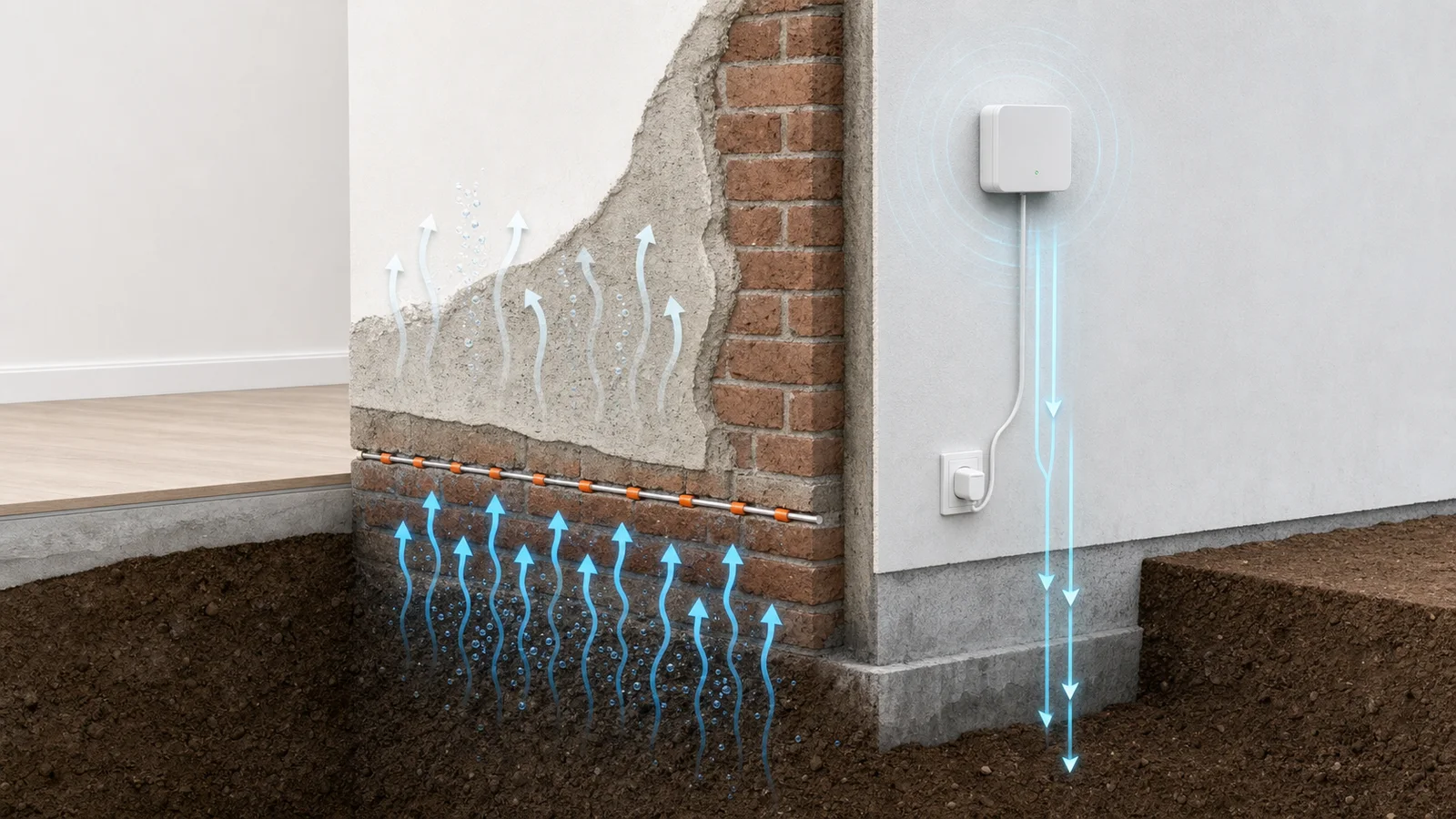
Capillary damp-proofing plaster and injection
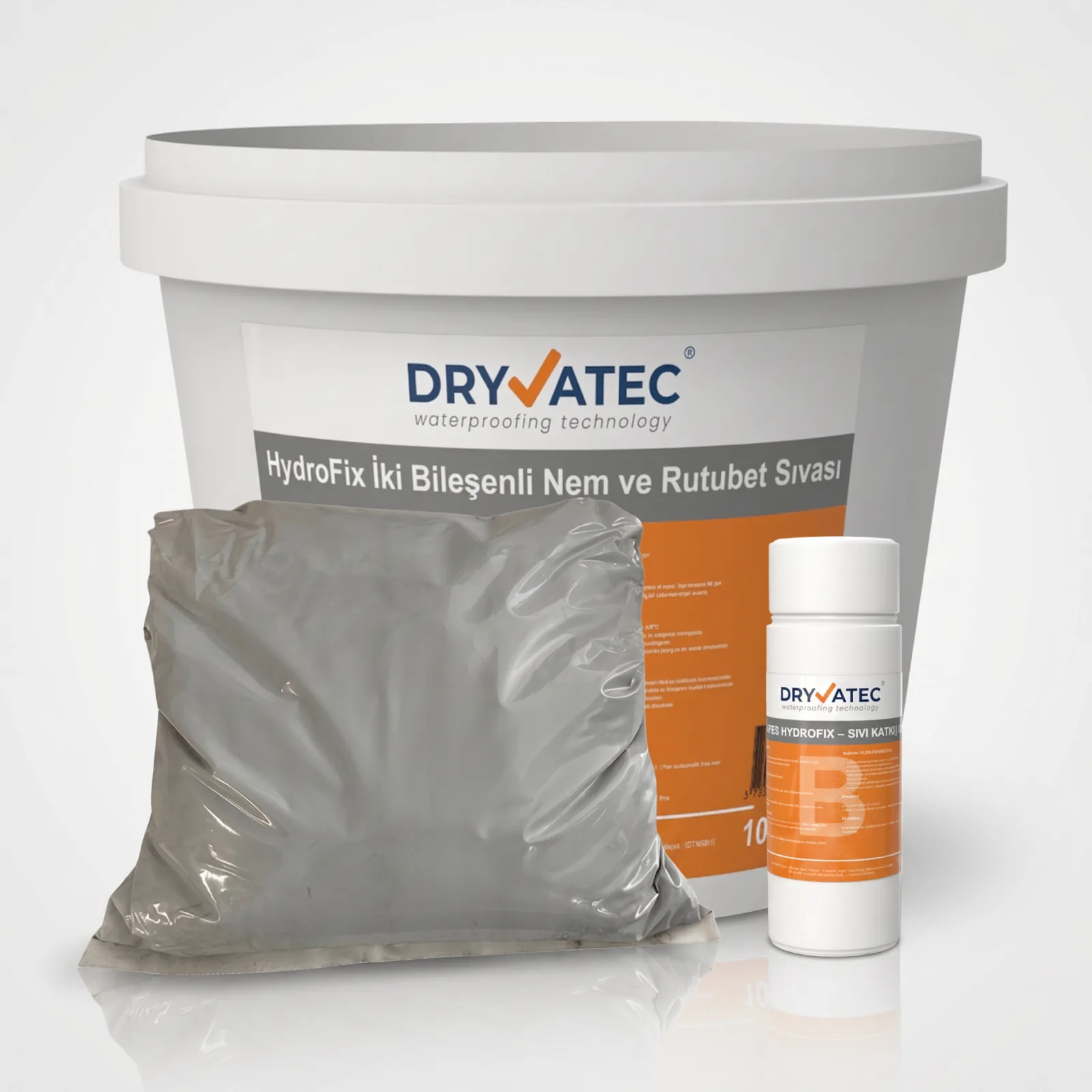
HydroFix 10kg Damp-Proofing Plaster
Dryvatec's capillary moisture-barrier plaster: 10 kg of powder + 100 ml of liquid additive, 4.5–5 m² in a single coat, breathable structure.
1.500₺ incl. VAT View Product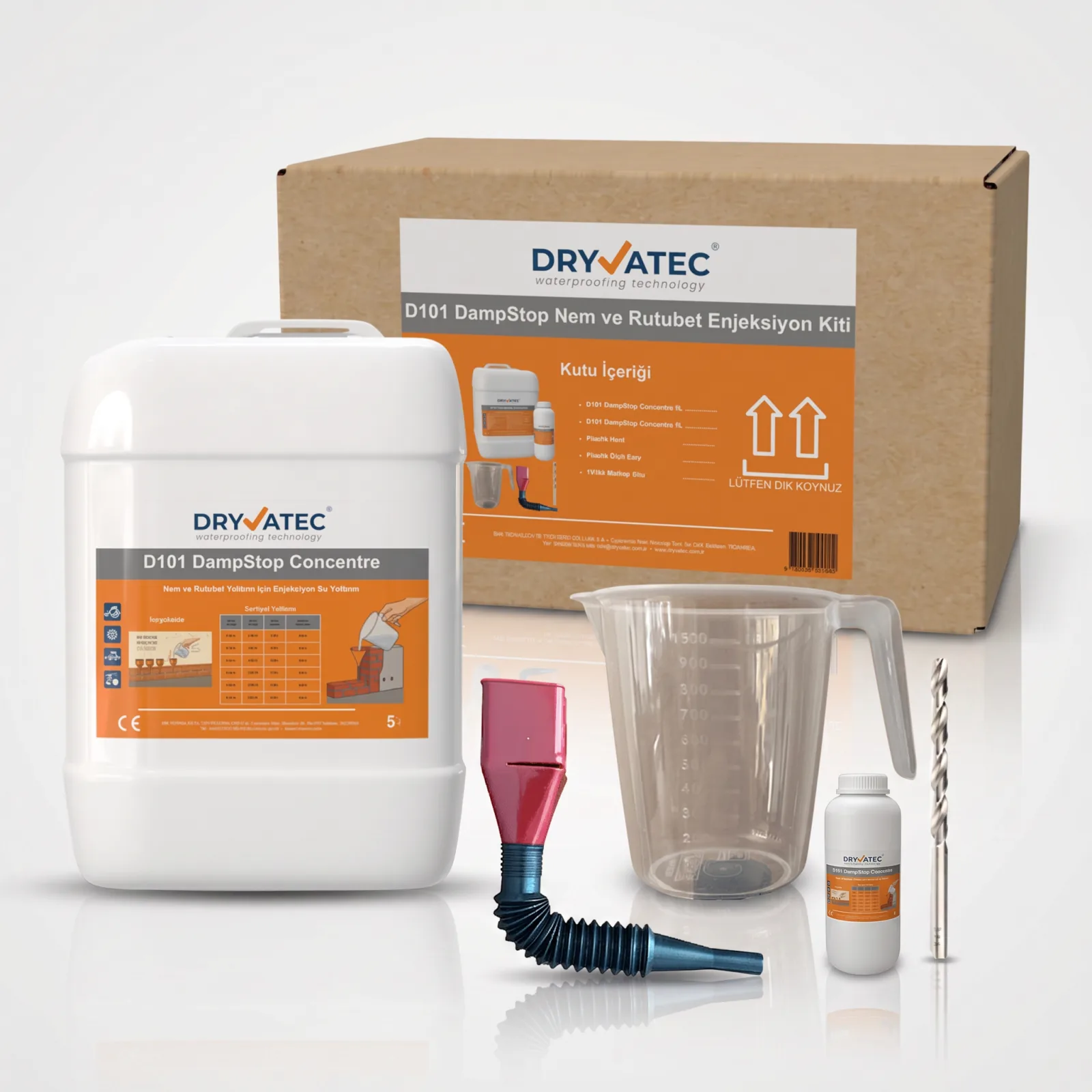
DampStop Complete Kit
If there is rising damp inside the wall, an injection damp-proof course alongside the capillary plaster: concentrate + equipment.
8.700₺ incl. VAT View ProductPay by card (Ziraat 3D Secure) or bank transfer/EFT — for bank transfer call +90 850 532 6 999 · No cash on delivery or instalments · Free shipping within Türkiye · 14-day right of return · Work out the quantity with the consumption calculator.
How is capillary plaster applied?
Blistered paint and damaged plaster are stripped until the mineral surface is exposed, the surface is brushed and lightly dampened if necessary, the mix is prepared and applied in two coats, and once it has dried for at least 3 days it is painted with a breathable paint. A step-by-step explanation: How to paint a damp wall. The HydroFix application guide on the product page and the 93-second video also show all the steps.
Frequently Asked Questions
What is capillary plaster?
It is the name given to cement-based damp-proofing plasters that stop water in the wall from reaching the surface by capillary action. Because it lets water vapour escape, the wall continues to breathe.
Does capillary plaster stop rising damp?
It protects the surface but does not stop moisture rising inside the wall. For a permanent result against damp rising from the base of the wall, an injection damp-proof course at the base of the wall and capillary plaster on the surface are applied together.
How many mm thick is capillary plaster applied?
For HydroFix, 2–2.5 mm per coat is applied, 3–4 mm in total over two coats (3 mm recommended). The second coat is applied in the opposite direction once the first coat has dried (6–8 hours).
Can you paint over capillary plaster?
Yes. Once the plaster is visibly dry, wait at least 3 days, then apply primer and a vapour-permeable paint. Plastic and oil-based paints are not recommended.
Is capillary plaster used on exterior façades?
HydroFix is an interior product and is not used on exterior façades. For exterior façades, crystalline waterproofing products are recommended.
Related Guides
- What is capillary action?
- Damp-proof plaster or paint?
- How to apply HydroFix
- Can damp spread to another wall?
- Triple System: injection + damp-proofing plaster + Damp Box (Nem Kutusu)
Is capillary plaster enough on its own?
Send a photo of your wall; we will tell you free of charge whether injection is needed.