

When most people see black-and-green mould stains on a wall, the first solution they reach for is anti-mould paint. It seems logical: cover the mould and stop it coming back. Yet after a few months the mould usually returns in the same spot — often even more widespread. So does anti-mould paint really work, or does it merely buy you time? In this article we explain the real cause of mould and how a permanent solution to mould on walls is achieved.
What anti-mould paint can and cannot do
Thanks to the fungicidal (anti-fungal) additives they contain, anti-mould paints delay mould growth on the painted surface for a while. This is a real but temporary effect, because mould is a result, not a cause. The true cause of mould is moisture; as long as the source of the moisture persists, the mould re-emerges through the pores of the paint, through the joints and at the points where the fungicidal effect has weakened.
In short, anti-mould paint suppresses the symptom but does not remove the cause. If the damp continues, the paint's protection has a limited lifespan.
When is anti-mould paint enough?
If the mould is only on condensing surfaces such as a bathroom ceiling or window reveals, and the ventilation has been fixed, anti-mould paint applied to the cleaned surface gives good results. If the mould appears in the lower part of the wall together with damp stains or blistering plaster, the problem is damp rising from the base; in that case paint alone is not enough and the source of the damp must be cut off first (the 3 steps below).
Products used when the mould comes from damp
- HydroFix damp-proofing plaster 10 kg — replaces blistered, salt-efflorescent plaster; a breathable, salt-resistant repair plaster
- DampStop Complete Kit — injection concentrate and application equipment in one box for rising damp at the base of the wall (HydroFix sold separately)
Pay by card or bank transfer/EFT · Free shipping within Türkiye · 14-day returns · Find out how much you need with the consumption calculator.
Why does mould keep coming back? (The real cause: damp)
Mould fungus needs three things to grow: moisture, an organic surface and stagnant air. The most critical of these that you can control is moisture. Damp in a wall usually comes from the following sources:
- Rising damp: moisture that rises from the ground by capillary action (concentrated in the lower part of the wall). More detail: what is rising damp.
- Condensation: warm, humid air turning into water droplets on a cold surface (window edges, external wall corners).
- Water leak: a plumbing leak or water ingress through the façade.
- Poor ventilation: moisture that builds up in spaces such as bathrooms, kitchens and basements.
Any surface treatment carried out without solving this source (wiping, bleach, anti-mould paint) only buys time. We covered the relationship between damp and mould in detail in our article on the difference between damp and mould.
The definitive solution to mould on walls: 3 steps
1. Clean the mould off the surface
First clean the existing mould off the surface with a suitable cleaner and dry the area thoroughly. This is only a starting step — on its own it is not enough.
2. Cut off the source of the moisture
If the problem is rising damp, the DampStop injection barrier stops the capillary rise of moisture; the injection is carried out after the HydroFix plaster in step 3 has been applied and has dried. If it is caused by condensation, improve the ventilation. If there is a water leak, repair the plumbing. To identify the true source of the moisture, the Triple System approach and professional moisture measurement are used.
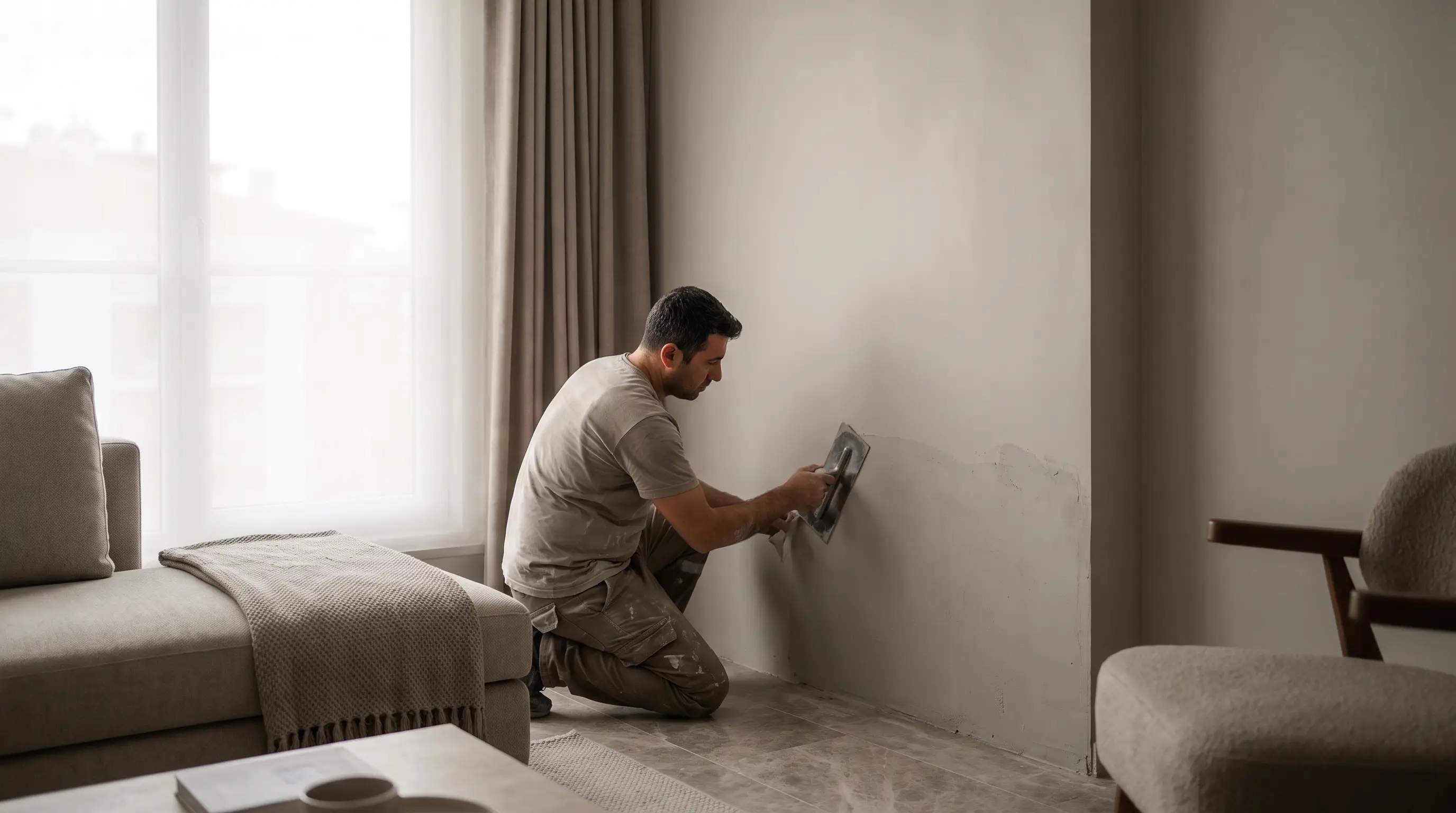
3. Restore the surface with a breathable plaster
Strip the damaged plaster and restore the surface with HydroFix Damp-Proofing Plaster. With rising damp this step comes before the injection: first the old plaster is stripped and HydroFix applied, then once the plaster has dried (24–48 hours) the DampStop injection is carried out. Why? Stripping plaster can break open the cells of the bricks; if you inject first, the solution runs out through those breaks. If the plaster goes on first, the injection stays inside the brick without overflowing. Its breathable, porous structure lets the wall dry out healthily and eliminates the damp base on which mould would take hold again. If you wish, you can then apply a breathable interior paint (optionally with an anti-mould additive) over this layer — but the main protection now lies in the right system, not in the paint. For the difference between paint and plaster, see: damp-proof plaster or paint.
Conclusion
Anti-mould paint is not useless; but on its own it is not a permanent solution. Mould is a symptom, damp is the cause. For a lasting result the order is clear: clean the mould and identify the source of the moisture; with rising damp, first strip the damaged plaster and apply a breathable plaster (HydroFix), then, once it has dried, cut off the source of the moisture (DampStop). When these steps are followed, the mould does not return and your home becomes both healthier and longer-lasting. For a solution tailored to your building, fill in the Request a Quote form.
You may also find these useful: How to paint a damp wall?
If you want to keep mould from coming back
Cut off the source of the moisture and restore the surface with the right system.