
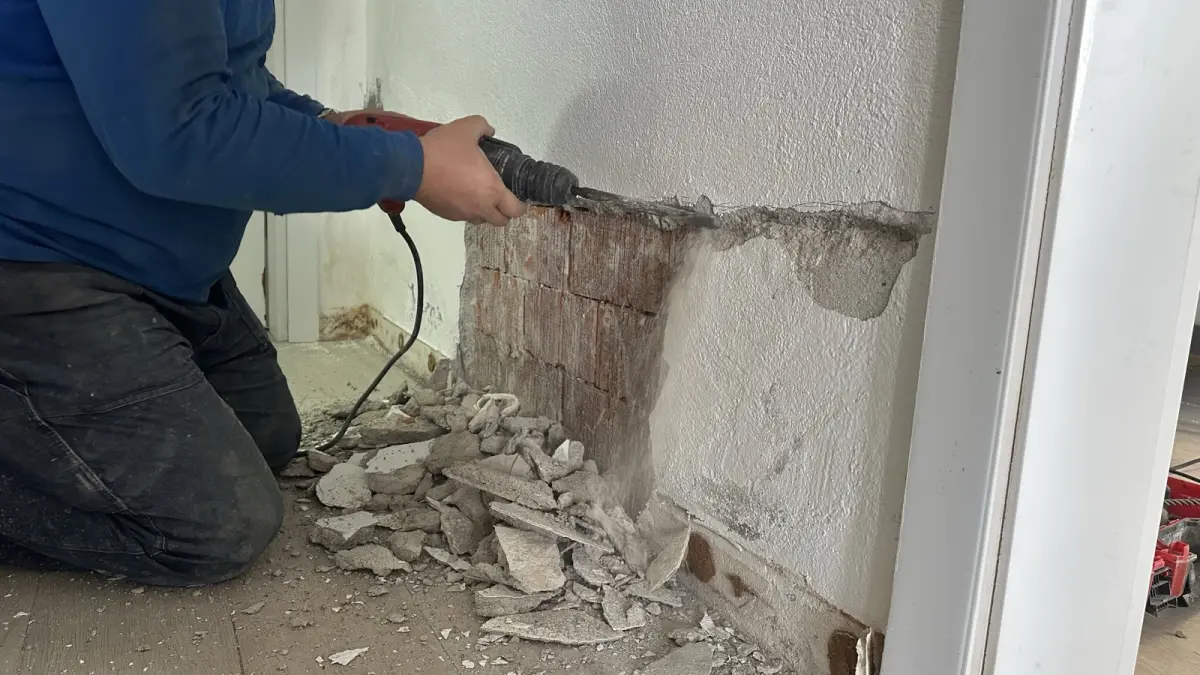
Short answer: Covering a damp wall with plasterboard, wood panelling, wallpaper, foam panels or stone-effect cladding hides the damp but does not stop it. The moisture stays behind the covering; mould grows there, the covering swells or its adhesive lets go, and the damp often reappears above where the covering ends. If you are going to cover the wall, the source of the damp must first be identified, the damaged plaster renewed with a breathable damp-proofing plaster (with rising damp, the injection is done once this plaster has dried), and the wall allowed to dry.
Many people who are tired of blistering paint arrive at the same point: "If I cover it with something so it can't be seen, that's enough." The wish is very understandable; but covering a damp wall in most cases does not postpone the expense, it increases it. Below we explain how common types of covering behave on a damp wall, and the correct order of work.
Why doesn't covering fix damp?
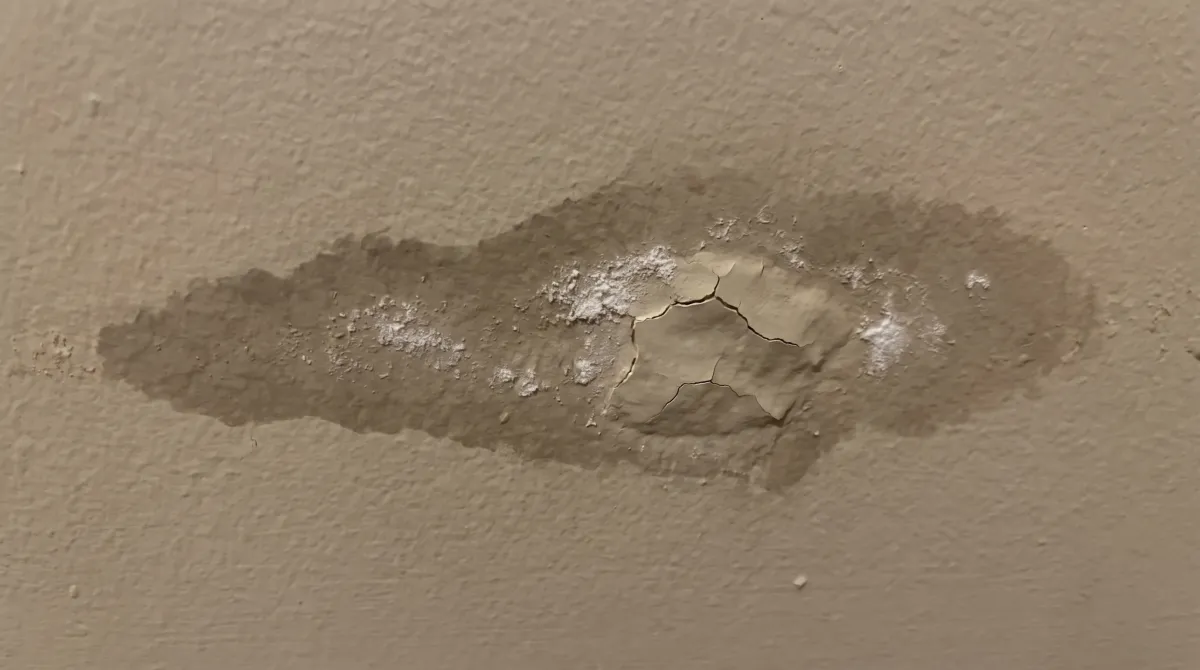
A damp wall constantly takes in water and balances it by evaporating that water from its surface. When you cover the surface, evaporation slows down or stops; the moisture builds up behind the covering. This dark, damp, airless cavity is ideal for mould. In addition, the water looks for somewhere it can evaporate and shows itself at the top edge of the covering or on the side walls. Because the source stays the same, the problem grows; it just becomes invisible.
What happens with each type of covering?
| Covering | What happens on a damp wall? |
|---|---|
| Plasterboard (gypsum board) | Gypsum absorbs moisture and softens; mould forms in the cavity behind it. Moisture-resistant (green) boards are meant for wet rooms, but they do not fix the wall's own damp. |
| Wood panelling | Wood absorbs moisture; swelling, warping, mould and odour appear. |
| Wallpaper | Vinyl wallpapers in particular do not let vapour through; the paper blisters, the seams open and mould stains form underneath. |
| Foam / polystyrene / PVC panels | Seal the surface completely; moisture and mould build up between the panel and the wall. |
| Stone- or brick-effect cladding, ceramic tiles | The adhesive weakens on a damp, salty surface; salts come out through the joints as white marks, and pieces may fall off. |
This table does not mean these coverings are bad; all of them can be used without problems on a dry wall. The problem is applying them to a damp wall. The same logic applies to paint: How to paint a damp wall.
What to do before covering
- Identify the source: Is it rising damp from the ground (base of the wall), condensation (corners, ceiling, around windows) or a leak (gets worse with rain)? See the guide to removing wall damp.
- Cut off the source: For a leak, repair the leak; for condensation, ventilation and heating. For rising damp, DampStop injection at the base of the wall, but only after the plaster (see below).
- Strip the damaged plaster: Blistered, powdery plaster is scraped off until the mineral surface is exposed.
- Renew the surface with damp-proofing plaster: HydroFix stops capillary water transfer and lets water vapour escape; 2–2.5 mm per coat, 3–4 mm in total over two coats.
- With rising damp, carry out the injection: Once HydroFix has dried (24–48 hours), the holes are drilled and DampStop is injected at the base of the wall; after at least 48 hours the holes are filled. Why this order? Stripping plaster can break open the cells of the bricks; if you inject first, the solution runs out through those breaks. If the plaster goes on first, the injection stays inside the brick without overflowing.
- Wait for it to dry: At least 3 days for the plaster; for the old moisture inside the wall to come out can take weeks to months depending on wall thickness. Not covering the surface again during this period speeds up drying.
- Then cover or paint: Once the wall has dried, the covering of your choice can be applied. Where possible, choose vapour-permeable materials.
Cut off the damp before covering
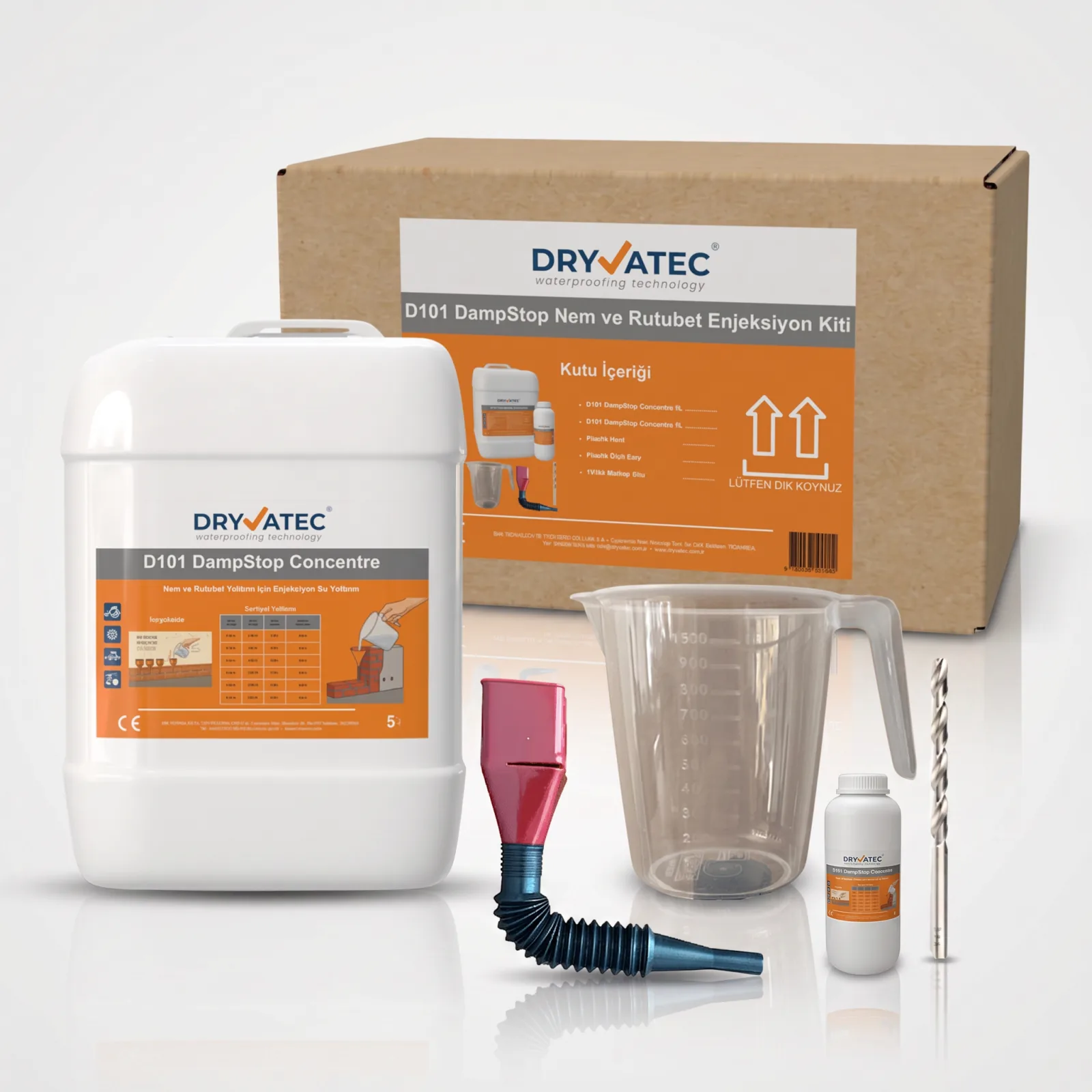
DampStop Complete Kit
Injection concentrate + equipment for damp rising from the base of the wall, so no moisture is left behind the covering.
8.700₺ incl. VAT View Product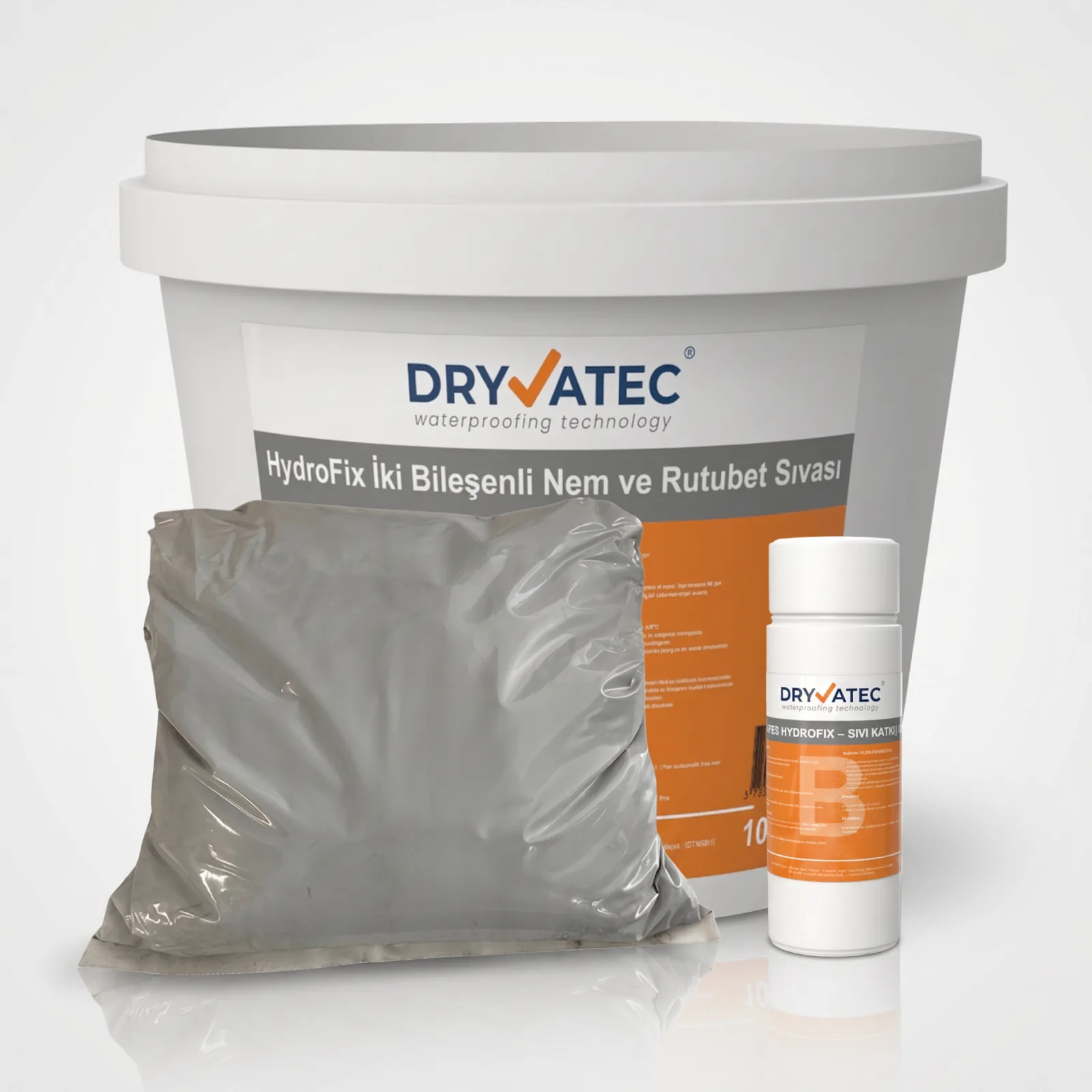
HydroFix 10kg Damp-Proofing Plaster
The surface before covering or painting: a breathable interior damp-proofing plaster that stops capillary water transfer.
1.500₺ incl. VAT View ProductPay by card (Ziraat 3D Secure) or bank transfer/EFT — for bank transfer call +90 850 532 6 999 · No cash on delivery or instalments · Free shipping within Türkiye · 14-day right of return · Work out the quantity with the consumption calculator.
If you rent or do not want any demolition
If you cannot strip and re-plaster the wall, covering it is still not a permanent solution. Rising damp in the wall is still solved in the wall itself: the old plaster is stripped, HydroFix is applied and, once it has dried, the DampStop injection is carried out. The Damp Box (Nem Kutusu) does not replace this: it carries water reaching the foundation and rising in the columns back into the ground and is added as part of the triple system when there is also damp throughout the building and at the base of columns (it is fixed to a load-bearing wall with two wall plugs, plugged into a socket and consumes 3-5 watts). Once the wall has dried, it can safely be covered or painted.
Frequently Asked Questions
Can you put plasterboard on a damp wall?
It is not recommended. Plasterboard absorbs moisture, mould forms in the cavity behind it, and the damp reappears where the board ends. First the source of the damp must be cut off and the wall must dry.
Can you hang wallpaper on a damp wall?
No. Vinyl wallpapers in particular do not let water vapour through; the paper blisters, the seams open and mould forms underneath. Wallpaper should only be applied to a wall whose source has been cut off and which has dried out.
Can you put wood panelling on a damp wall?
Wood panelling absorbs moisture; swelling, warping and mould appear. Fitting panelling before the damp has been fixed is not advisable.
What should be done before covering a damp wall?
The source is identified; any leak or condensation is fixed. The damaged plaster is stripped and the surface is renewed with a breathable damp-proofing plaster; with rising damp, the injection is carried out once the plaster has dried. The covering is applied once the wall has dried.
Related Guides
- How to paint a damp wall
- A definitive fix for wall damp
- What is capillary plaster, and does it work?
- How much does damp treatment cost?
- Mould and black stains
Fix the damp before you cover the wall
Send a photo of your wall; we will recommend the right order of work and product quantities free of charge.