📌 In short
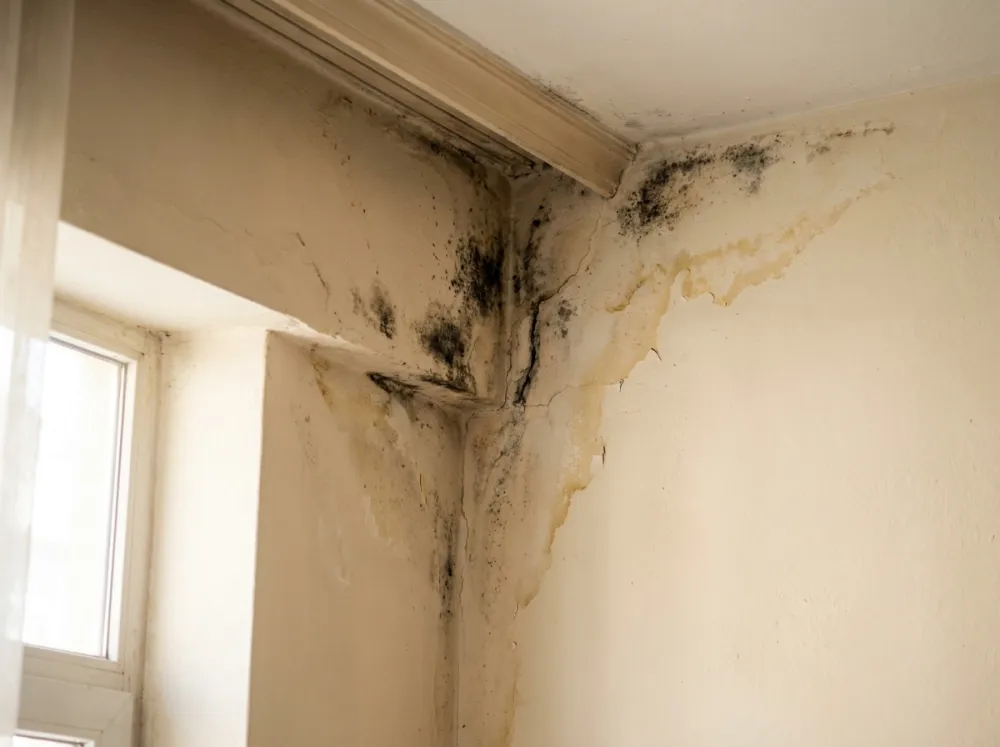
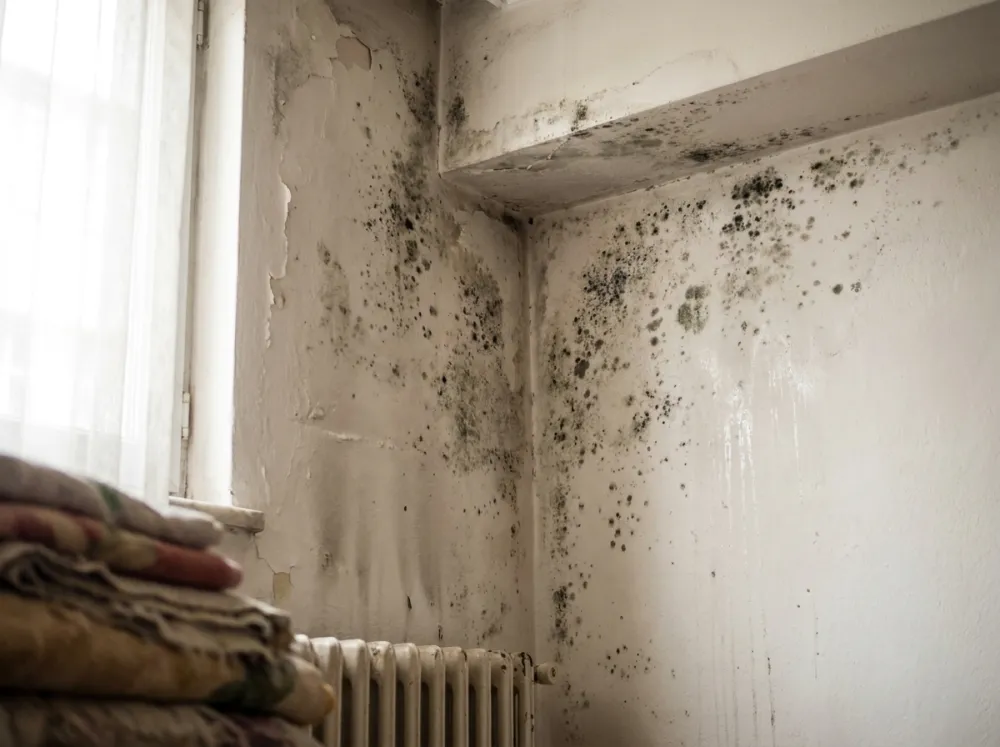
The black-green stains on your wall are mould: a fungal colony that multiplies on damp surfaces. Mould is a symptom — the real problem is the moisture reaching the wall. That is why wiping it, painting over it or spraying mould killer only works temporarily; until the moisture source (rising damp, condensation or a water leak) is solved, the mould returns within a few weeks. The permanent fix: find and stop the source of the moisture, clean the surface safely and protect it with breathable plaster.
What Are the Black Stains on the Wall?
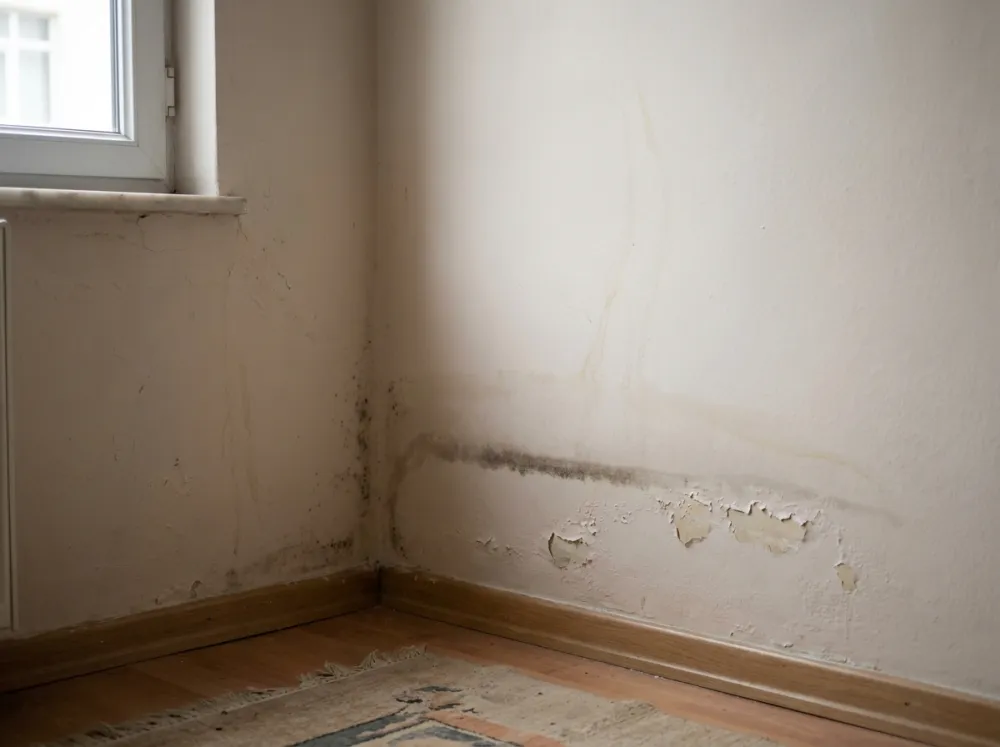
Mould, which appears as black, greenish or grey staining, is a fungal colony that multiplies on damp surfaces. Mould spores are always present in the air; you cannot eliminate them completely. For the spores to grow into a colony on a wall, they need only one thing: constant moisture. Food (paint, gypsum, dust) and warmth are already present in every home.
So the rule is simple: wherever there is mould, there is moisture. If you only clean away the visible trace, the same damp surface will host a new colony within a few weeks.
Important: Mould Is a Health Issue
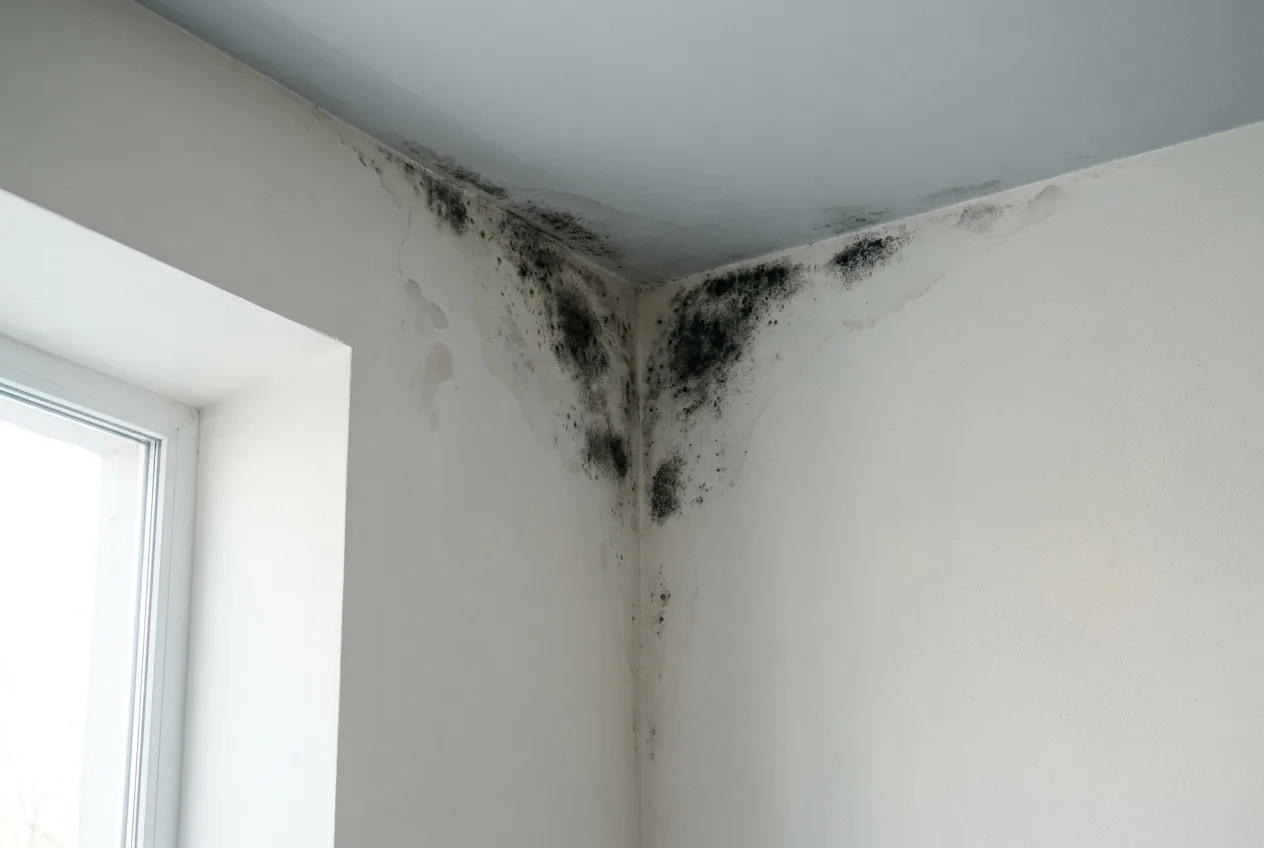
Mould is not merely a cosmetic problem. Colonies continuously release spores and volatile substances into the air; these can trigger coughing, sneezing, burning eyes, headaches and allergic reactions. The risk is more serious for asthma and allergy sufferers, babies and people with weakened immune systems. If there is mould in a bedroom or a child's room, we recommend not putting the problem off. For more detail, see is damp harmful to your health.
Where Is the Moisture Coming From? (3 Possible Sources)
The first step towards a permanent solution is correctly diagnosing the moisture that feeds the mould. The location of the mould gives you a strong clue:
| Where is the mould? | Likely source | Direction of the fix |
|---|---|---|
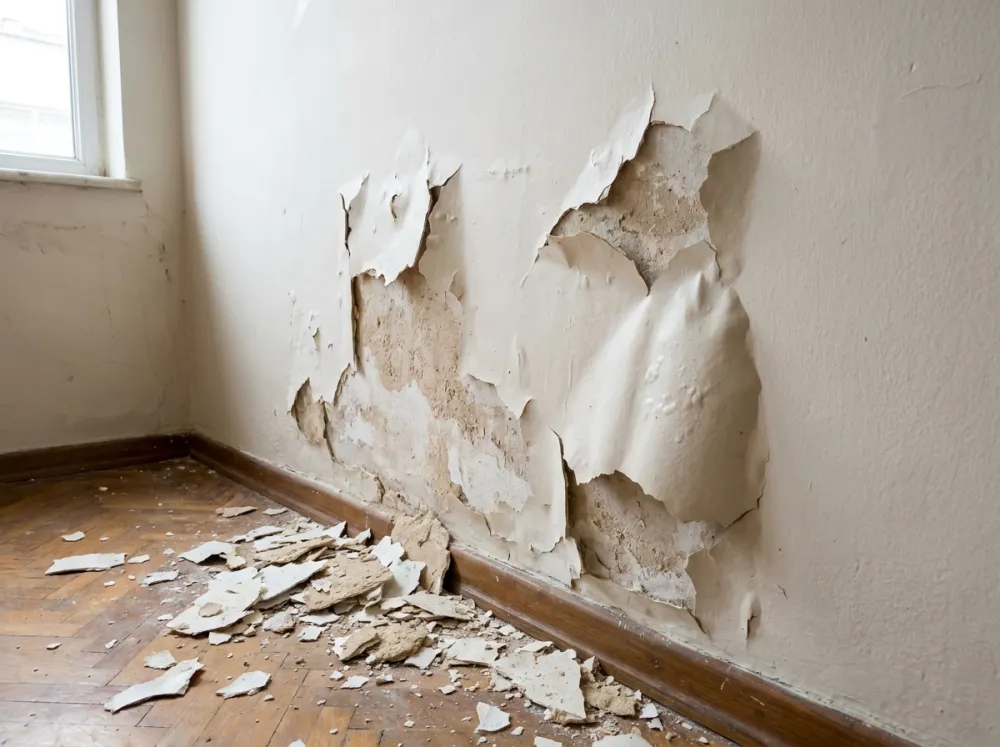
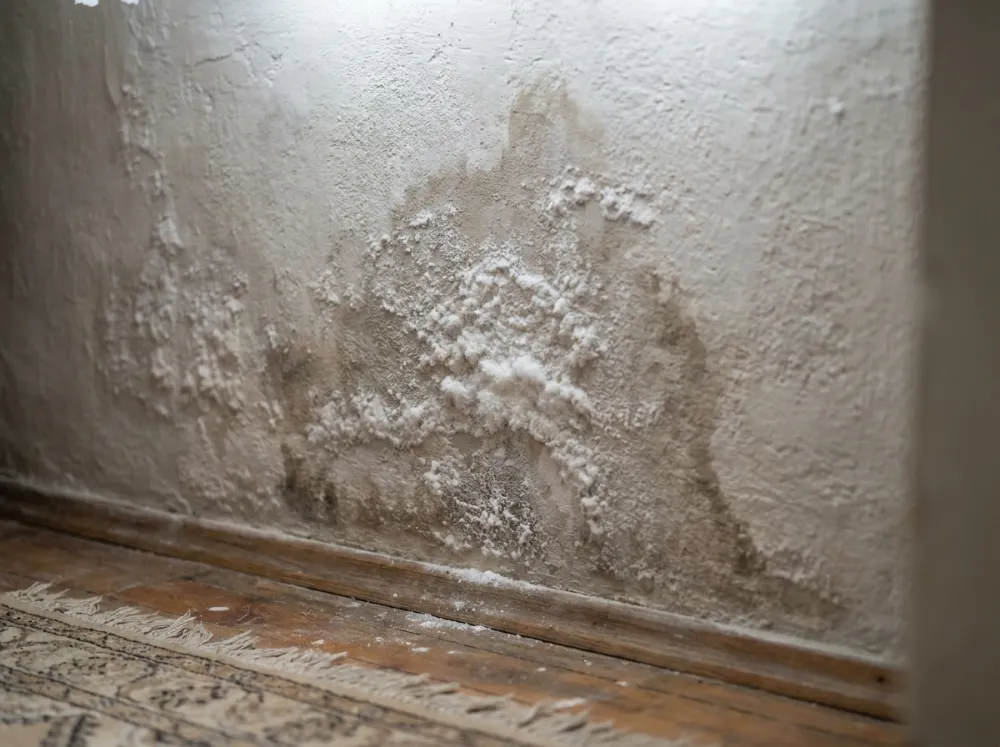
| Lower zone of the wall, above the skirting; blistering paint and salt marks nearby | Rising damp (capillary water from the ground) | DampStop injection + HydroFix plaster |
| Window reveals, external wall corners, ceiling junctions, behind furniture | Condensation (humid air turning to water on cold surfaces) | Ventilation + eliminating thermal bridges |
| Concentrated at a single point, growing fast, sometimes spreading from the ceiling | Water leak (plumbing, roof, facade) | Find and repair the leak |
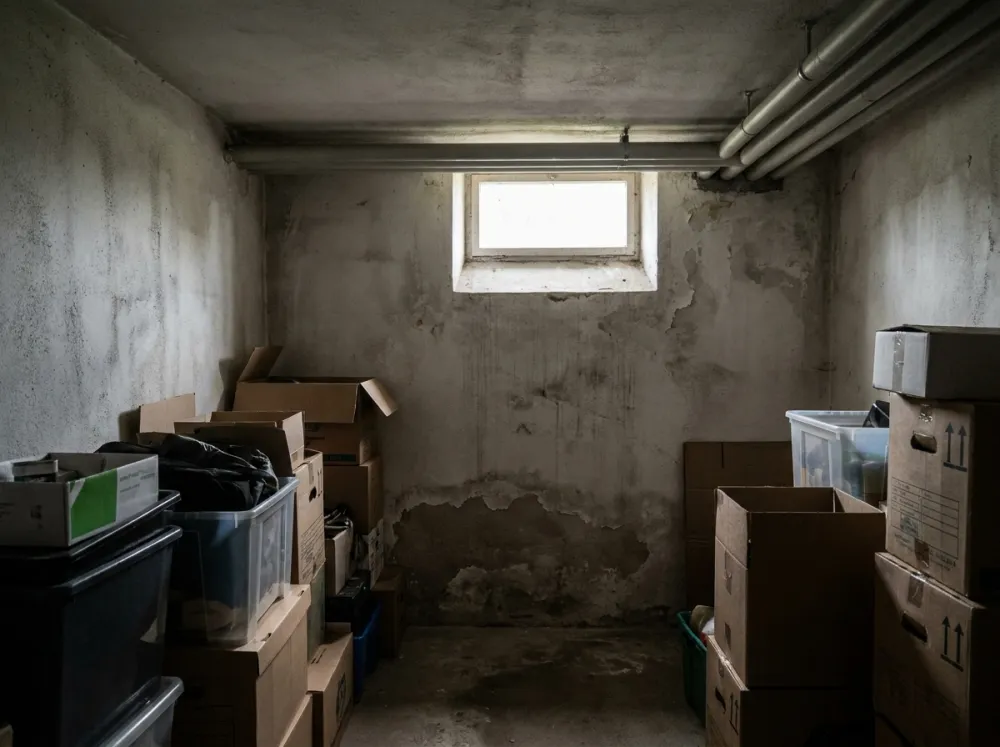
If the mould is mainly on the ceiling and in the corners, we cover condensation in detail on our ceiling and corner mould page. If it is in the basement, the basement and ground floor damp page will suit you better.
The Permanent Fix: Stop the Source, Then Clean
This is the correct order — do it the other way round and you will be repeating the cleaning every month:
- Stop the moisture source. If the mould is on the lower zone of the wall and is accompanied by signs of rising damp (a damp line, salt, blistering paint), a damp-proof barrier is applied to the wall with DampStop injection; this injection is done after the HydroFix plaster from step 3 has dried. Stripping plaster can break open the cells of the bricks; if you inject first, the solution runs out through those breaks. If the plaster goes on first, the injection stays inside the brick without overflowing. If it is condensation-driven, regular ventilation and measures that raise the surface temperature are needed; if there is a leak, it is repaired first.
- Clean the mould safely. Wear gloves + an FFP2/N95 mask + goggles, ventilate the room, wet the surface, clean it with a soft brush and dry it completely. Never mix cleaning chemicals with one another.
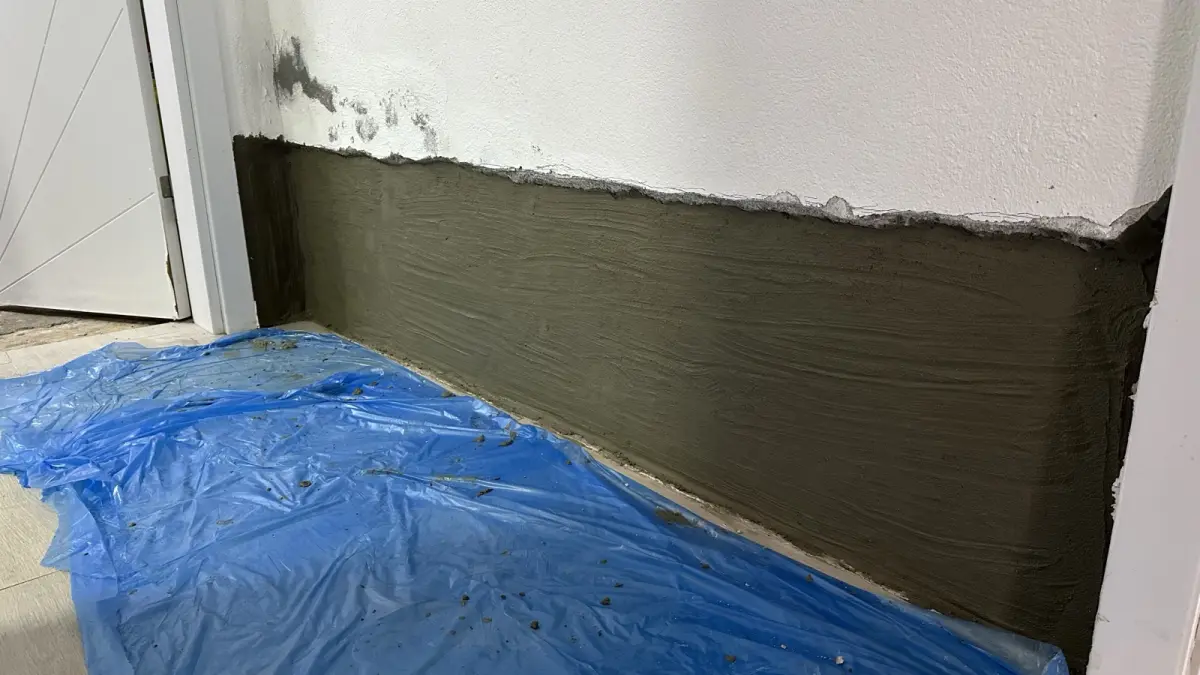
- Protect the surface. Damp-damaged plaster is stripped and renewed with HydroFix breathable plaster; with rising damp, the DampStop injection follows once this plaster has dried (24–48 hours). A diffusion-open paint goes on last. On a dry, breathable surface, mould cannot find a foothold.
⚠️ Do not attempt the cleaning yourself — talk to us instead — in these cases: the mouldy area is larger than 1 m²; it keeps coming back despite repeated cleaning; you cannot find the source; or someone in the home has asthma or allergies, or there is a baby. Send us photos and as soon as possible we will assess the situation and recommend a solution tailored to you — free of charge.
How Is It Applied? (93 seconds)
Products Used to Solve This Problem
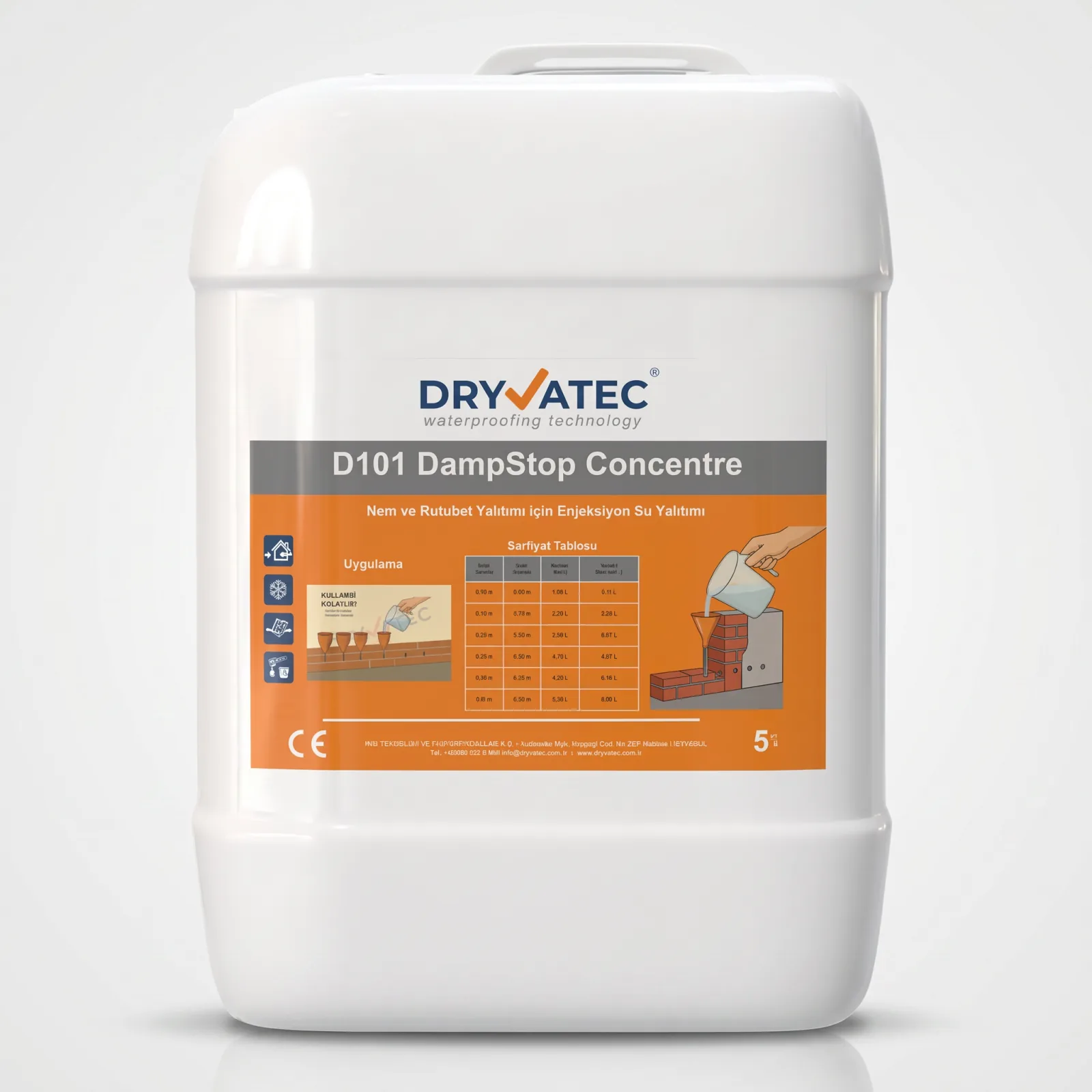
DampStop 5L Injection
Injected into holes drilled along the bottom course of the wall; forms a silane/siloxane barrier that stops the water from rising.
8.000₺ View Product
HydroFix 10 kg Damp-Proofing Plaster
Applied before the injection, in place of the stripped plaster; a breathable, salt-resistant repair plaster.
1.500₺ View Product
DampStop Complete Kit
DampStop 5 L concentrate + funnel, measuring jug and 14 mm drill bit. Everything you need for the injection in one box.
8.700₺ View ProductSee how the three products work together: The Triple System →
Frequently Asked Questions
Is mould really harmful to health?
Yes. Mould spores and the substances they release can cause coughing, sneezing, eye irritation, headaches and allergic reactions. The risk is higher for people with asthma, allergies or weakened immunity, and for babies. No one should sleep in a mouldy room; the problem should be solved before it grows.
Is wiping the mould off with bleach enough?
No. On non-porous surfaces bleach lightens the stain, but on porous surfaces such as plaster it does not kill the mould at its root; as long as the moisture continues, the mould returns within a few weeks. Also, never mix bleach with ammonia-based or acidic cleaners; toxic gas is released.
Why does the mould always appear in the same spot?
Because it means there is a constant source of moisture there. If it is on the lower zone of the wall, it is most likely rising damp; around window reveals and in corners, condensation; and if it is concentrated at a single point, it signals a hidden water leak. Any cleaning done without solving the source is temporary.
Is anti-mould paint a permanent solution?
No. Its additives can delay the mould's appearance for a while, but as long as moisture keeps reaching the wall, the mould returns either in the same spot or right next to it. Paint is a preventive layer; the solution itself is stopping the source of the moisture.
Learn More: Related Guides
- Is Damp Harmful to Your Health?
- Can Paint Fix a Damp Problem?
- Rising Damp vs Condensation: What Is the Difference?
Not sure? Send us a photo and we will tell you
Send photos of the problem area; our technical team will assess the cause as soon as possible and recommend a solution tailored to you. Free of charge, with no obligation to buy.