
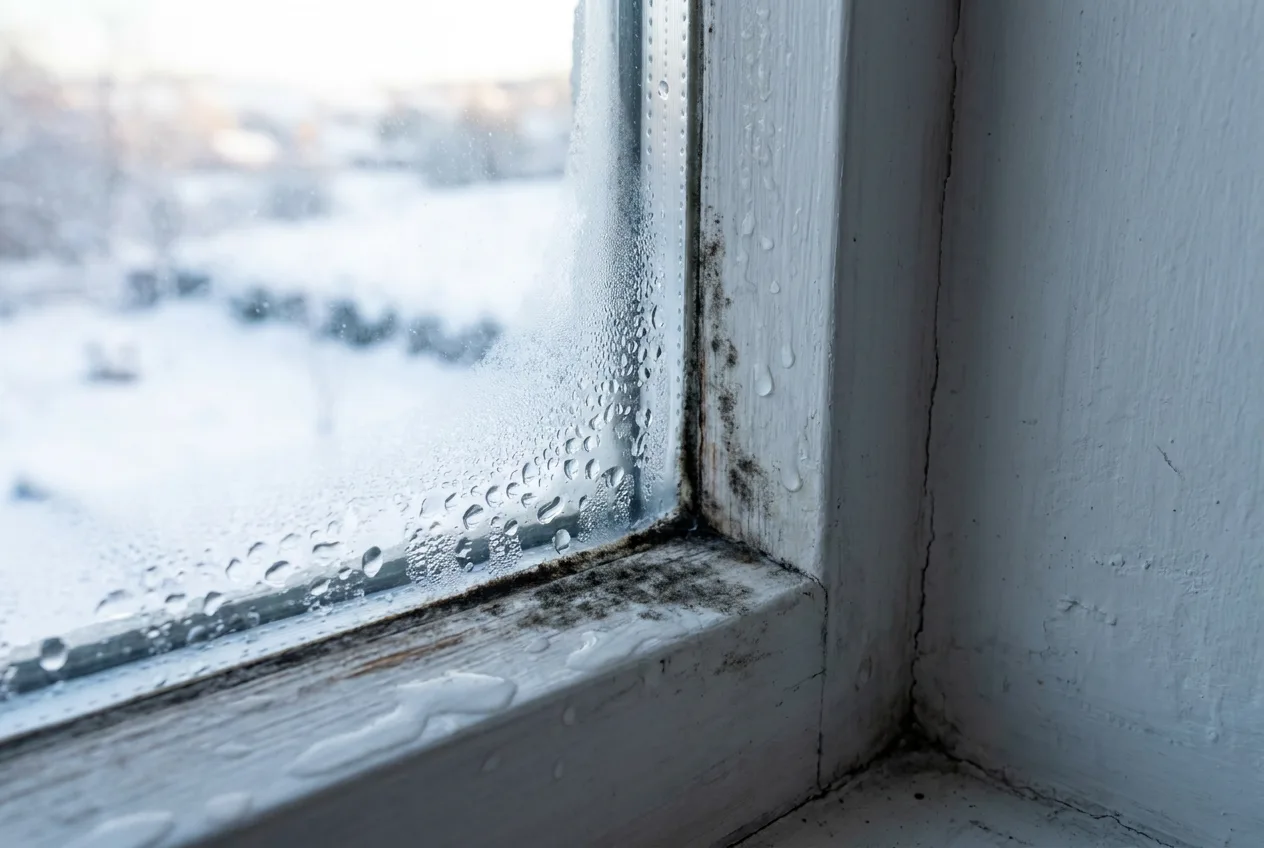
Short answer: Window condensation is warm, moist room air touching cold glass and turning into water droplets. To prevent it, three things are done: lower the indoor humidity (around 40–50% in winter), ventilate regularly and briefly, and keep the area in front of the glass warm (do not block the radiator, keep curtains away from the glass). If the problem persists, single glazing or a window with failed seals is replaced with double glazing. Window condensation is not wall damp; if there is no staining at the base of the wall, you do not need to apply any product to the wall.
On winter mornings, when you open the curtains you may find the inside of the glass misted up and water collected on the windowsill. This is very common and usually shows that the air in the home is too humid. In this article we explain why windows steam up, why it is so common with uPVC windows, and how to prevent it step by step. As a damp solutions brand, let us be honest: window condensation is not a problem our products solve; the solution lies in ventilation, heating and the window itself.
What causes window condensation?
There is always invisible water vapour in the air. Warm air can carry more vapour, cold air less. When the room air touches the glass, one of the coldest surfaces indoors, it cools down; if its temperature drops below the limit known as the dew point, the excess vapour turns into water droplets on the glass. For example, in a room at 20 °C and 60% humidity the dew point is about 12 °C; if the inner surface of the glass is colder than that, the window steams up.
The main reasons windows mist up more in winter:
- High indoor humidity: Cooking, showering, laundry dried indoors, house plants and breathing constantly add moisture to the air.
- Too little ventilation: Windows are kept shut while the heating is on; moist air cannot get out.
- Cold glass: Single glazing, or old frames or frames with failed seals, keep the inner surface of the glass colder.
- No air circulation in front of the glass: Thick curtains, blinds or furniture blocking the radiator create a cold, still pocket of air between the glass and the room.
The article in which we explain the physics of condensation and how it differs from rising damp in detail: What is condensation damp?
uPVC window condensation: is the window faulty or is the home damp?
"We had new uPVC windows fitted and the glass started steaming up" is a common complaint. The reason is usually not that the window is bad, but that it seals well. Old, draughty frames used to ventilate the home on their own; after airtight uPVC windows are fitted, the moisture produced indoors cannot escape and the indoor humidity rises. The solution is not to change the window but to change your ventilation habits.
Looking at where on the glass the condensation forms lets you tell the problems apart:
| Where is the condensation? | What does it mean? | What should be done? |
|---|---|---|
| On the room side of the glass | Indoor humidity is high and the glass is cold | Ventilation, humidity control, balanced heating |
| Only along the edge of the glass, near the glazing bead | The edge zone is the coldest part of the glass; humidity is borderline | Lowering the indoor humidity a little is usually enough |
| Between the two panes | The seal of the double-glazed unit has failed | It will not go away by wiping; the double-glazed unit is replaced |
| On the outer surface of the glass (in the mornings) | Moisture in the outdoor air is condensing on the cold glass surface; this can happen with well-insulated glazing | Usually not a problem; it disappears as the day warms up |
How to stop window condensation: step by step
- Measure the indoor humidity. Place a digital hygrometer away from exterior walls and radiators, and read it morning and evening for a few days. In winter, aim for around 40–50%; a reading constantly above 60% makes window condensation almost inevitable. More details: What should indoor humidity be?
- Ventilate briefly and often. Open windows on opposite sides fully for 5–10 minutes several times a day. A window left ajar for hours cools the walls but does not remove moisture nearly as effectively.
- Remove moisture at its source. Run the extractor fan while cooking and after showering, and keep the bathroom and kitchen doors closed. If possible, do not dry laundry indoors, especially not in the bedroom.
- Heat the home evenly. Do not leave some rooms completely cold; the windows and walls of a cold room collect the moisture coming from the other rooms.
- Keep the area in front of the glass clear. Do not block the radiator with furniture or thick curtains; at night keep the curtain a few centimetres away from the glass and open it first thing in the morning. The warm air rising from the radiator warms the glass.
- Wipe away the water that collects. Water collecting on the windowsill and glazing beads leads to mould in the seals and corners; wipe it off with a dry cloth in the morning.
- Use a dehumidifier if needed. It lowers the humidity in the air in rooms where ventilation is not enough, where laundry is dried or that are rarely used.
- Overhaul the window. If condensation persists despite these steps, replacing single glazing with double glazing, renewing worn seals and insulating thermal bridges around the window provide a lasting improvement.
Why should window condensation be taken seriously?
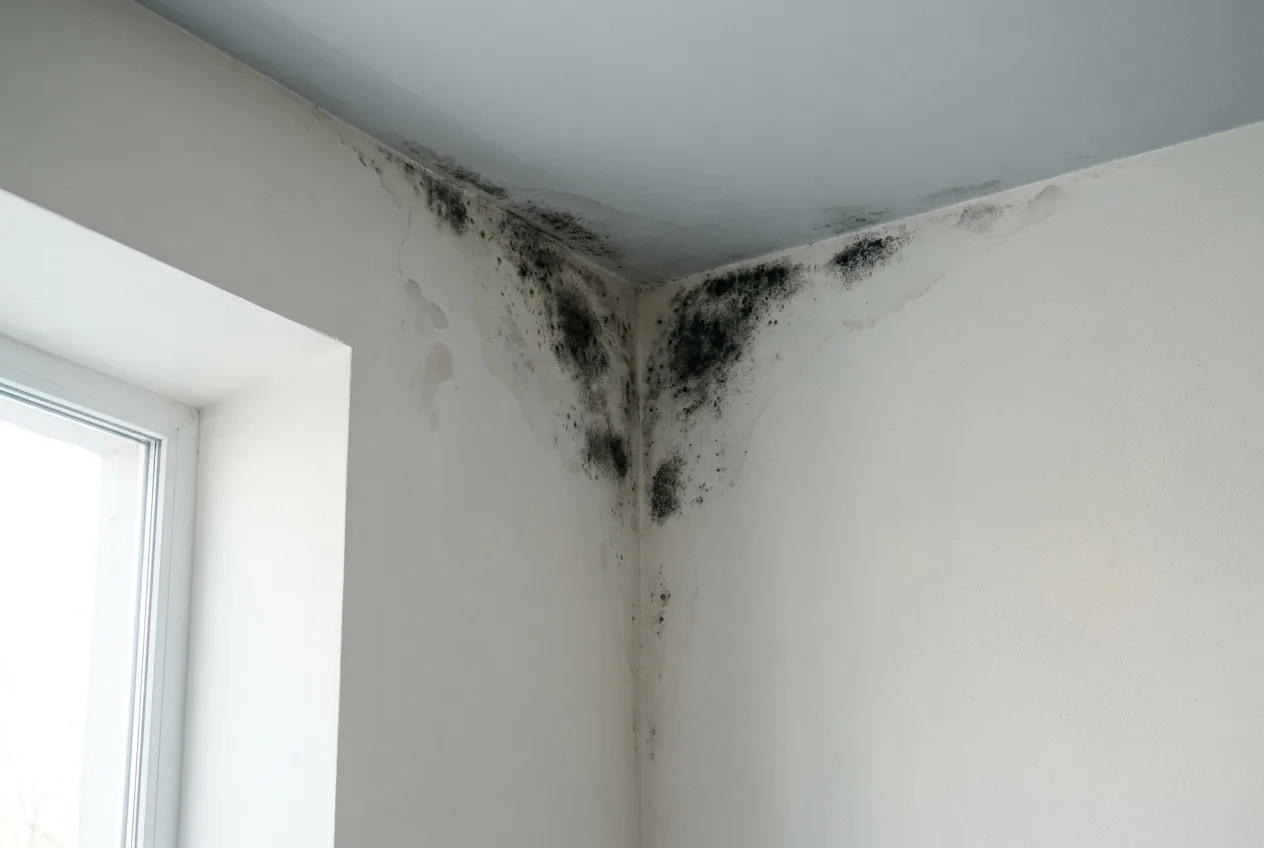
A light mist now and then is not a problem. But if water collects on the windowsill every morning, it shows that the humidity in the home stays high for long periods. Black mould forms on glazing beads and seals that stay permanently wet; the same moisture also condenses in ceiling corners, behind wardrobes and on exterior walls. For cleaning mould: How to clean mould on walls If there is a persistent damp smell: How to get rid of a damp smell
Window condensation or damp coming from the wall?
Window condensation comes from moisture in the air and decreases with the measures above. In some homes, however, the wall itself is also wet. The following signs cannot be explained by window condensation:
- A yellow-brown stain that starts at the base of the wall and spreads upwards,
- Blistering paint, crumbling plaster and white salt marks on the surface at skirting-board level,
- Wetness that persists summer and winter even though the indoor humidity is normal.
This picture most probably points to moisture rising from the ground by capillary action; ventilation and a dehumidifier will not solve it. For its causes and solution, see our rising damp guide, and to identify the source at home, our article on detecting damp. If you are not sure which it is, send photos of the wall using the Request a Quote form; our technical team will assess them online and get back to you within 24 hours.
Frequently Asked Questions
How do you stop window condensation?
Keep the indoor humidity around 40-50% in winter, ventilate by opening windows on opposite sides for 5-10 minutes several times a day, use the extractor fan while cooking and showering, do not dry laundry indoors and do not block the radiator. If the problem persists, single glazing or a window with failed seals is replaced.
Why do uPVC windows steam up?
Because uPVC windows are airtight, they do not ventilate the home on their own like old frames did; the moisture produced indoors cannot escape and condenses on the cold glass. In most cases the problem is not the window but the reduced ventilation.
What should you do if mist forms between the two panes?
Mist between the two panes shows that the seal of the double-glazed unit has failed. It will not go away by wiping or ventilating; the double-glazed unit needs to be replaced.
Why do windows mist up?
When warm, moist room air touches cold glass it cools down, and the water vapour it contains turns into droplets on the surface of the glass. The higher the indoor humidity and the colder the glass, the more the window mists up.
Does a dehumidifier prevent window condensation?
In rooms where ventilation is not enough, it reduces window condensation by lowering the moisture in the air. However, it has no effect on damp rising from the base of the wall; that problem has to be solved inside the wall.
Can window condensation be solved with damp-proofing products?
No. Window condensation comes from moisture in the air; injection, damp-proofing plaster or wall devices do not solve this problem. These products only make sense for damp rising from the base of the wall.
Related Guides
- What is condensation damp? How it differs from rising damp
- What should indoor humidity be?
- What is damp and what causes it?
- How to clean mould on walls
- Rising damp: causes, signs and solution
Windows steaming up, and a stain at the base of the wall too?
Send us a photo of your wall; our technical team will assess it online and tell you free of charge whether the moisture is coming from the air or from the ground.