
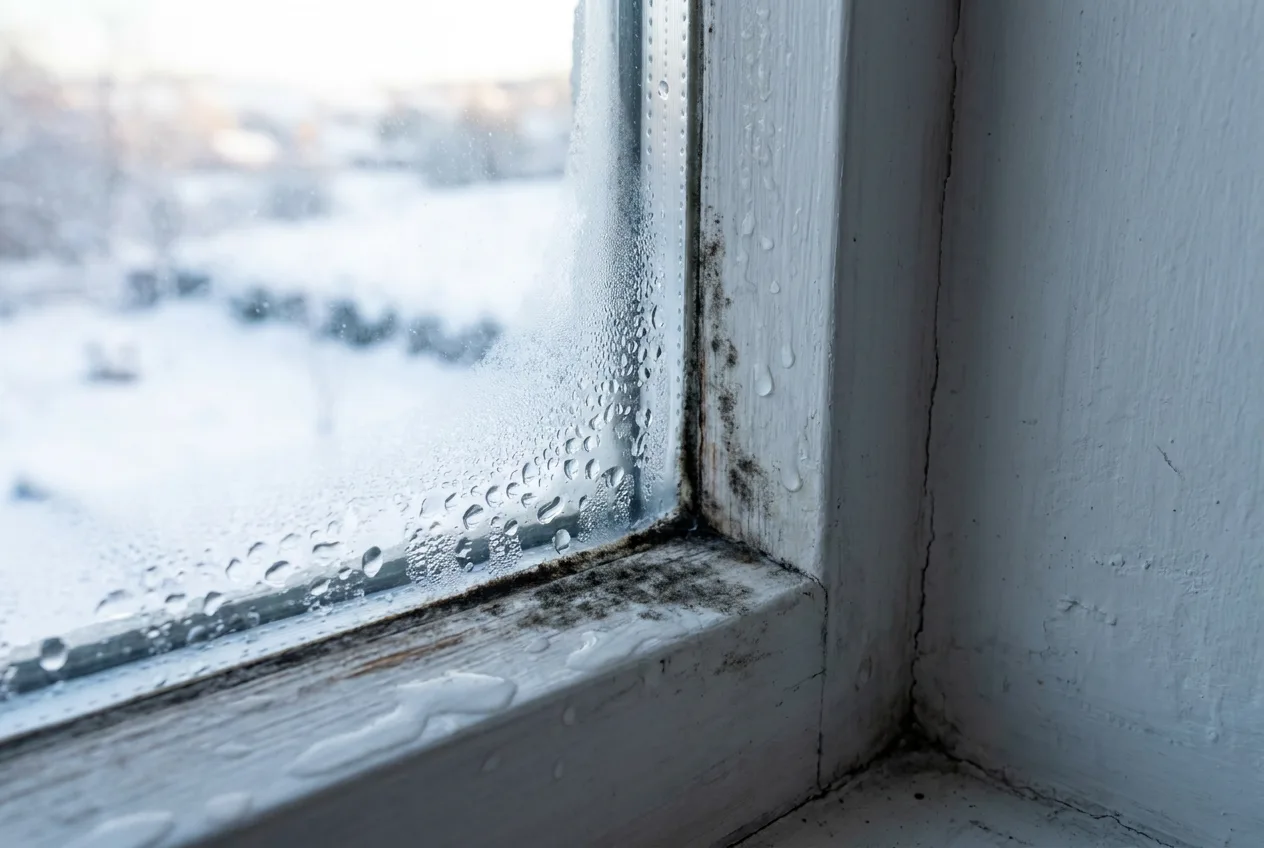
Short answer: In homes, indoor humidity (relative humidity) should generally be kept between 40% and 60%. To reduce the risk of mould, it is important that it does not stay above 60% for long periods. Because exterior walls and windows are cold in winter, staying at around 40-50% noticeably reduces window condensation and mould in corners. Below 30%, on the other hand, can cause a dry throat and dry skin.
"What should indoor humidity be?" is searched for a lot, especially in December and January, because windows start to mist up and black spots begin to appear in corners. In this article we explain the ideal range, how to measure humidity, what to do if it is too high and, most importantly, the difference between moisture in the air and damp in the wall.
Ideal indoor humidity table
| Relative humidity | What does it mean? |
|---|---|
| Below 30% | The air is dry; dry throat, eyes and skin, static electricity. |
| 40% – 60% | The generally accepted comfort range. |
| 40% – 50% in winter | Reduces the risk of condensation on cold windows and in exterior-wall corners. |
| Constantly above 60% | Higher risk of window condensation, mould in corners and on ceilings, and a damp smell. |
These values should be considered together with room temperature. The same amount of water vapour means higher relative humidity in a cold room; this is why unheated rooms go mouldy faster. For health effects: How does living in a damp environment affect your health?
How do you measure indoor humidity?
The easiest way is to use a digital hygrometer (most are sold together with a thermometer). Place it at sitting height, away from exterior walls and heaters; take readings in the morning, in the evening and after cooking or showering. A single reading is misleading; noting values over a few days shows the real picture.
Important: a hygrometer measures the humidity of the air; it does not measure the moisture inside the wall. For wall moisture, moisture meters that touch the surface are used; more detail: How is damp detected in buildings?
What happens if indoor humidity is too high?
When warm, humid indoor air touches a cold surface (a window, an exterior-wall corner, the ceiling), it turns into water droplets. This is called condensation. Repeated condensation leads to black mould in corners and around windows, a damp smell and stains behind curtains.
How do you lower indoor humidity?
- Short, frequent ventilation: Opening the windows fully for 5-10 minutes several times a day is more effective than leaving them ajar.
- Remove moisture at the source: Run the extractor fan while showering and cooking, and keep the bathroom door closed.
- Do not dry laundry indoors: Wet laundry releases a significant amount of water vapour into the room.
- Heat evenly: Leaving some rooms completely unheated increases condensation in those rooms.
- Do not push furniture against exterior walls: Leave a gap of a few centimetres between wardrobes or sofas and the wall.
- A dehumidifier if needed: In rooms where ventilation is not enough, it lowers the humidity in the air.
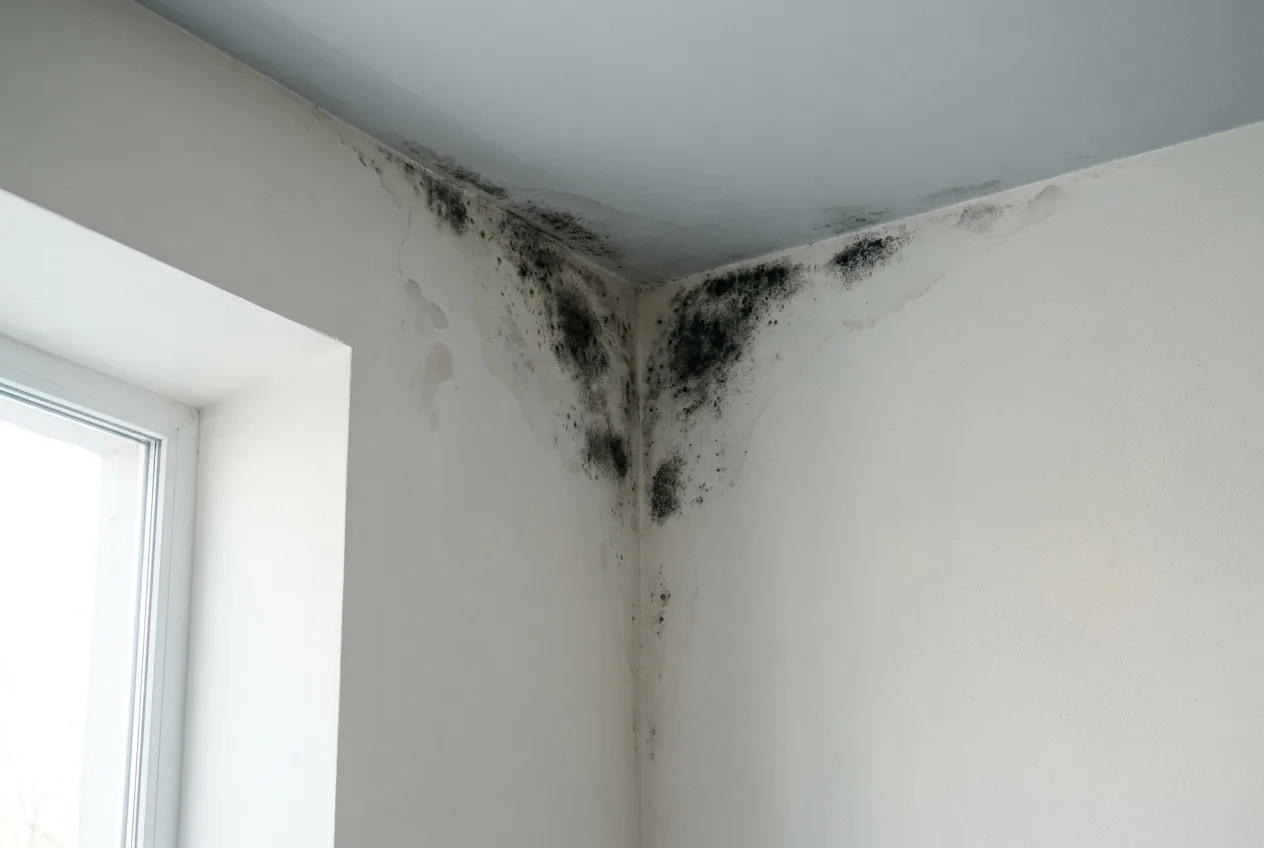
Indoor humidity is normal but the wall is still damp: that is a different problem
If the hygrometer shows 45% but there are yellow stains, blistering paint and white salt marks at the base of the wall, the problem is not in the air but in the wall. Moisture rising from the ground by capillary action (rising damp) cannot be fixed with ventilation or a dehumidifier; the path of the water inside the wall has to be cut off. In this case the damaged plaster is first stripped and a breathable damp-proofing plaster (HydroFix) applied, then, once it has dried, an injection damp-proof course (DampStop) is made at the base of the wall. If there is also damp throughout the building, in the foundation and columns, the Damp Box (Nem Kutusu) is added; it carries water reaching the foundation and rising in the columns back into the ground.
If indoor humidity is normal but the base of the wall is wet
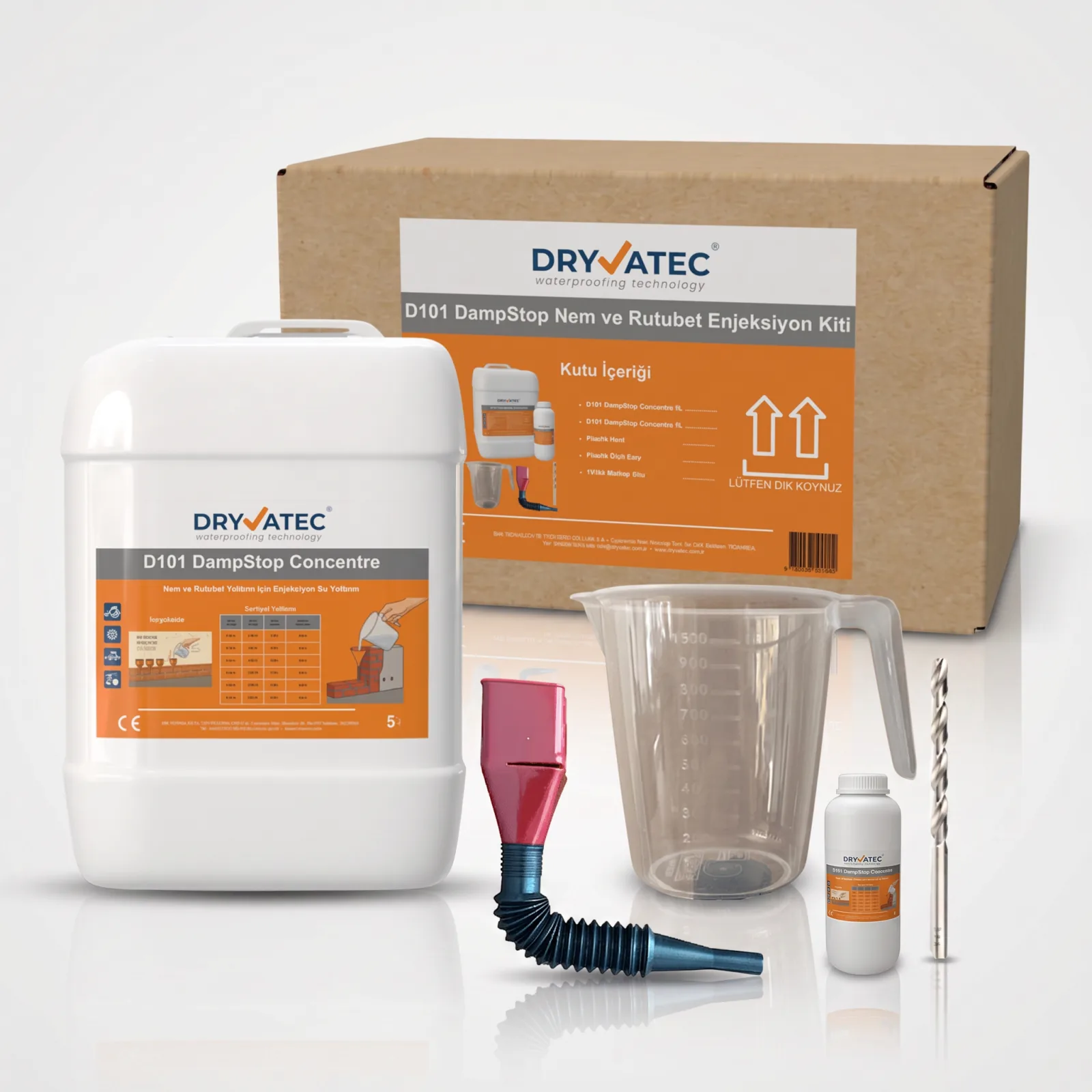
DampStop Complete Kit
Damp rising from the base of the wall has nothing to do with the air: injection concentrate + equipment in one box; HydroFix for the surface is sold separately.
8.700₺ incl. VAT View Product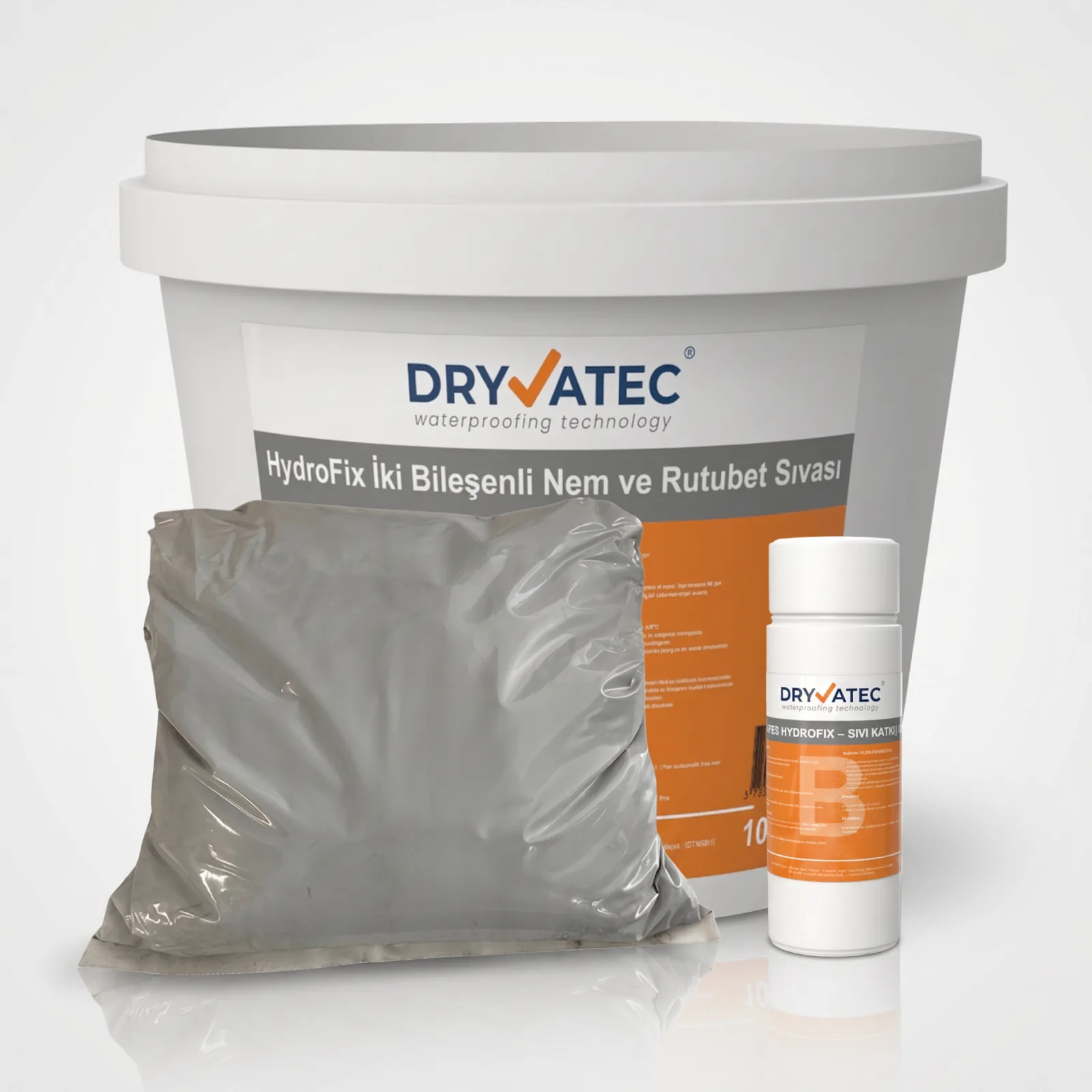
HydroFix 10kg Damp-Proofing Plaster
A breathable damp-proofing plaster to replace blistered, salt-damaged interior wall plaster.
1.500₺ incl. VAT View Product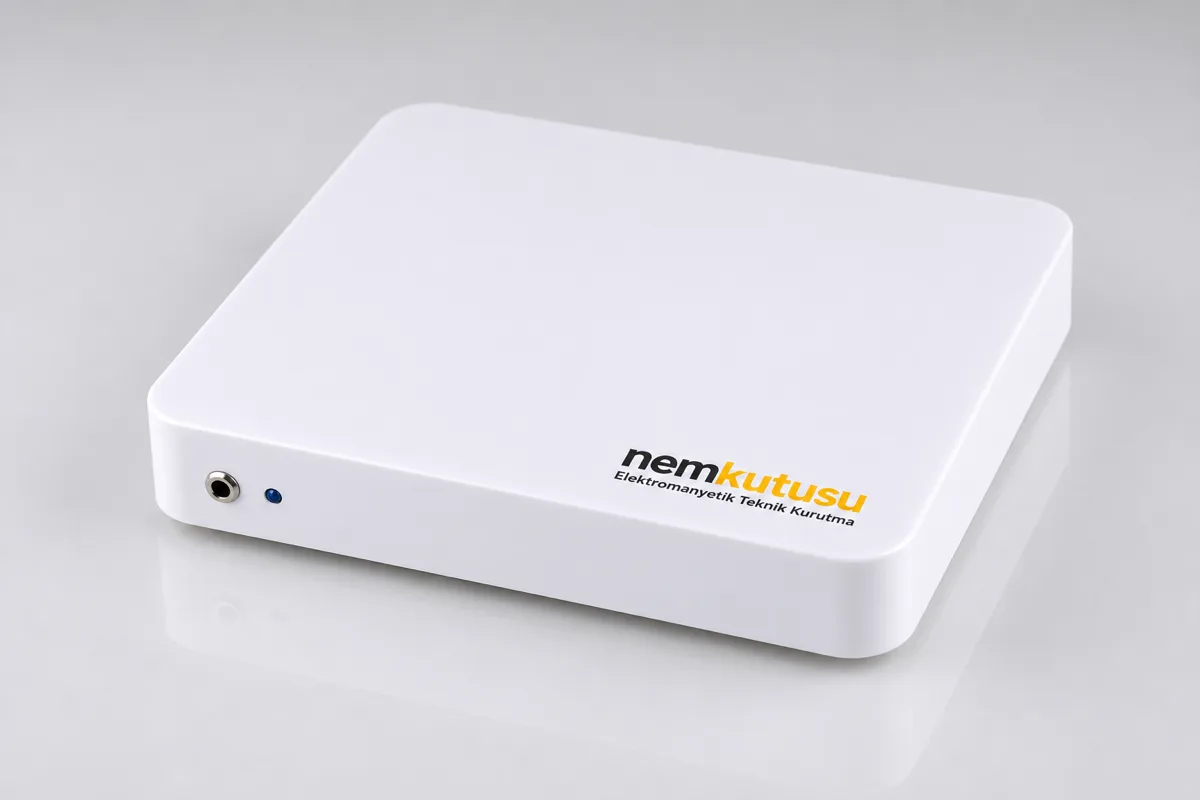
Dryvatec Damp Box
Carries water reaching the foundation and rising in the columns back into the ground; on the walls it works with DampStop + HydroFix as the triple system. Plugs into a socket, 3-5 W.
50.000₺ incl. VAT View ProductPay by card (Ziraat 3D Secure) or bank transfer/EFT — for bank transfer call +90 850 532 6 999 · No cash on delivery or instalments · Free shipping within Türkiye · 14-day right of return · Work out the quantity with the consumption calculator.
Frequently Asked Questions
What should indoor humidity be?
In homes, relative humidity should generally be kept between 40% and 60%. To reduce the risk of mould, it is important that it does not stay above 60% for long periods.
What should indoor humidity be in winter?
Aiming for around 40-50% in winter is a good balance. Because exterior walls and windows are cold, higher humidity leads to condensation on these surfaces, misted-up windows and mould in corners.
What happens if indoor humidity is too high?
Humid air condenses on cold surfaces: windows mist up, black mould and a damp smell appear in ceiling and exterior-wall corners. Short, frequent ventilation, using an extractor fan and even heating bring the humidity down.
How do you measure indoor humidity?
With a digital hygrometer. Place it away from exterior walls and heaters and take readings in the morning and evening for a few days. A hygrometer measures the humidity of the air; it does not measure the moisture inside the wall.
Does a dehumidifier remove damp from a wall?
No. A dehumidifier draws moisture from the room air; it works for condensation problems. It has no effect on damp rising from the base of the wall; for that you need an injection damp-proof course (DampStop) at the base of the wall and a breathable damp-proofing plaster (HydroFix). If there is also damp in the foundation and columns, the Damp Box is added.
Related Guides
- How to prevent window condensation
- What causes "damp bugs" and how to get rid of them
- What is condensation damp? How it differs from rising damp
- How does living in a damp environment affect your health?
- How to get rid of a damp smell at home
- Which damp remover actually works?
- Ceiling and corner mould
Is the moisture in your wall coming from the air or from the ground?
Send a photo; our technical team will assess the source free of charge.