
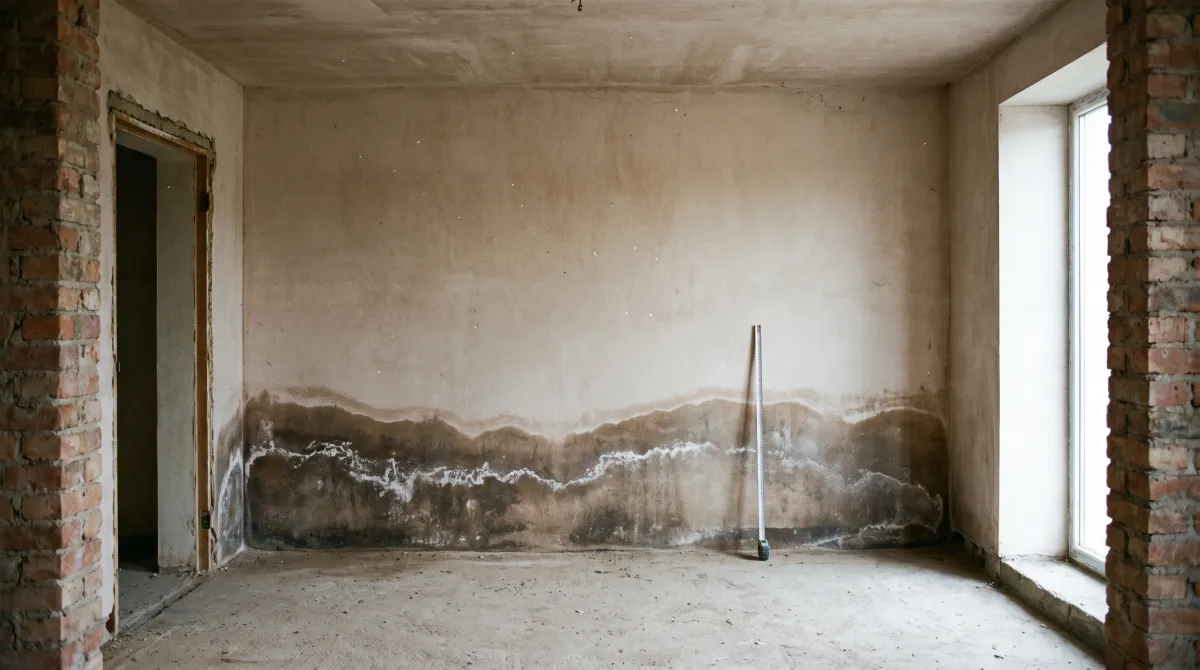
Short answer: An injection damp-proof course in one wall does not push moisture into another wall; each wall draws water up from its own base. However, untreated walls stay as damp as before, and at the corner where the barrier ends they act as a bridge: moisture can rise in the adjoining wall and spread into the treated wall through the junction. That is why every wall showing symptoms, and the junctions between them, should be dealt with together. With damp coming from next door, the shared wall can be treated from your side; but sources such as rainwater entering through the neighbour's facade can only be fixed on their side.
This is one of the real questions our chat assistant hears most often: "If I treat this wall, won't I just be sending the moisture to other walls or into the floor?" Another reader had solved the damp in their own flat but was worried the problem would come back because the outer wall of the adjoining flat let in water whenever it rained. In this article we answer both clearly.
Does injection push moisture into another wall?
No. Rising damp is water from the ground climbing up through the pores of a wall by capillary action, and it happens separately in every wall that is in contact with the ground. DampStop injection creates a water-repellent horizontal barrier at the base of the treated wall; it does not "send" the ground water to the adjoining wall. If the adjoining wall was already drawing up water, it keeps doing so — it simply becomes noticeable now, because the wall next to it has dried out.
The same applies to the floor (screed): a horizontal barrier does not increase moisture in the floor. If the floor is also wet, however, its own cause (missing insulation under the floor, plumbing) should be investigated separately.
The real risk: the bridge at the junction
If you treat a damp outer wall but leave untreated the interior partition wall that meets it at a right angle, the partition wall keeps drawing water from the ground. This water can also travel sideways at the junction corner and show up as a new mark in the corner, above the barrier. Therefore:
- All exterior and interior walls showing symptoms are planned together; rising damp occurs in interior partition walls as well.
- The barrier is continued without interruption around corners and junctions.
- On exterior walls, if the screed inside covers the injection line, a 10–15 cm wide strip is broken out; on interior walls no screed removal is needed — the skirting board is removed.
Do walls without a problem need treatment too? Treating a dry wall that shows no symptoms as a precaution is not necessary. However, including the junction area of a wall that connects to a damp wall in the barrier cuts the bridge. To decide which walls to include, you can send us your floor plan and photos using the Request a Quote form.
How can you tell damp is coming from next door?
- The stain is concentrated on the shared (party) wall and your other walls are dry: The source may be the base of the shared wall or the neighbour's side.
- It gets worse after rain: Water may be entering through the neighbour's facade or the shared roof.
- The stain is on the ceiling: A plumbing or balcony leak from the flat above is the likely suspect.
- The neighbour has the same problem on their side: The shared wall is drawing water from the ground on both sides.
What can you do on your side?
- If the shared wall is drawing water from the ground: First the damaged plaster is stripped and the surface renewed with HydroFix; once the plaster has dried, an injection damp-proof course can be applied to the base of the wall from your side, with the drill hole depth at 80% of the wall thickness. The order matters: stripping plaster can break open the cells of the bricks; if you inject first, the solution runs out through those breaks.
- If the water comes from the neighbour's facade or the shared roof: The source is outside and must be repaired there. In apartment buildings the exterior facade and roof are usually common areas; contact the building management. See What to do about a wall letting in water from outside?
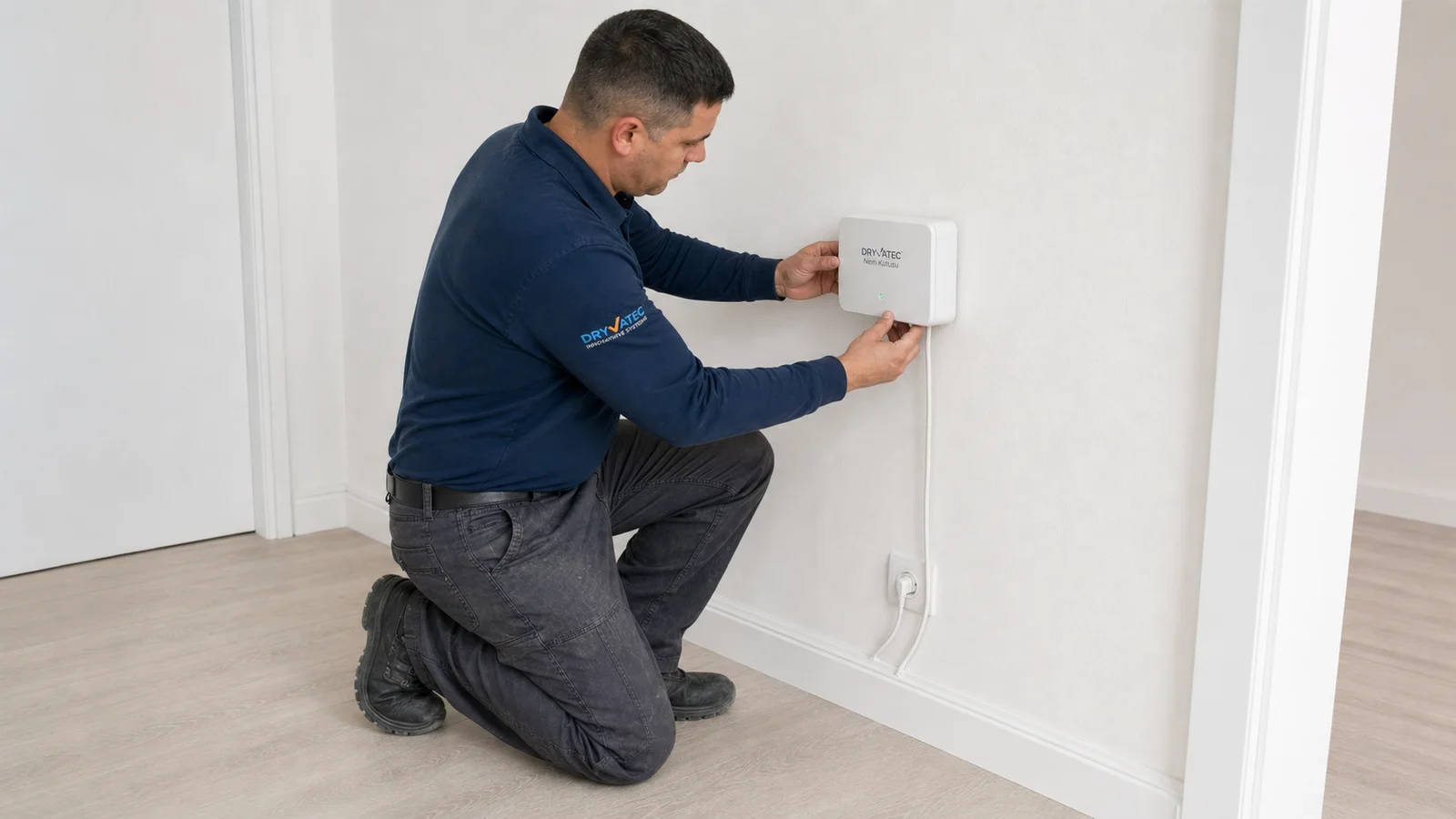
- If there is also damp in the foundation and columns, the Damp Box: It carries water reaching the foundation and rising in the columns back into the ground; the standard model covers an area of up to 900 m². It does not replace the injection and damp-proofing plaster on the walls; together the three make up the triple system. It is mounted on a load-bearing wall in the central part of the building, 25 cm–1 m above the floor and at least 1.5 m away from electronic devices; it does not fix rainwater leaks. More details: How does the Damp Box work?
For multiple walls or a shared wall
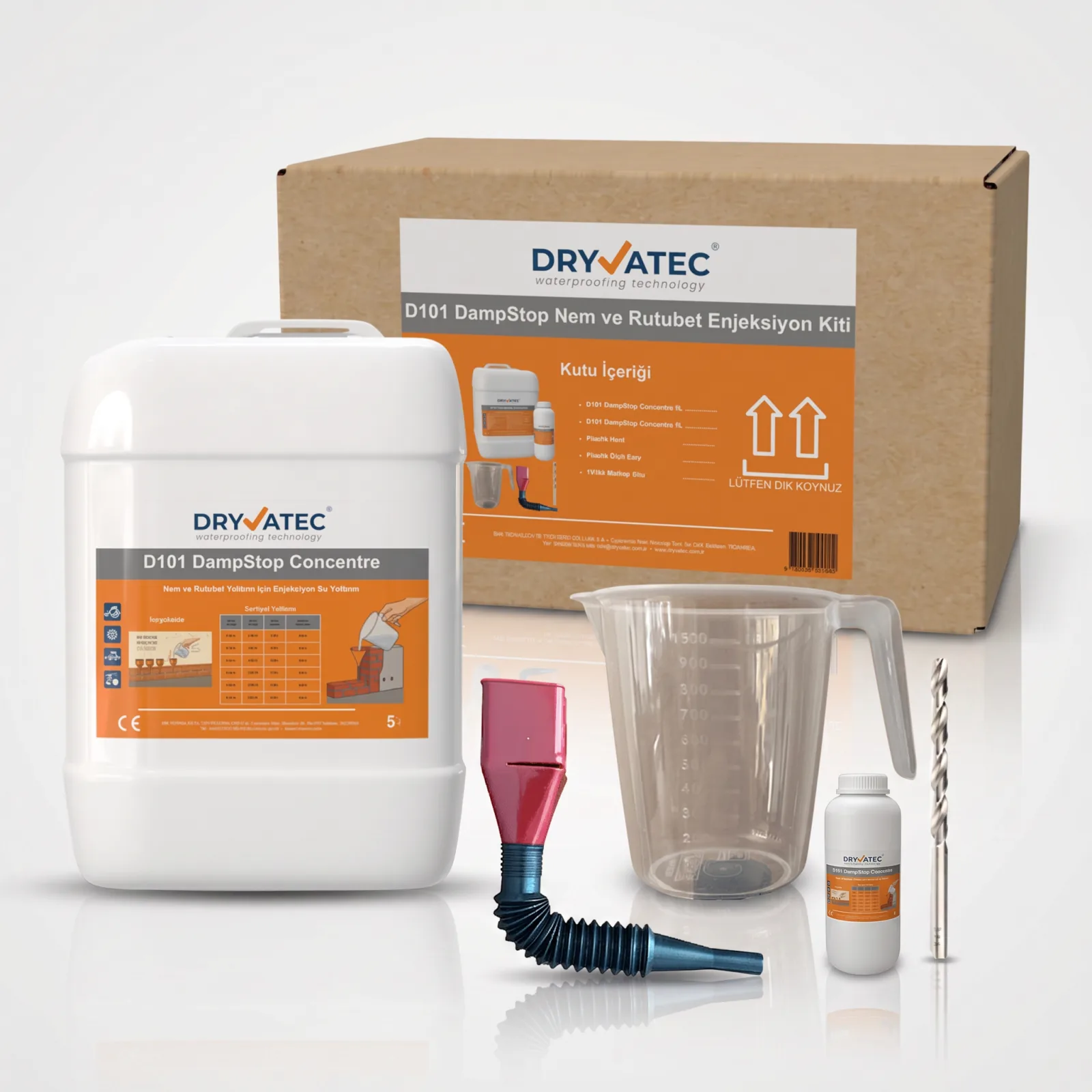
DampStop Complete Kit
A continuous injection damp-proof course at the base of all affected walls: 5 L concentrate (50 L solution) + equipment.
8.700₺ incl. VAT View Product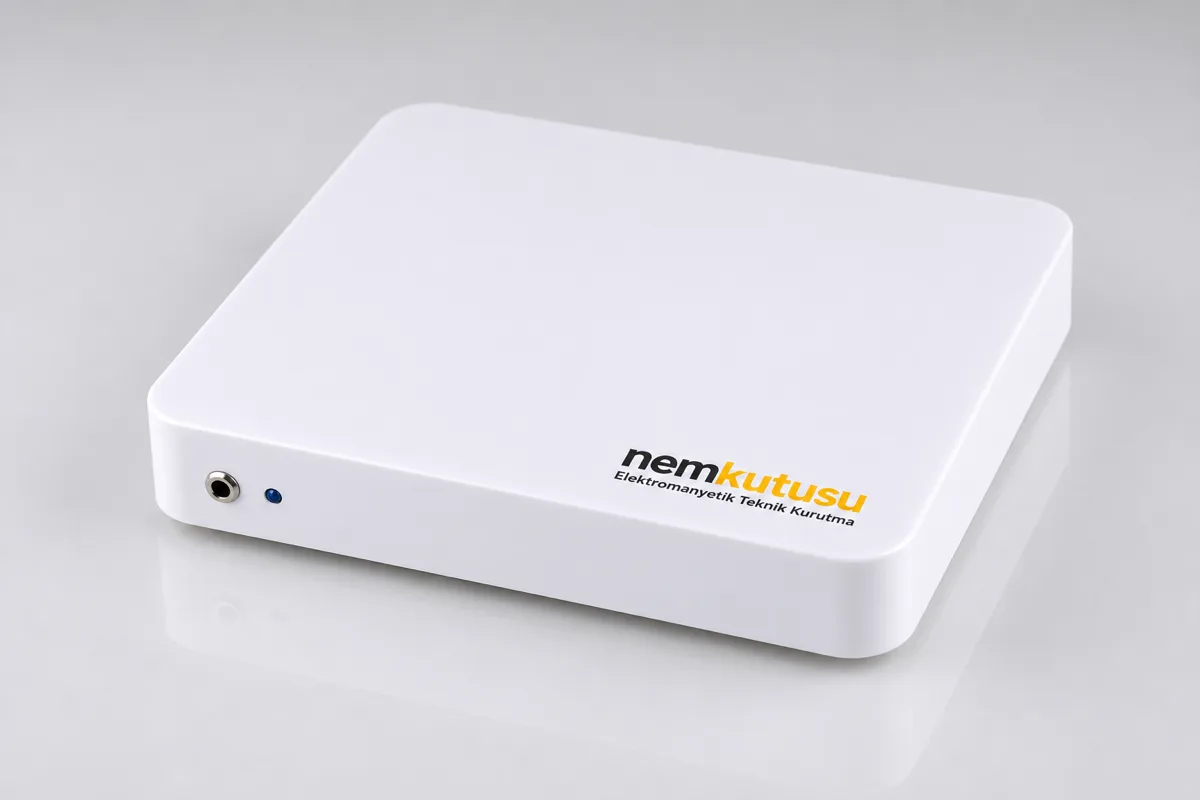
Dryvatec Damp Box
Carries water reaching the foundation and rising in the columns back into the ground; on the walls it works with DampStop + HydroFix as the triple system. Plugs into a socket, 3-5 W.
50.000₺ incl. VAT View Product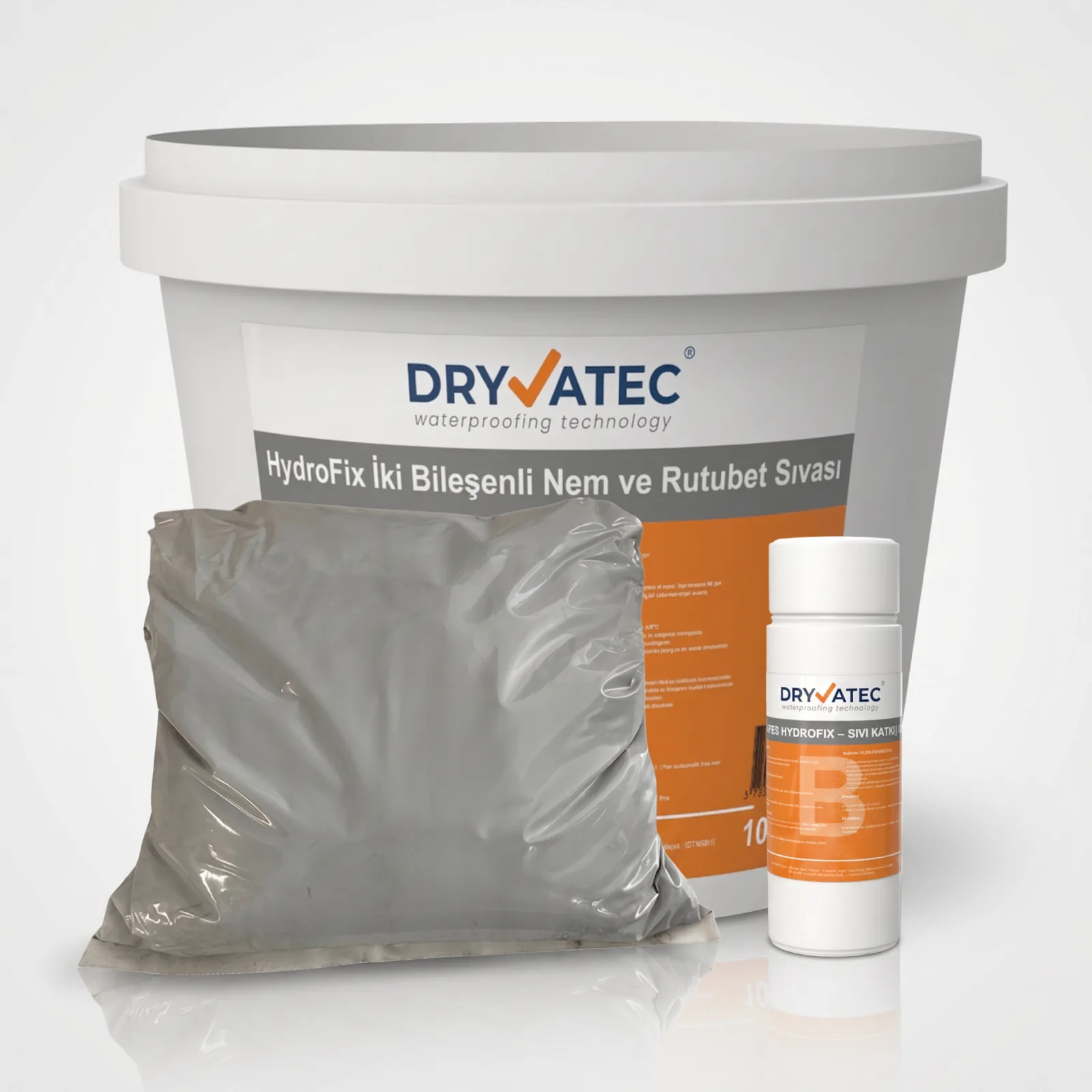
HydroFix 10kg Damp-Proofing Plaster
A breathable damp-proofing plaster applied before the injection, in place of the stripped interior plaster.
1.500₺ incl. VAT View ProductPay by card (Ziraat 3D Secure) or bank transfer/EFT — for bank transfer call 0850 532 6 999 · No cash on delivery or instalments · Free shipping within Türkiye · 14-day right of return · Work out the quantity with the consumption calculator.
Frequently Asked Questions
Does damp move to another wall after injection?
No. The barrier does not push moisture away; each wall draws water up from its own base. Untreated walls stay damp, and at the junction corner moisture can spread into the treated wall. That is why all walls showing symptoms, and the junctions between them, should be treated together.
Do walls without a problem need treatment too?
Treating a dry wall as a precaution is not necessary. However, including the junction area of a wall that connects to a damp wall in the barrier stops moisture from crossing at the corner.
How can you tell damp is coming from next door?
If the stain is concentrated on the shared wall while your other walls are dry, or if it gets worse after rain, the source may be the neighbour's side or the shared facade. A stain on the ceiling is usually a leak from the flat above.
Does the Damp Box affect damp in the neighbouring wall?
The Damp Box carries water reaching the foundation and rising in the columns back into the ground; the standard model covers an area of up to 900 m². Damp in the wall itself (brick, aerated concrete, concrete block) is treated with DampStop and HydroFix on the affected walls; the Damp Box does not replace them. It does not fix rainwater leaks; that source has to be repaired from the outside.
Where is the Damp Box installed?
It is mounted on a load-bearing wall in the central part of the building, at a height between 25 cm and 1 m above the floor, and at least 1.5 m away from electronic devices. The device must stay plugged in at all times and should not be moved.
Related Guides
- What is damp and what causes it? What to do if your home is damp
- Rising damp: causes, signs and solution
- Damp injection application guide
- What is capillary plaster and does it work?
- What is the Damp Box and how does it work?
- Triple System
Which walls need treatment?
Send us your floor plan and photos of your walls; our technical team will prepare an application plan free of charge.