
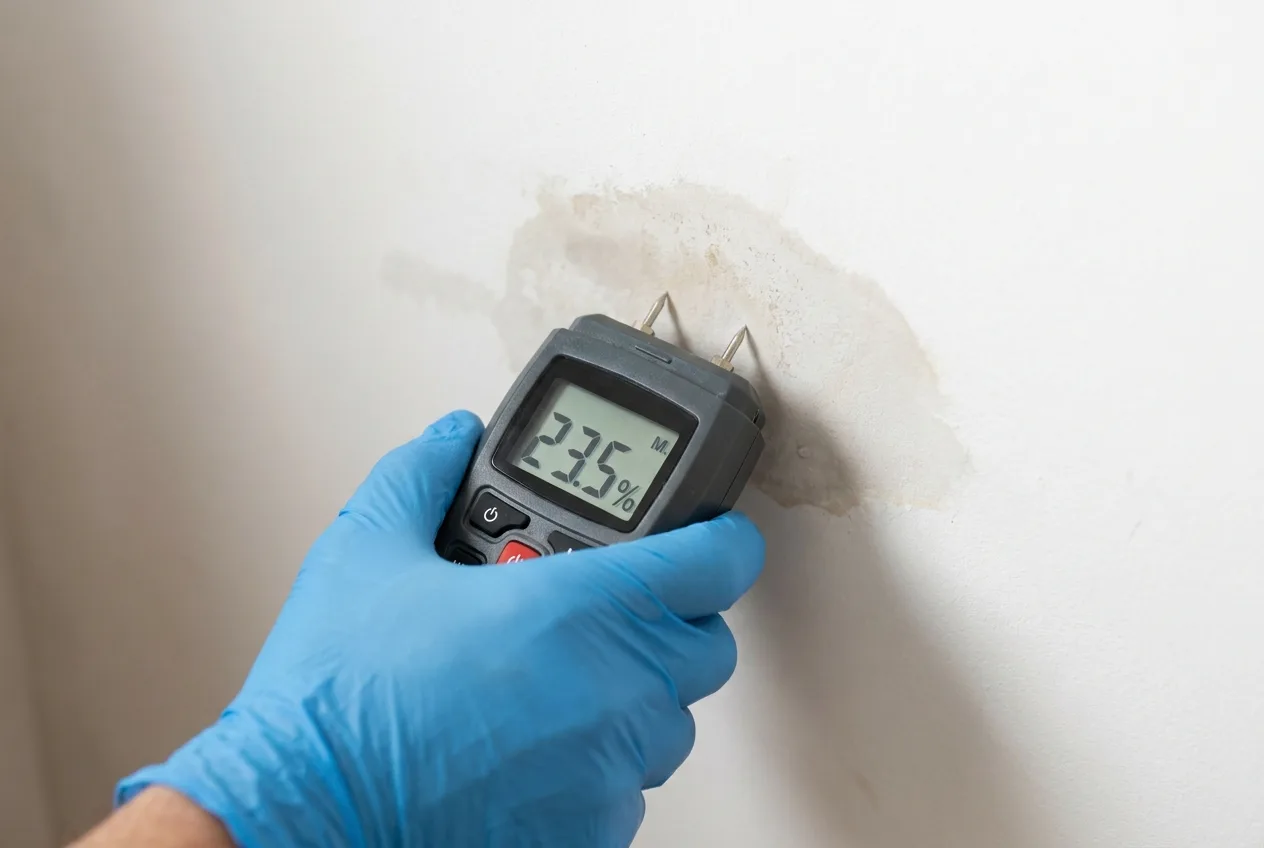
Short answer: If water is getting in from outside, the solution also starts outside: the point where water enters (a crack in the render, a window sill, a window-frame joint, the roof, a gutter, a balcony) is found and repaired, and the façade is waterproofed. Inside, once the wall has dried, the blistered plaster is stripped and renewed with a breathable damp-proofing plaster. Painting or covering only from the inside does not stop rainwater.
A stain on an interior wall that grows after rainy days, blistering paint or mould appearing in a corner often shows that water is getting in through the exterior wall. One of the questions that came to our chat assistant was exactly this: "The paint is blistering on the toilet wall that faces the outside; we're on the 3rd floor." In this article we first explain how to tell whether the source really is the exterior wall, and then, in order, what to do outside and inside.
Is the water really coming in through the exterior wall?
- If the stain grows after rain and shrinks in dry weather: water is most likely getting in from outside.
- On a façade exposed to wind and rain, below a window, in a corner or where the wall meets the ceiling: check the façade and window-frame details.
- If you live on an upper floor: a wall on the 2nd or 3rd floor does not get rising damp from the ground; rising damp only occurs in walls in contact with the ground. On an upper floor, damp is either water coming in from outside, a plumbing leak or condensation.
- On a bathroom or toilet wall: as well as the exterior wall, consider a plumbing leak and condensation of steam from the bathroom.
- If the stain starts at the base of the wall and persists during dry periods too: this may not be the exterior wall but rising damp.
Where water gets in from outside: a checklist
- Cracks in the façade render, and hairline cracks where columns and beams meet the wall
- Window sills: outward slope, drip groove underneath and side joints
- The joint and silicone between the window frame and the wall
- Overflows and leaks in the roof, eaves, gutters and downpipes
- Where the balcony floor meets the wall, and the balcony waterproofing
- Damaged external wall insulation or the joints of façade cladding
What to do outside
Once the source has been found, repairs come first: cracks are sealed with a suitable repair mortar, sill and window-frame joints are corrected, and gutters and downpipes are cleaned. Large surfaces need façade waterproofing. For exterior façade applications, Dryvatec's crystalline waterproofing products are recommended; these products are not sold in the online shop but on a project basis — ask for information for your building via the Request a Quote form. In apartment buildings the façade is usually a common area; you may need to apply to the building management for repairs.
What to do inside
- Cut off the external source first: Any work done inside while water is still getting in from outside is temporary.
- Wait for it to dry: Stripping the damaged plaster helps the wall dry faster.
- Renew the blistered plaster: HydroFix is applied to the mineral surface; 2–2.5 mm per coat, 3–4 mm in total over two coats. HydroFix is an interior product; it is not used on exterior façades.
- Breathable paint: Once the plaster has dried for at least 3 days, primer and a vapour-permeable paint. All the steps: How to paint a damp wall.
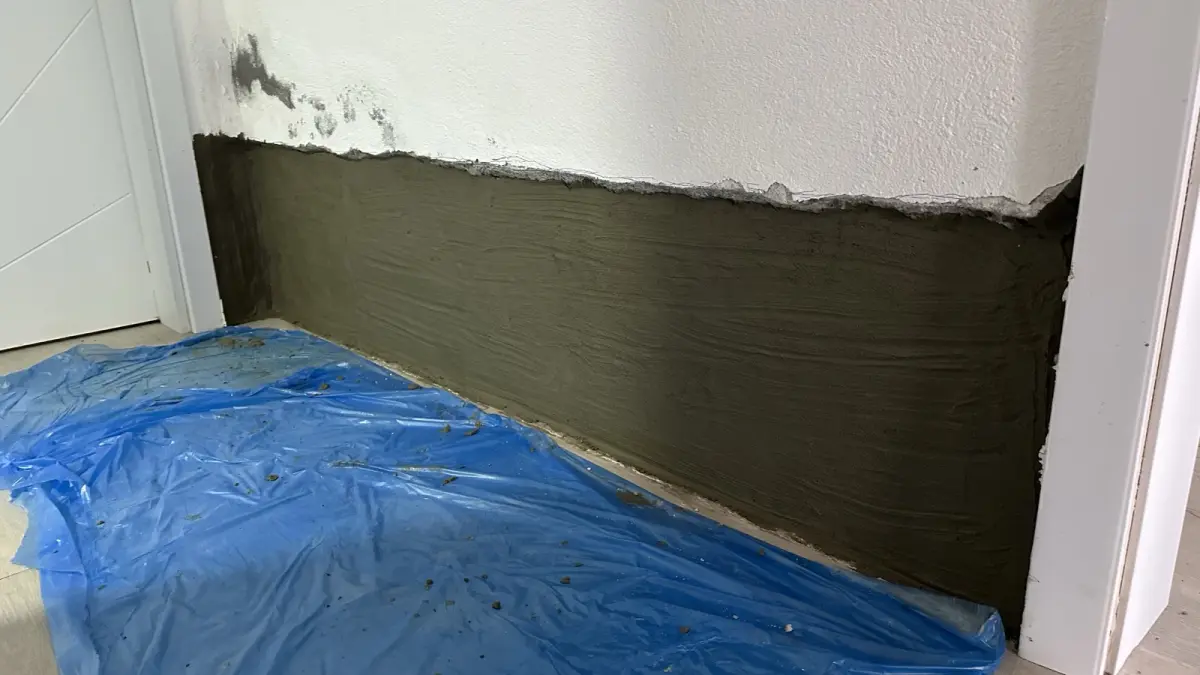
If a wall in contact with the ground lets in water from outside
In basements, garden-level floors and walls set against a slope, the "water from outside" is water in the soil. On these walls set into the soil, water gets in actively from outside; DampStop (rising damp) injection is not the solution here. HydroFix damp-proofing plaster keeps the problem out of sight for a while, but as long as water keeps getting in, the damp will show itself again later. To stop moisture and water in a basement, you need works such as polyurethane (PU) injection and crystalline waterproofing; these are planned on the basis of an expert assessment. More detail: Moisture and water ingress in basements.
In an exterior wall on the ground floor or entrance level, water can also get in horizontally beneath the brick, at the joint where the wall sits on the foundation concrete; we explain why the screed is removed during a renovation and why the damp-proofing plaster is taken down to the floor junction in Damp entering at the base of an exterior wall.
For repairing the inner surface and for ground-level walls
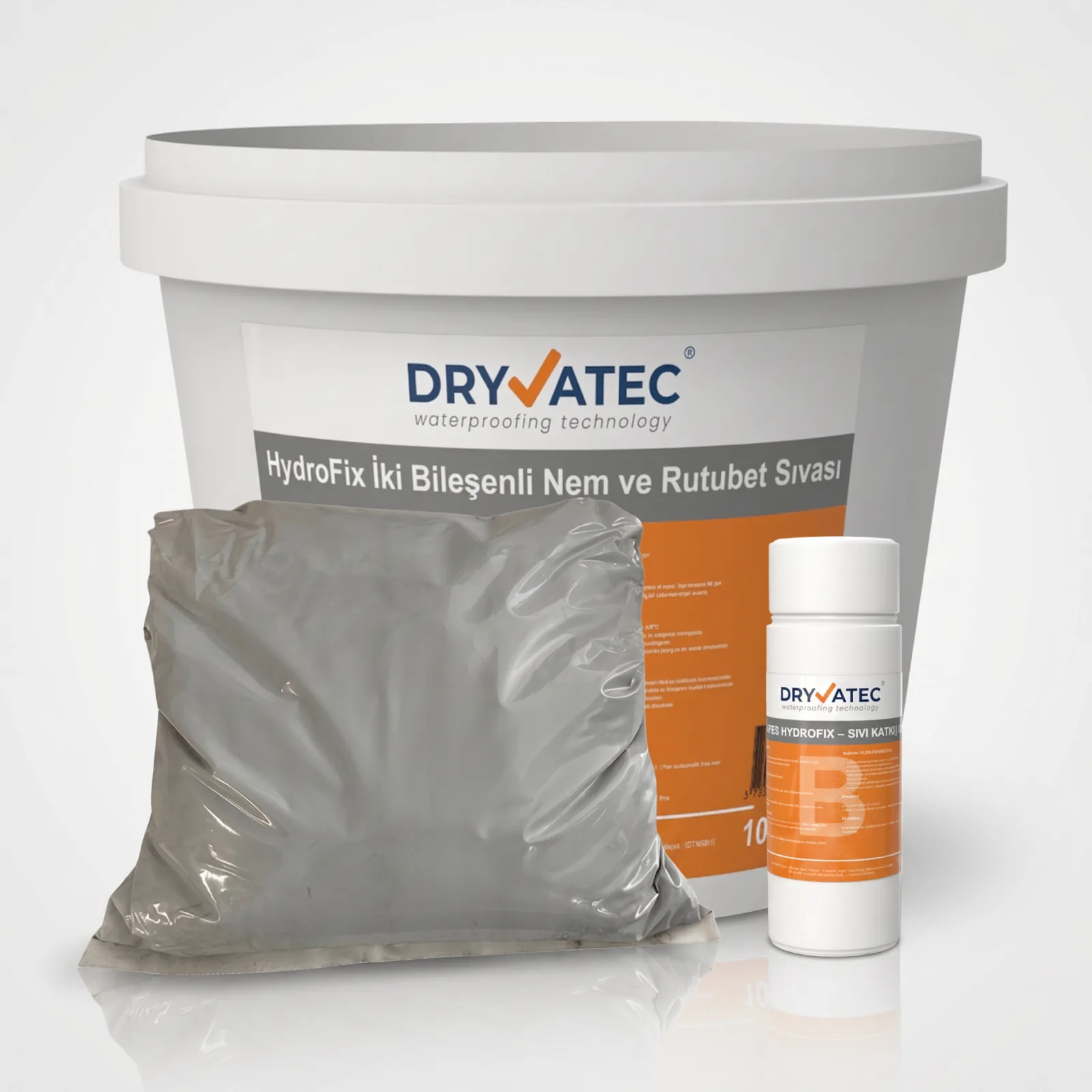
HydroFix 10kg Damp-Proofing Plaster
To replace blistered interior plaster once the external source has been fixed; a breathable interior damp-proofing plaster.
1.500₺ incl. VAT View Product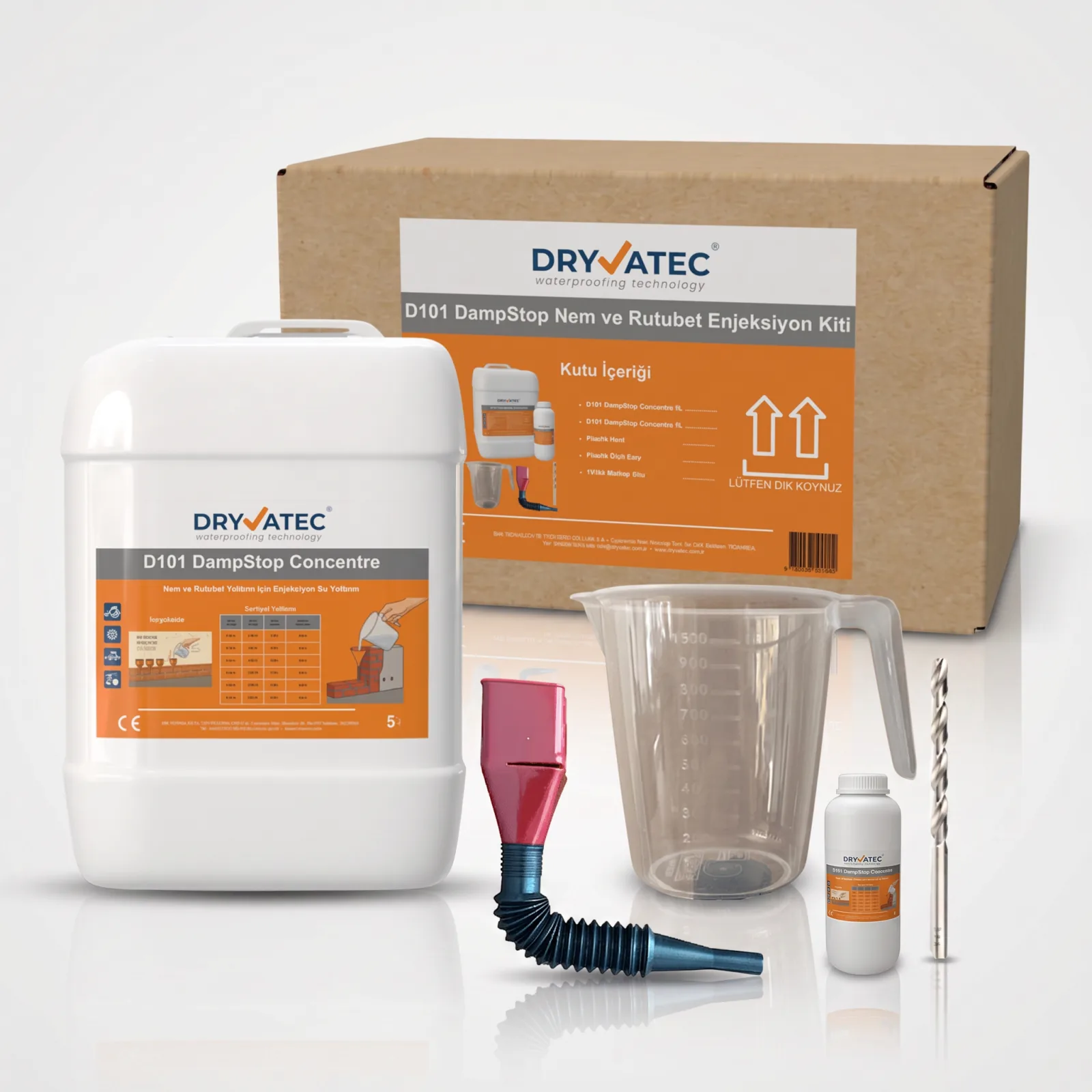
DampStop Complete Kit
If the wall has no contact with the soil and the damp is rising from the base of the wall: injection concentrate + equipment. Not for basement walls set into the soil.
8.700₺ incl. VAT View ProductPay by card (Ziraat 3D Secure) or bank transfer/EFT — for bank transfer call +90 850 532 6 999 · No cash on delivery or instalments · Free shipping within Türkiye · 14-day right of return · Work out the quantity with the consumption calculator.
"What should be applied to a wall that lets in water?"
The answer depends on which side the water is coming in from. For rainwater coming in from outside, repair and waterproofing are needed on the outer face; a product applied from the inside does not on its own stop water coming from outside. Inside, once the source has been cut off, a breathable damp-proofing plaster is applied in place of the damaged surface. Simply sealing the inside with a "waterproof" paint traps the water inside the wall and speeds up blistering.
Frequently Asked Questions
What can be done from the inside about a wall letting in water from outside?
The job on the inside is, once the external source has been fixed, to strip the damaged plaster, renew it with a breathable damp-proofing plaster and paint it with a breathable paint. Work done from the inside does not on its own stop water entering from outside.
What should be applied to a wall that lets in water?
On the outer face, crack repair and façade waterproofing; on the inner face, once the source has been cut off, a breathable damp-proofing plaster such as HydroFix. Sealing the inside with waterproof paint traps the water inside the wall.
Is damp on an upper-floor exterior wall rising damp?
No. Rising damp only occurs in walls in contact with the ground. Damp on an upper floor is rainwater coming in from outside, a plumbing leak or condensation.
Does external wall insulation stop water coming in from outside?
The main purpose of external wall insulation (ETICS) is thermal insulation. Sound, correctly detailed insulation protects the façade from rain; however, insulation that has cracked or whose joints have opened can let in water. If water is getting in, the damaged area must be repaired first.
Can HydroFix be used on an exterior façade?
No. HydroFix is designed for interior applications. For exterior façades, Dryvatec crystalline waterproofing products are recommended.
Related Guides
- A definitive fix for wall damp: 3 methods by source
- Which is the best waterproofing material?
- How to paint a damp wall
- What is condensation damp?
- Blistering paint and crumbling plaster
Not sure where the water is coming from?
Send photos of the wall from inside and outside; we will assess the source and the solution free of charge.