📌 In short
The white, cotton-like or crystalline powder on your wall surface is salt efflorescence — known in Türkiye by the folk name güherçile (saltpetre). Its source is the water moving inside the wall: as the water evaporates, it leaves behind the salts it carries. Brushing removes it, but as long as the water keeps coming it forms again — and, worse, as the crystals grow they blow the plaster and paint apart. The permanent fix: remove the salt-laden plaster and replace it with salt-resistant HydroFix, then, once the plaster has dried, cut off the water's path with DampStop injection.
What Is This White Powder?
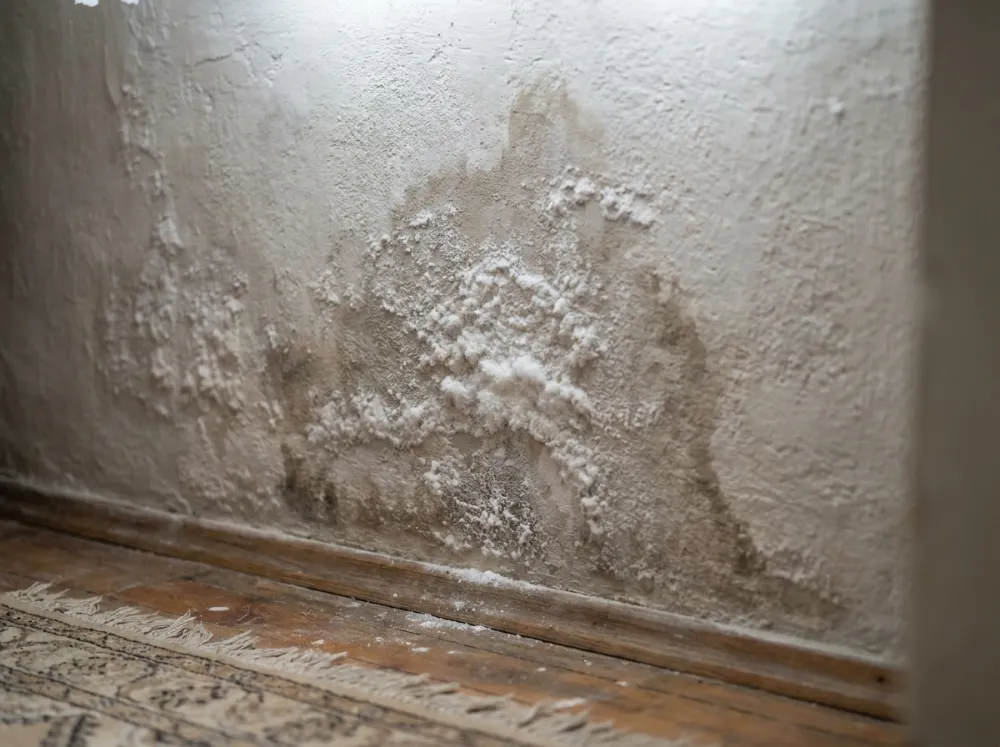
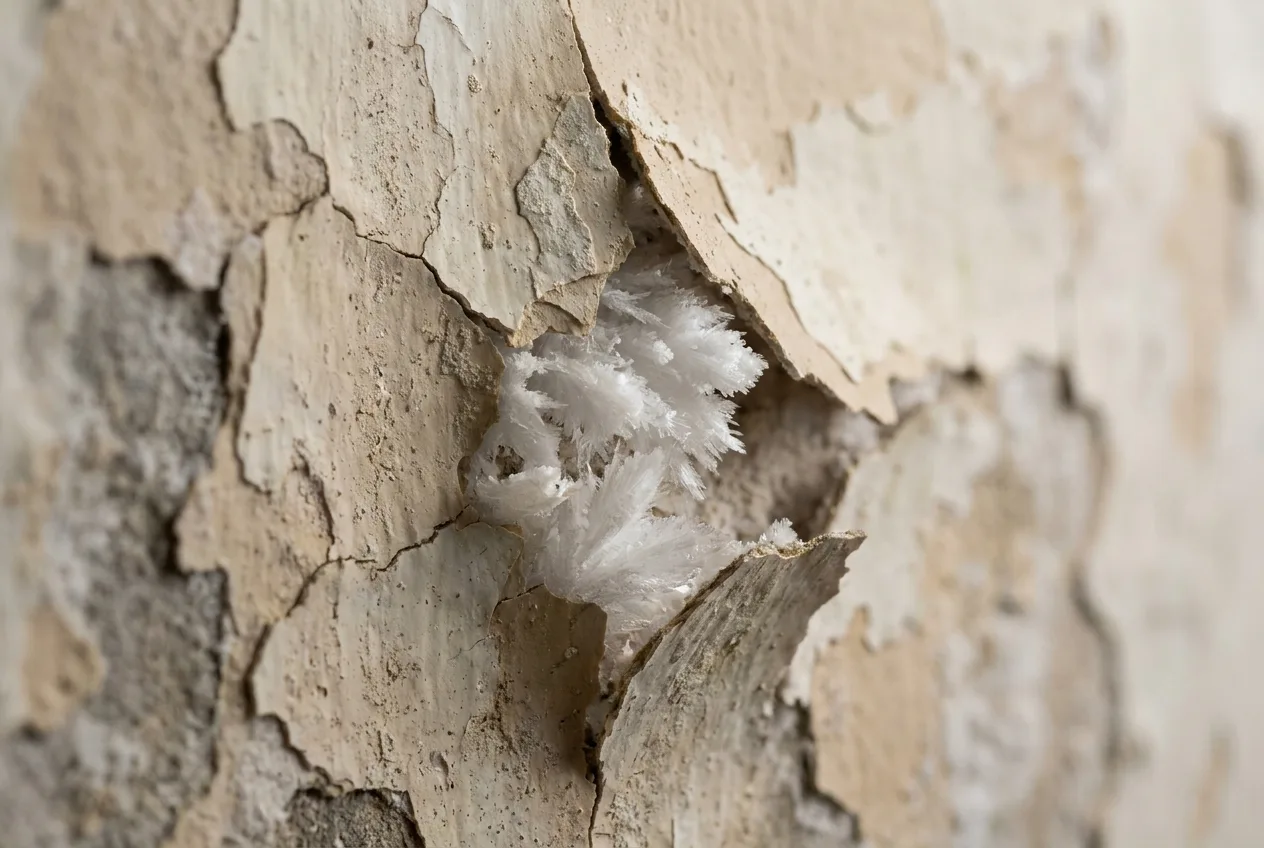
The white, cotton-like, sometimes snow-like crystalline layer that builds up at the base of a wall, on brickwork or on top of plaster is called salt efflorescence (technically efflorescence; its folk name in Türkiye is güherçile — saltpetre). It looks harmless, but the message it carries is important: water is circulating inside your wall.
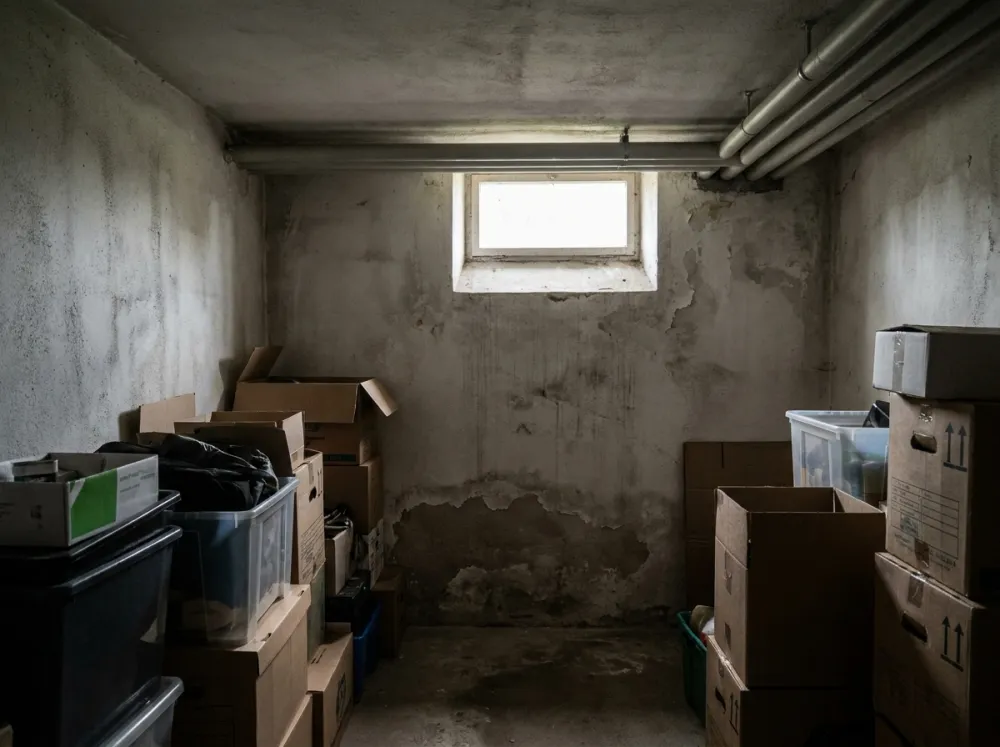
The mechanism is simple: as ground water climbs up through the wall's pores, it collects dissolved salts from the soil, the mortar and the brick along the way. When the water reaches the surface and evaporates, the water itself leaves — the salts stay behind. Every evaporation cycle adds a new layer of salt to the surface. Think of it as the wall's equivalent of the limescale at the bottom of a kettle.
Why It Is Not Just a Cosmetic Problem
Salt is the wall's silent destroyer. It causes damage in two ways:
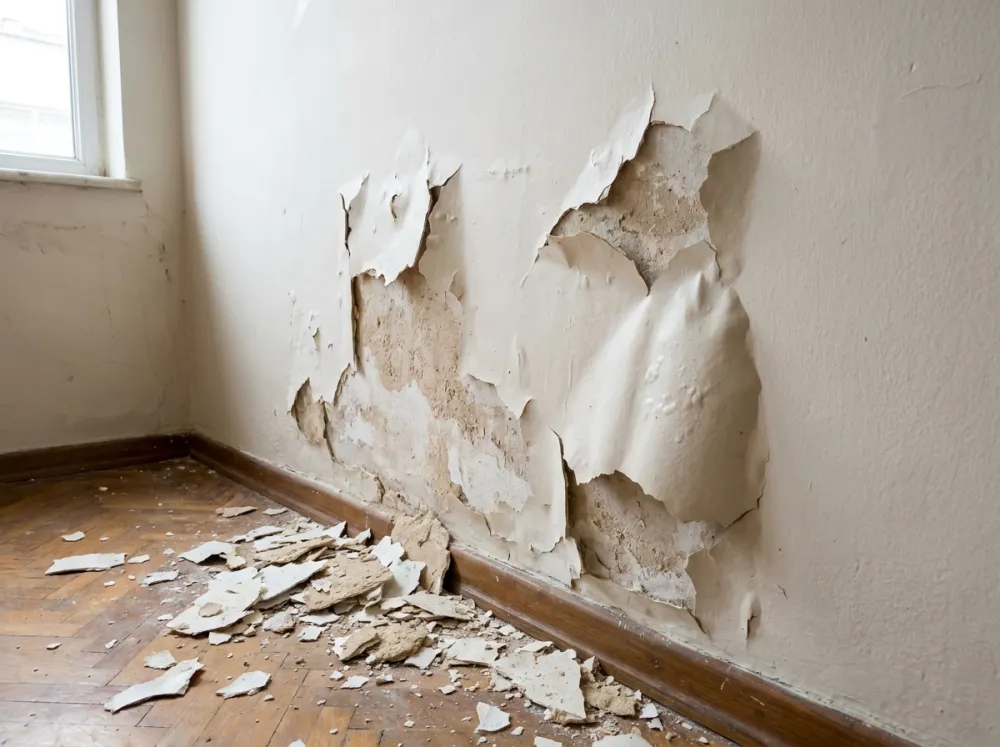
- Crystallisation pressure: Salt crystals grow inside the pores of the plaster and the brick. As they grow they exert powerful pressure on their surroundings; paint blisters, plaster crumbles, the brick face flakes away. It is no coincidence that peeling paint and salt efflorescence are so often seen side by side.
- The moisture-magnet effect: Many salts are hygroscopic — they draw moisture from the air. That means a salt-laden wall can keep absorbing moisture from the air even after the rising damp has been stopped. This is why salt-laden plaster must not be left on the surface; it has to be removed.
Does This Sound Familiar? Quick Checklist
If you are seeing the following, there is active water movement in your wall:
- White, cotton-like deposits at the base of the wall or above the skirting
- The powder brushes off but returns within weeks
- Blistering paint or crumbling plaster in the same area
- The deposit increases in dry weather (faster evaporation leaves more salt behind)
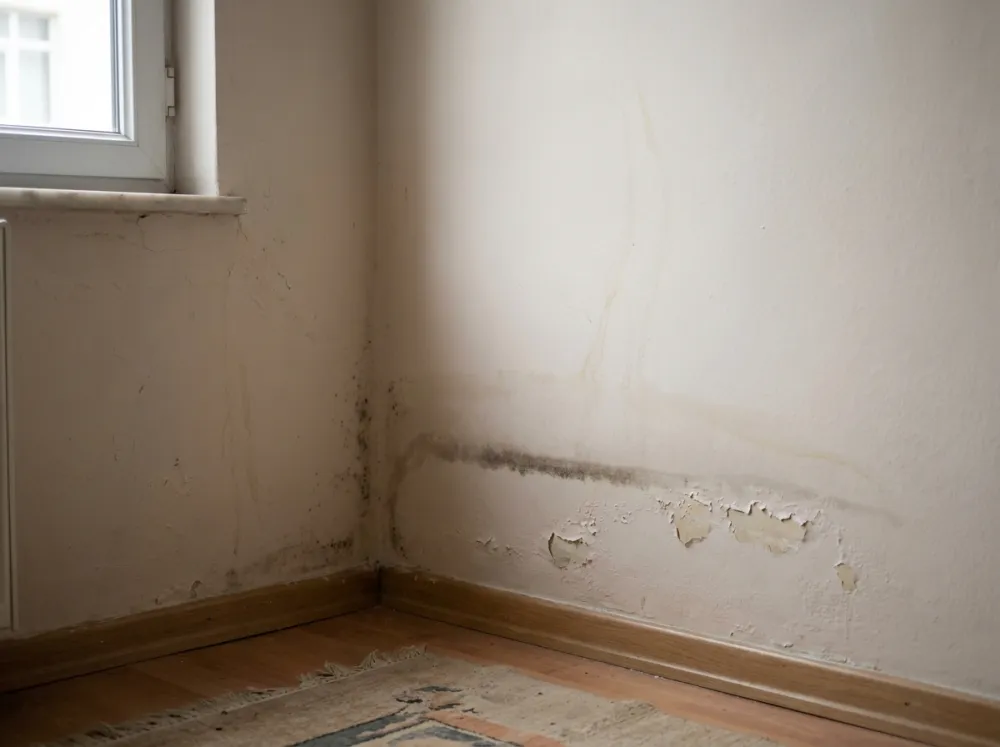
- A damp line or moisture stain accompanies it on the lower zone of the wall
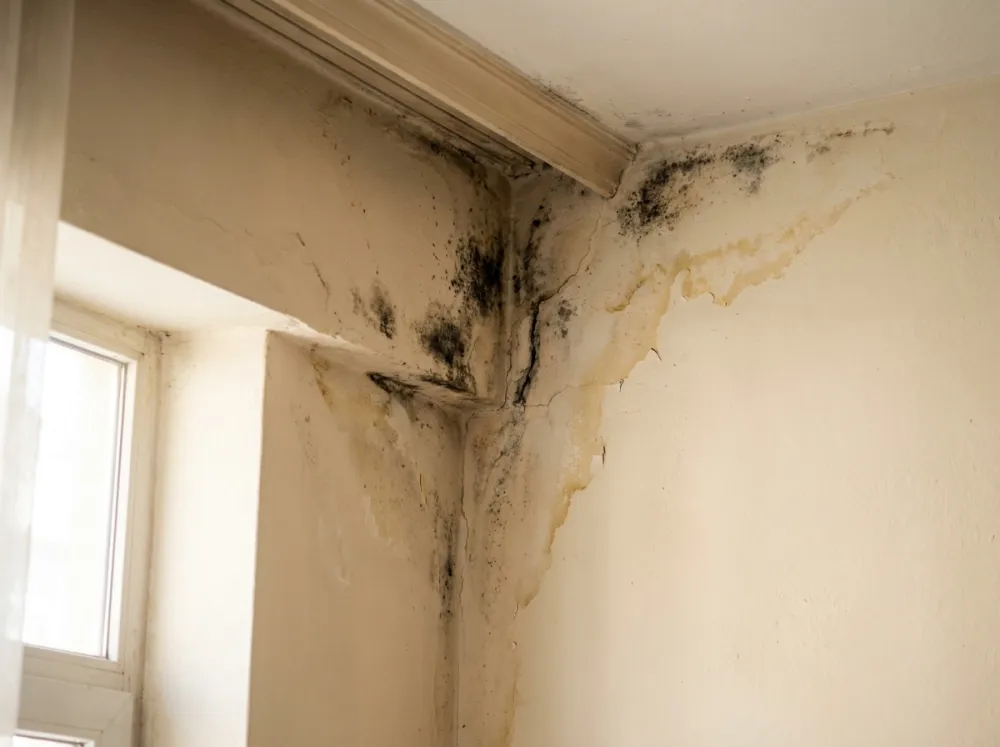
Salt efflorescence is almost always seen together with rising damp; the two are two faces of the same problem.
The Permanent Fix: Stop the Water, Replace the Salt-Laden Plaster
The only way to stop the salt production is to cut off the path of the water that carries it:
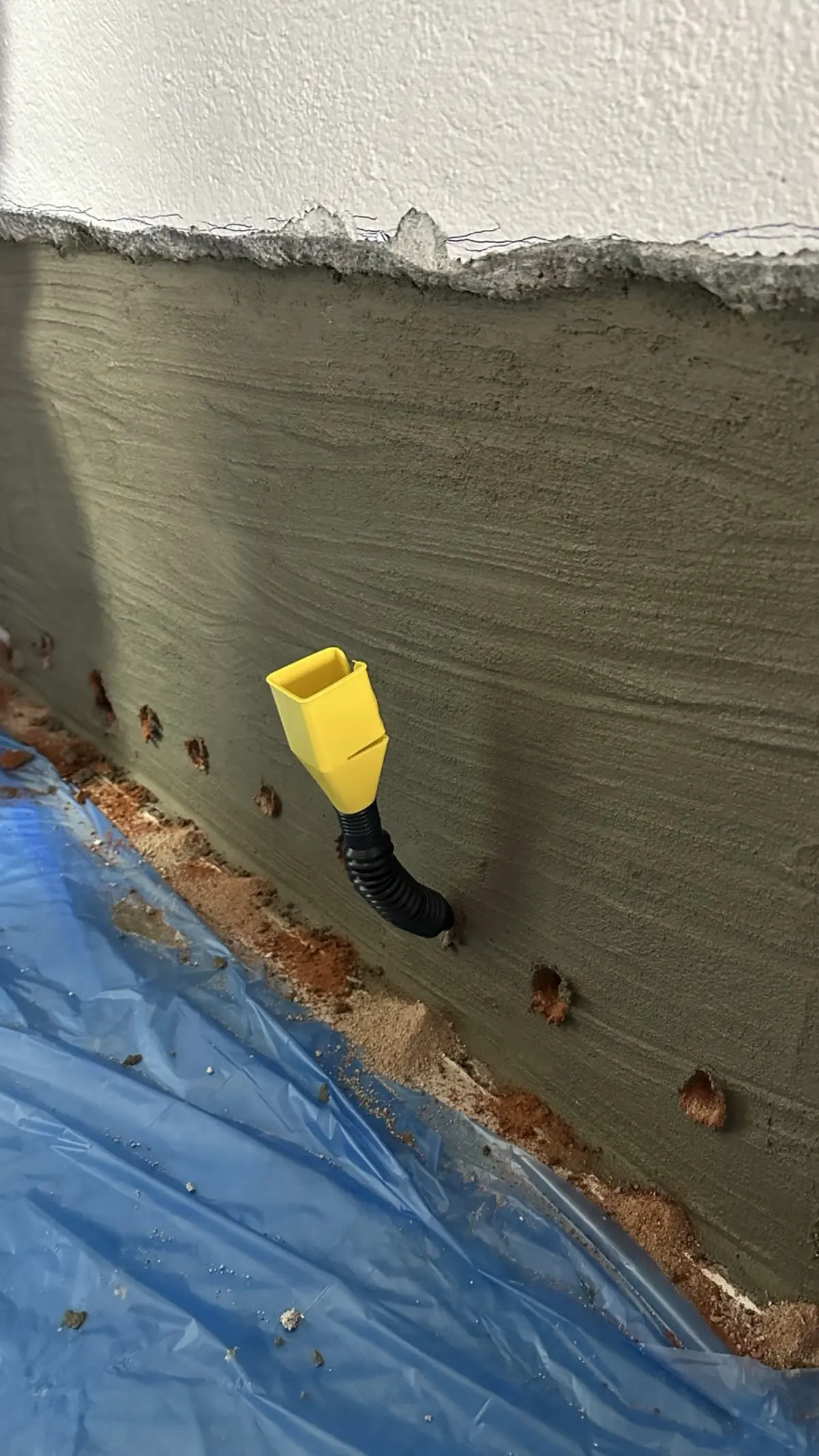
- Remove the salt-laden plaster: Because the existing plaster will keep releasing the salt it has stored over the years, the damaged area (together with its surroundings) is chipped off and the debris removed from the site.
- Salt-resistant plaster (HydroFix): The surface is renewed with HydroFix damp-proofing plaster. HydroFix both lets the remaining moisture in the wall evaporate and, thanks to its pore structure, prevents salt crystals from blowing the surface apart.
- Damp-proof barrier (DampStop): Once the HydroFix has dried (24–48 hours), DampStop injection is applied along the bottom course of the wall; the pores become water-repellent, and the transport of water — and with it, salt — from the ground stops. Why this order? Stripping plaster can break open the cells of the bricks; if you inject first, the solution runs out through those breaks. If the plaster goes on first, the injection stays inside the brick without overflowing.
Not sure which products or quantities your wall needs? Send us photos of your wall; we will assess them free of charge as soon as possible.
How Is It Applied? (93 seconds)
Products Used to Solve This Problem
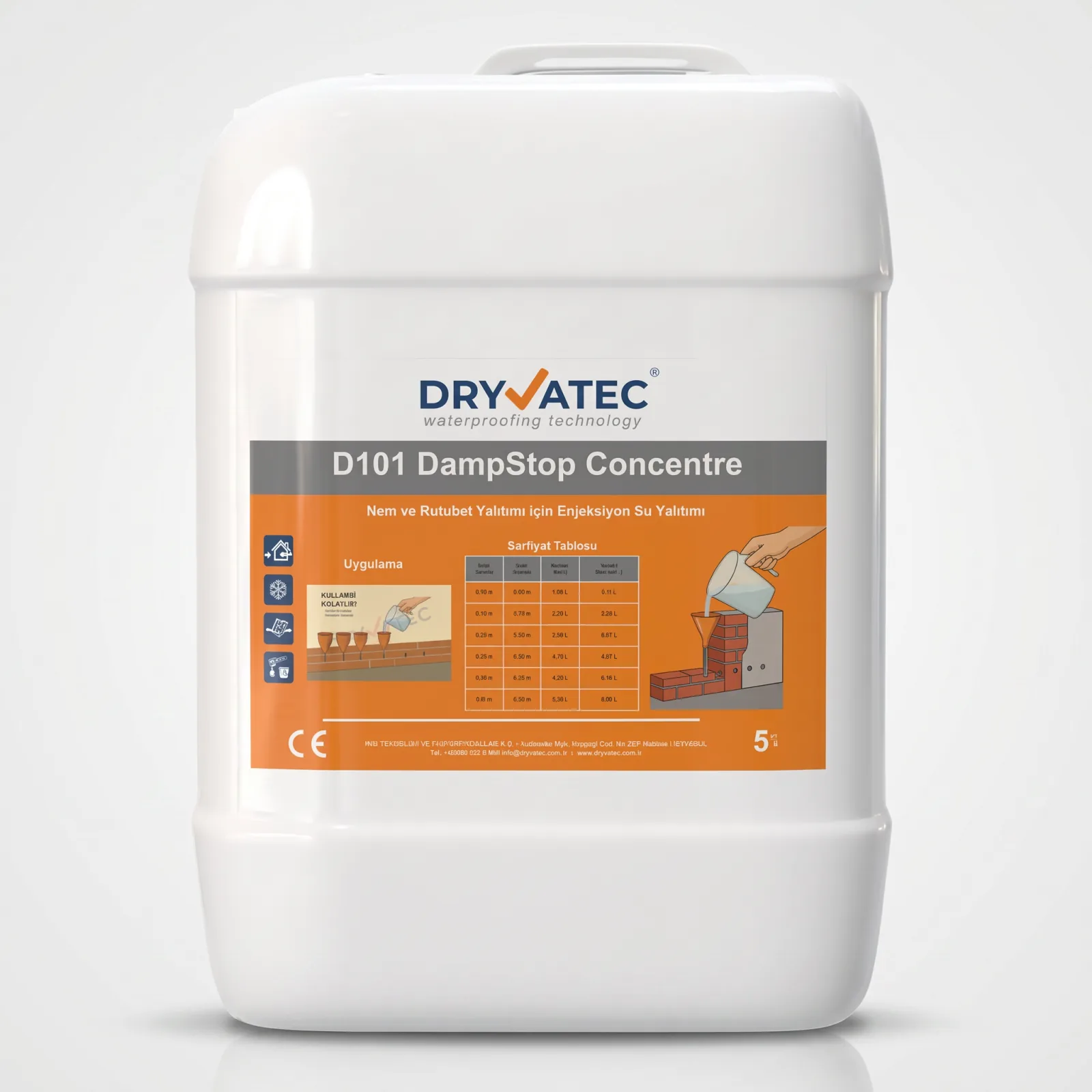
DampStop 5L Injection
Injected into holes drilled along the bottom course of the wall; forms a silane/siloxane barrier that stops the water from rising.
8.000₺ View Product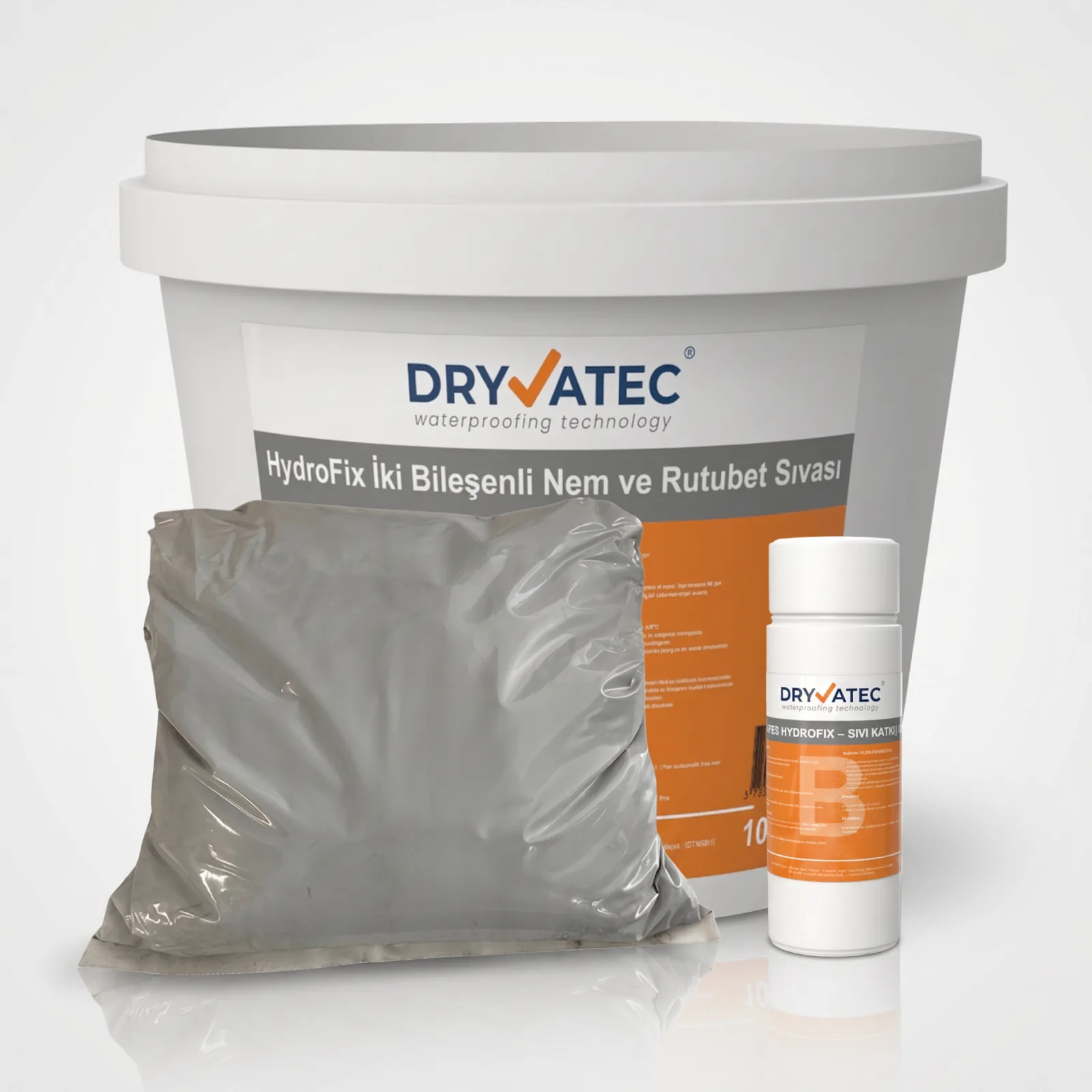
HydroFix 10 kg Damp-Proofing Plaster
Applied before the injection, in place of the stripped plaster; a breathable, salt-resistant repair plaster.
1.500₺ View Product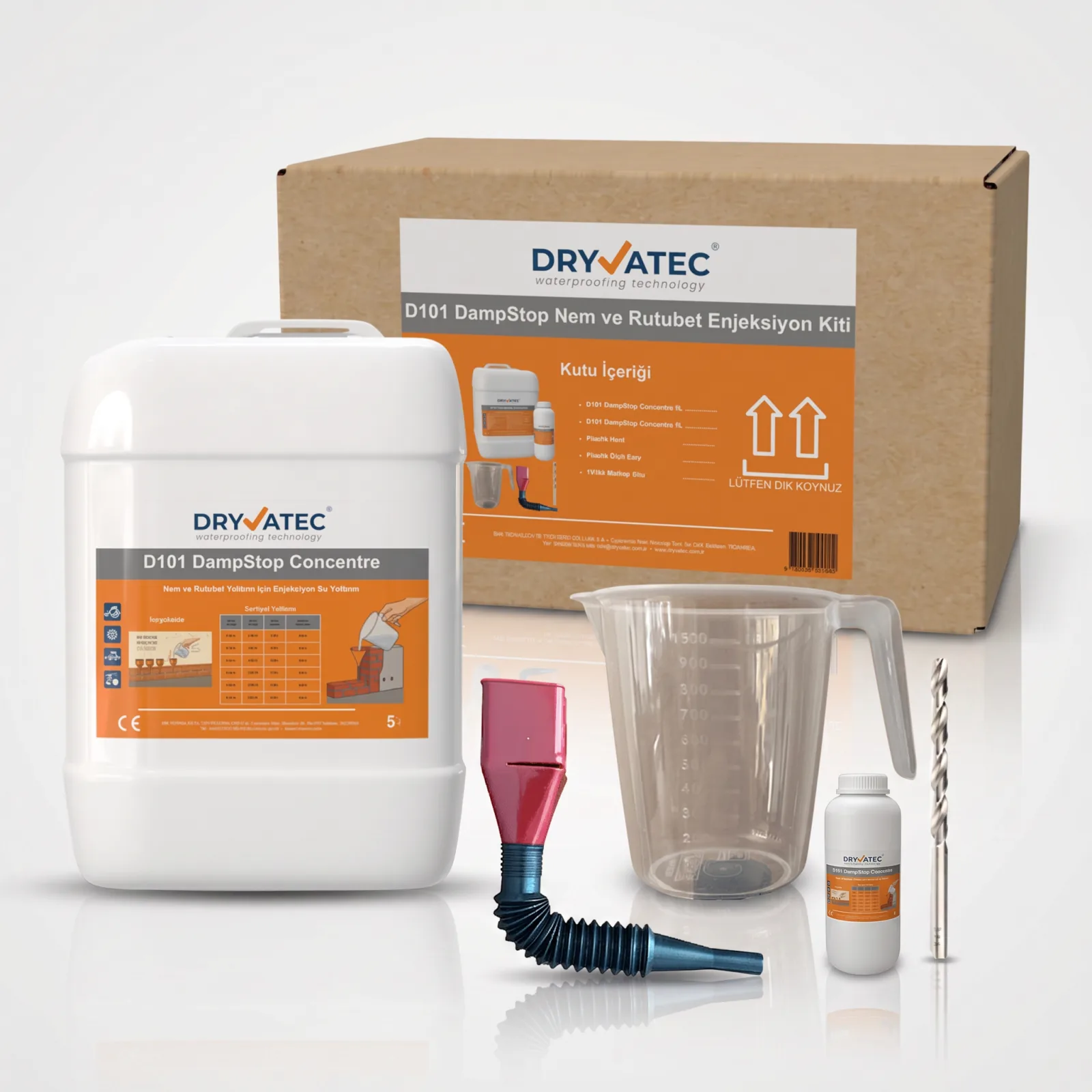
DampStop Complete Kit
DampStop 5 L concentrate + funnel, measuring jug and 14 mm drill bit. Everything you need for the injection in one box.
8.700₺ View ProductSee how the three products work together: The Triple System →
What Is the White "Ash" or Powder on the Wall?
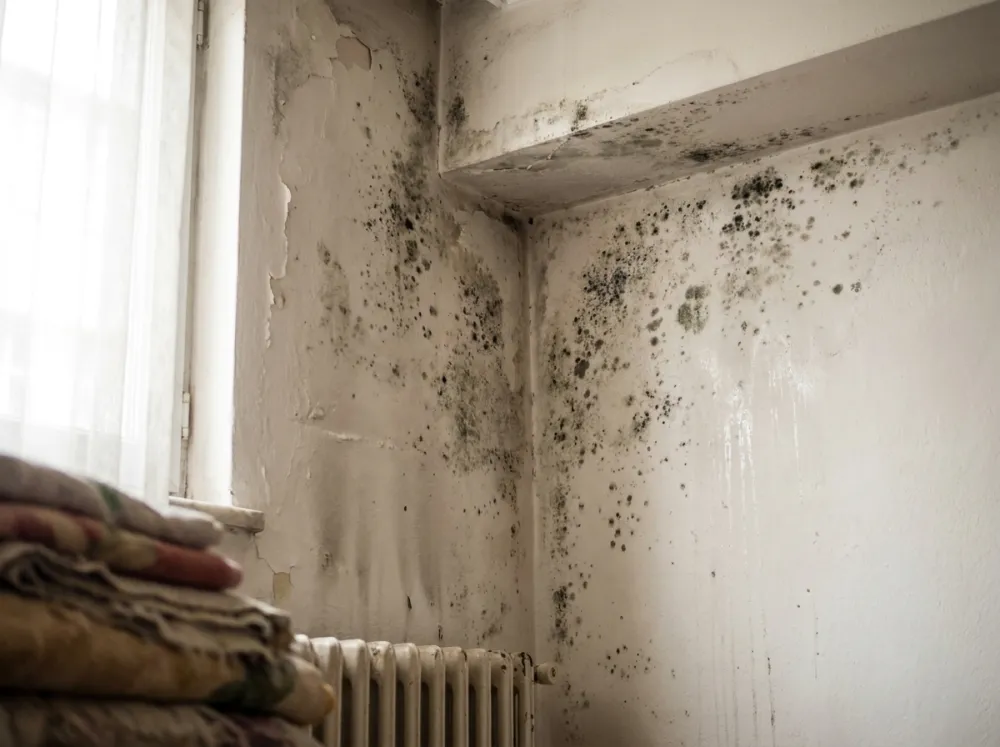
The white, fluffy layer that crumbles like powder when wiped — often described as "ash" or "the wall is dusting" — is not mould but salt efflorescence. Mould spreads as black, greenish or grey spots and smells musty; efflorescence is white, odourless and usually appears in the lower section of the wall, up to the height rising damp reaches. Wiping or brushing it off is temporary: as long as water comes through the wall, salt keeps returning to the surface. The lasting fix is to stop the water and replace the salt-laden plaster, as described below.
Frequently Asked Questions
Is the white powder on my wall mould?
No. A white, fluffy, odourless layer that crumbles like powder is salt efflorescence. Mould spreads as black, greenish or grey spots and smells musty. Efflorescence shows that water is coming through the wall; wiping it off without stopping the source is only temporary.
I keep brushing off the white powder but it comes back — why?
Because the powder is not the problem itself; it is the result. As long as water keeps moving inside the wall, every evaporation leaves fresh salt on the surface. Brushing only clears the appearance temporarily; the permanent fix is to stop the water entering the wall.
Is saltpetre toxic or harmful to health?
The salt itself is typically not toxic; but its presence shows the wall is constantly damp. A damp wall lays the ground for mould, poor air quality and respiratory complaints. In other words, the real health risk is not the powder itself but the damp problem it points to.
Why won't normal plaster and paint stick to a salt-laden wall?
Salts attract moisture (they are hygroscopic) and change volume as they dry and rewet. This cycle pushes normal plaster and paint off from within, making them blister. That is why standard gypsum/cement plaster on a salt-laden surface soon crumbles again; a salt-resistant, breathable special plaster is required.
Which products are needed for the fix?
Two steps: first the salt-laden plaster is removed and replaced with salt-resistant HydroFix damp-proofing plaster; once the plaster has dried, DampStop injection stops the water rising. The injection concentrate and equipment come together in the DampStop Complete Kit; HydroFix is bought separately.
Learn More: Related Guides
- What Is Rising Damp?
- Why Does Salt Efflorescence Form at the Base of Walls?
- How Can I Tell If the Damp on My Wall Is Rising Damp?
Not sure? Send us a photo and we will tell you
Send photos of the problem area; our technical team will assess the cause as soon as possible and recommend a solution tailored to you. Free of charge, with no obligation to buy.