📌 In short
Because basement walls are in direct contact with the ground, this is where damp problems hit hardest: water reaches the wall actively from outside, and once little sunlight and poor ventilation are added, musty odours, mould and mildewed belongings become almost inevitable. The solution depends on whether there is soil behind the wall: on a basement wall set into the soil, the water ingress is stopped with PU injection and crystalline waterproofing works; on a ground-floor wall with no contact with the soil, DampStop injection + HydroFix plaster are applied, with the Damp Box (Nem Kutusu) where needed.
Why Are Basements Always Damp?
When it comes to damp, basements and ground floors are the most challenging part of a building, because three disadvantages come together here:
- Ground contact: The walls and the floor slab are in direct contact with moist soil. If there is no waterproofing — or it has aged — water both rises up from the base and seeps in laterally through the walls.
- Little sun, little air: Because of small windows and weak airflow, evaporating moisture stays trapped indoors; relative humidity remains permanently high.
- Cold surfaces: Walls buried in the ground stay cool even in summer. When the humid indoor air touches these cold surfaces it condenses — the wall "sweats".
The result: a heavy musty smell, map-like stains on the walls, mildewed stored belongings and square metres you cannot use.
Does This Sound Familiar? Quick Checklist
If you see the following in your basement or on your ground floor, you have an active damp problem:
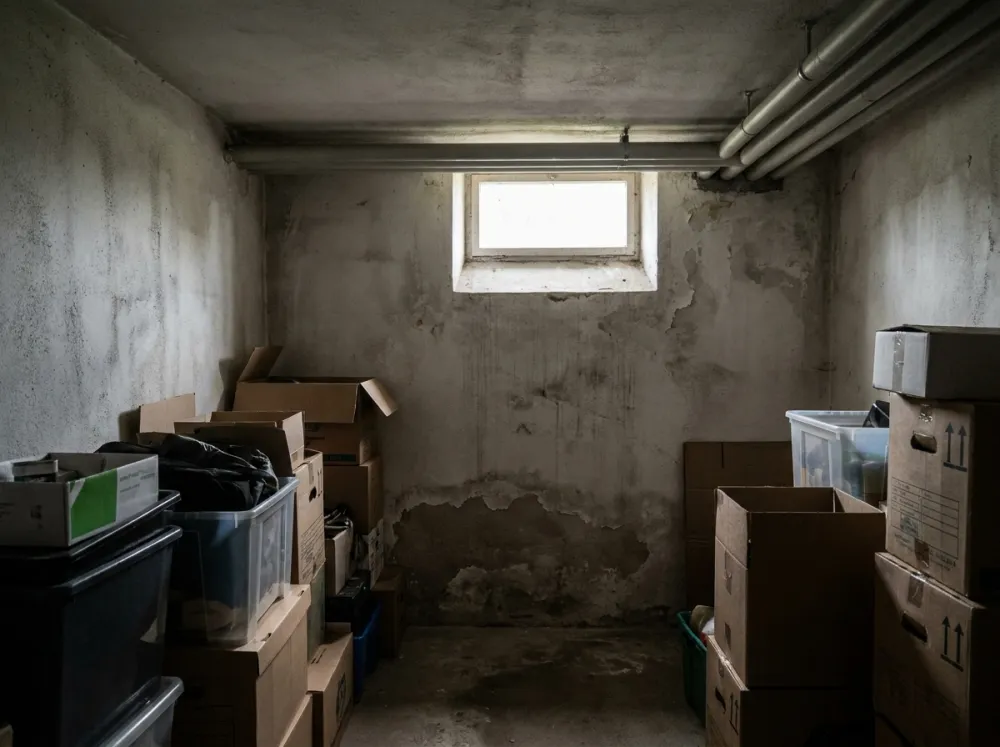
- A heavy, mouldy smell that hits you the moment you open the door
- Mould / softening on cardboard boxes, textiles and furniture
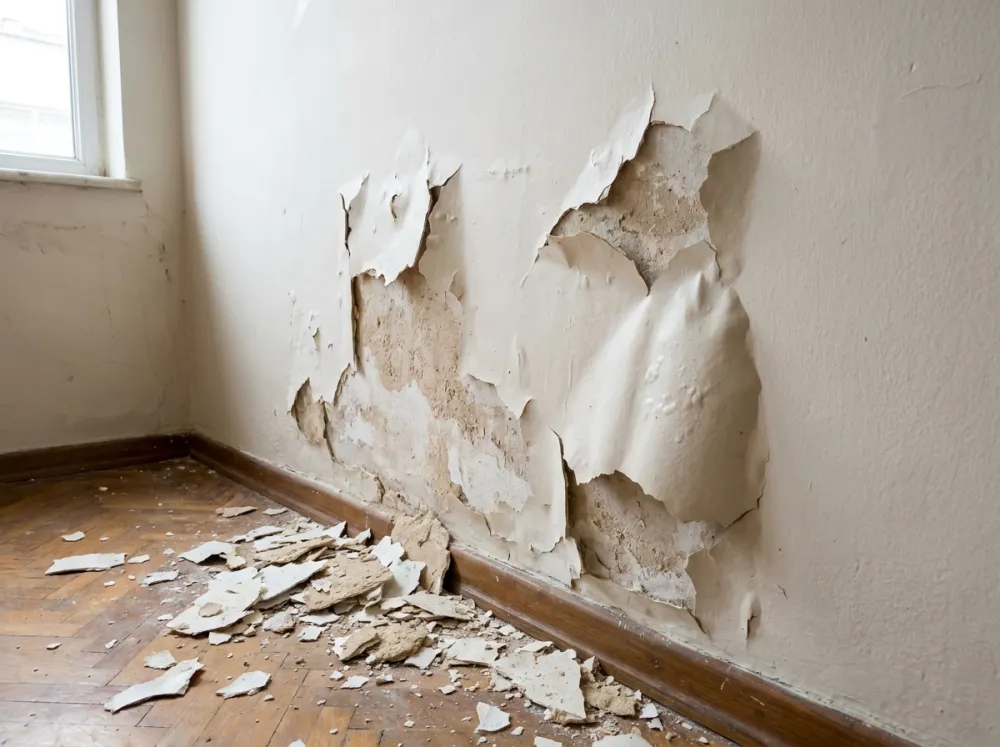
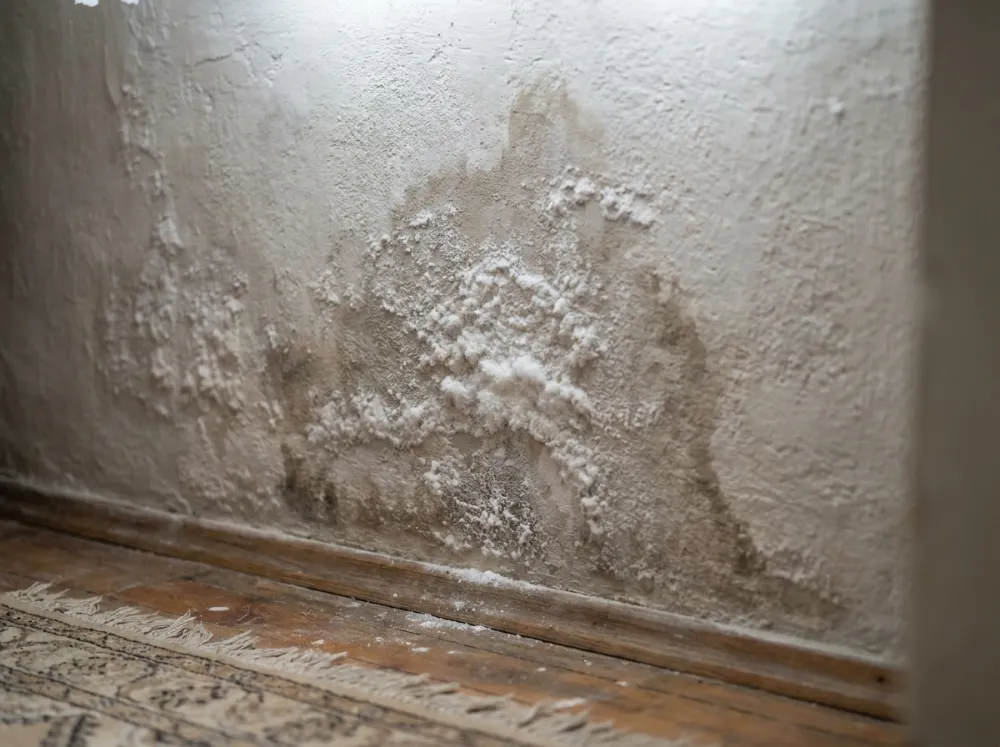
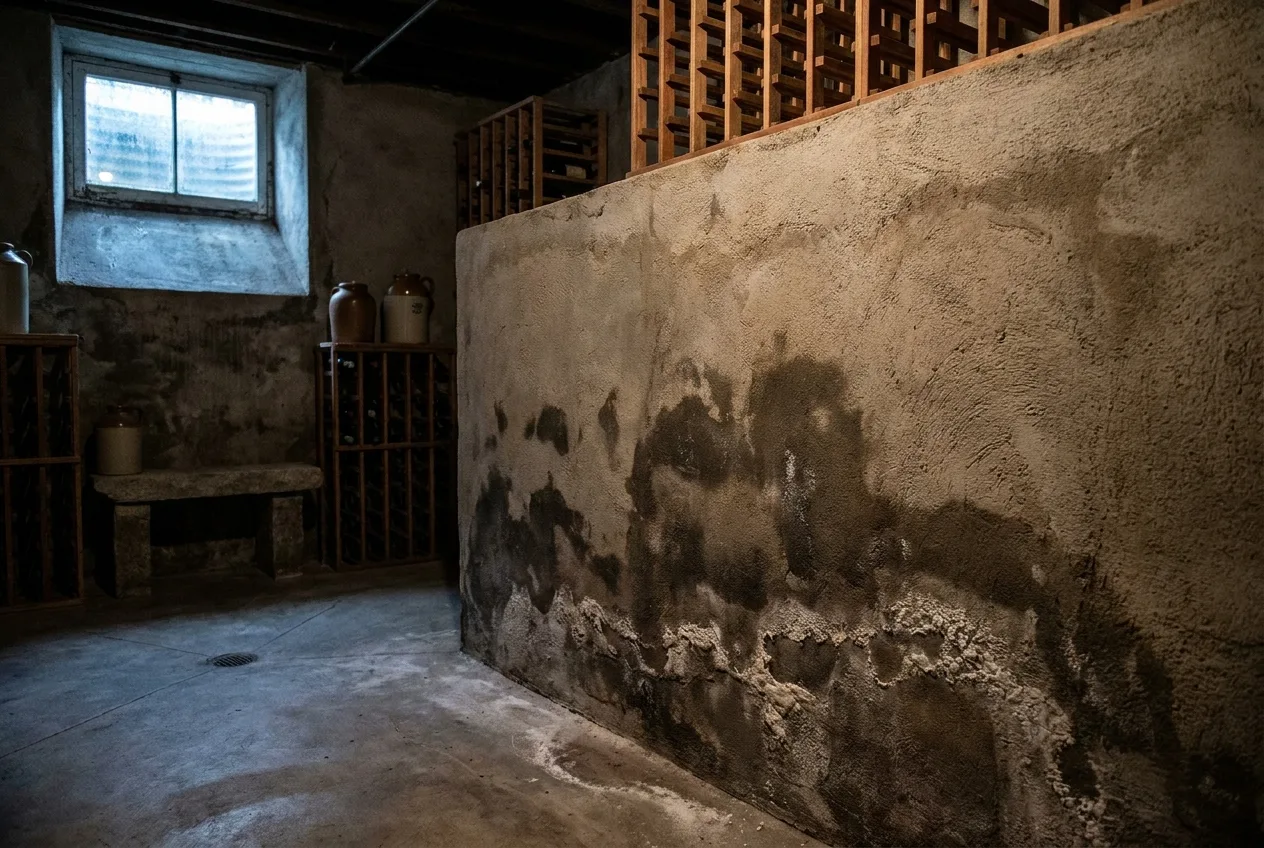
- White salt deposits and blistering plaster along the base of the walls
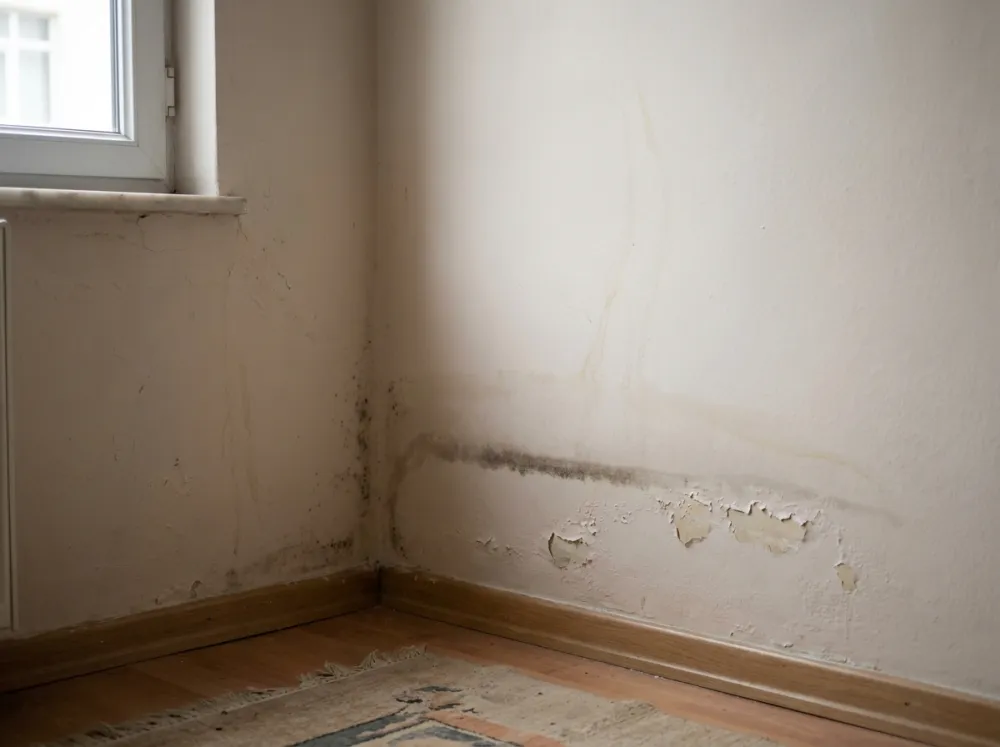
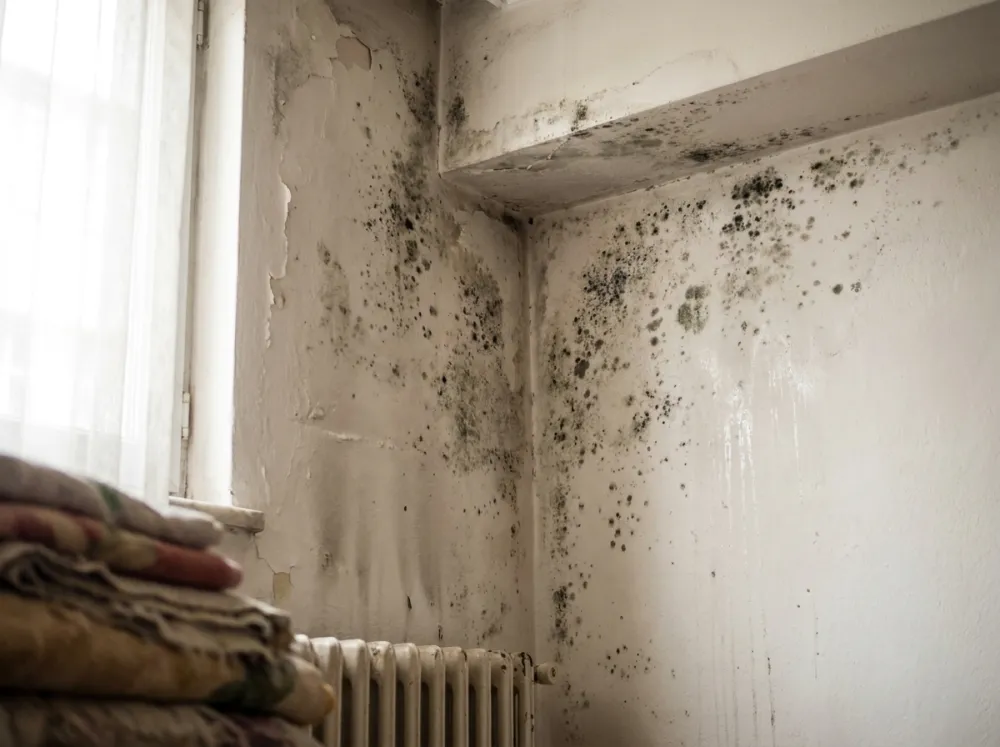
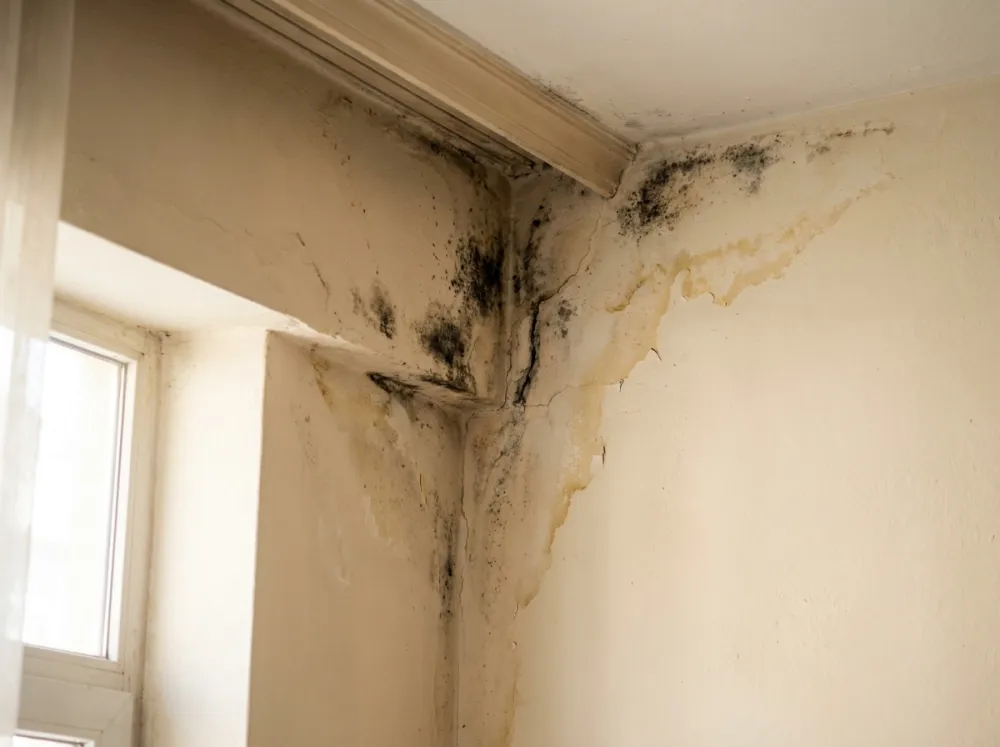
- Dark, map-patterned stains on the walls and black spots in the corners
- Rapid rusting of metal items and failures in electronic devices
- A noticeable increase in dampness during rainy periods
The Solution: First, Look Behind the Wall
Basement and ground-floor damp may show the same symptoms, but the solution is not the same. The first question is: is there soil behind the wall?
Basement, semi-basement, below-ground or retaining wall
On these walls, water gets in actively, from outside. Here, DampStop (rising damp) injection is not the solution. HydroFix damp-proofing plaster keeps the problem out of sight for a while, but as long as water keeps getting in, the damp will show itself again later. To stop moisture and water in a basement, you need to move on to works such as polyurethane (PU) injection and crystalline waterproofing. These are application works planned on the basis of an expert assessment. We explain where the water gets in, with a section of the application, in our article on moisture and water ingress in basements.
Is there soil behind your wall? A quick check: if the soil, garden or pavement outside that wall is higher than your floor inside, if your home is a garden-level or semi-basement flat or on a slope, and if the stain gets worse after rain, the wall is most likely in contact with the ground. The solution here is to stop the water getting in: if water is running, first N111 Stop water plug, then PU injection and crystalline waterproofing. An on-site survey can be arranged for these jobs; it is chargeable and planned by region: our own application team works in Istanbul and Izmir, our application partners cover the Kuşadası and Antalya areas, and other regions are assessed by our team. Send photos and the full address on WhatsApp; our team will let you know the survey fee and availability.
Entrance / ground floor (wall with no contact with the soil)
- Renew the surfaces with breathable plaster (HydroFix): First, plaster damaged by salt and moisture is stripped and HydroFix is applied. The moisture accumulated inside the wall escapes by evaporation without damaging the surface.
- Stop the rising damp (DampStop): Once the HydroFix has dried (24–48 hours), DampStop injection is applied along the bottom course of the wall; the water rising by capillary action from below is stopped. DampStop works on wall elements (brick, aerated concrete, concrete block). The injection comes after the plaster, so the solution does not run out through brick cells broken open while stripping.
- Damp Box for the foundation and columns: If there is damp throughout the building, or damp also appears at the base of columns and in reinforced-concrete sections, the Damp Box is added: it carries water reaching the foundation and rising in the columns back into the ground. We explain how it works in this FAQ answer.
- Organise the ventilation: Short, effective cross-ventilation twice a day noticeably speeds up the drying-out period. A dehumidifier is a good support during this phase — but it is not a solution on its own.
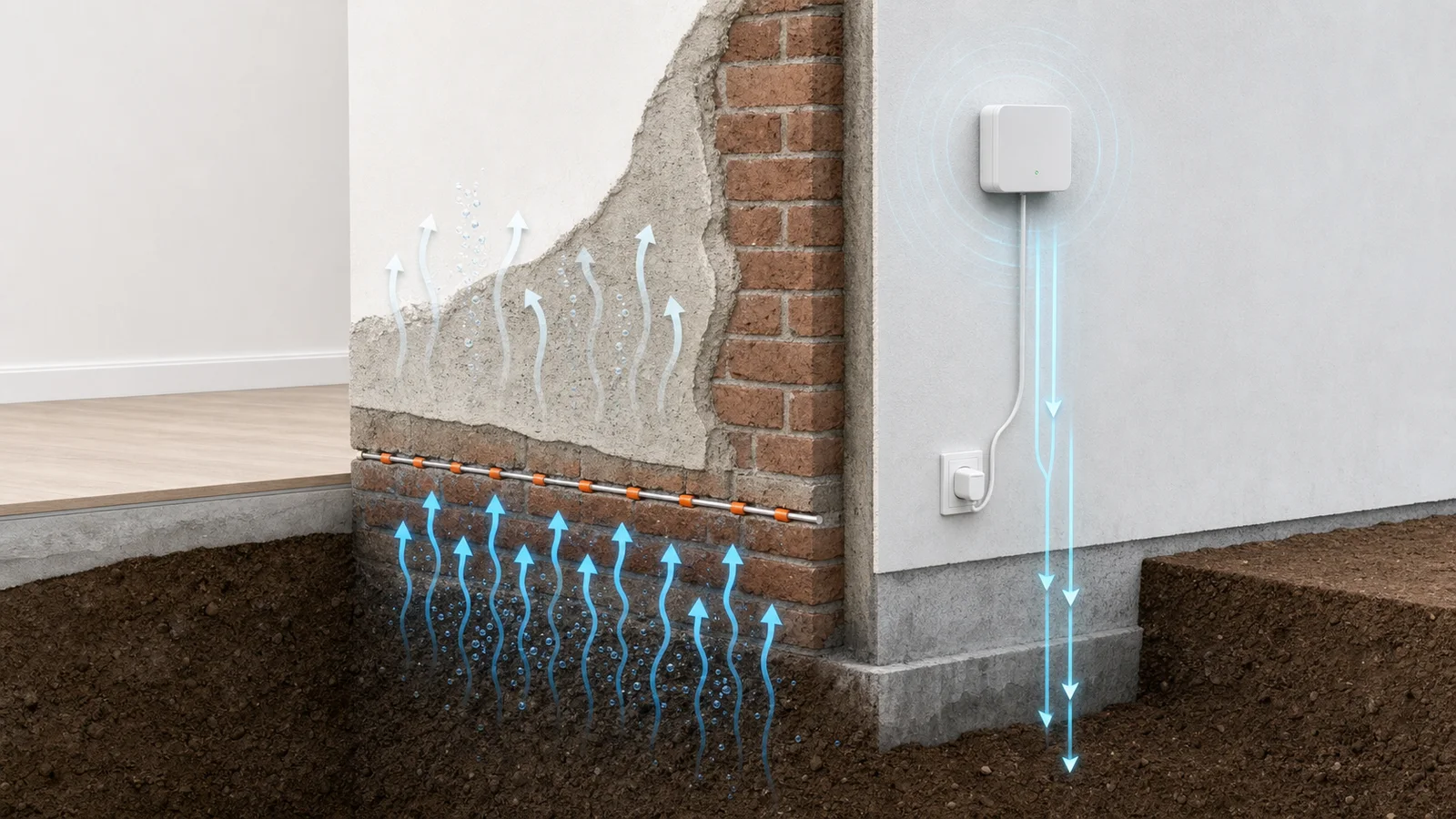
We show how the three products work together, with visuals, on the Triple System page. If you want to make your basement or ground floor usable, start with a free building assessment: send us photos and we will tell you which application your wall needs.
How Is It Applied? (93 seconds)
Products for the Ground Floor (Triple System)
These products are for entrance and ground-floor walls with no contact with the soil. On basement walls set into the soil, PU injection and crystalline waterproofing works are planned on the basis of an expert assessment: free building information form.
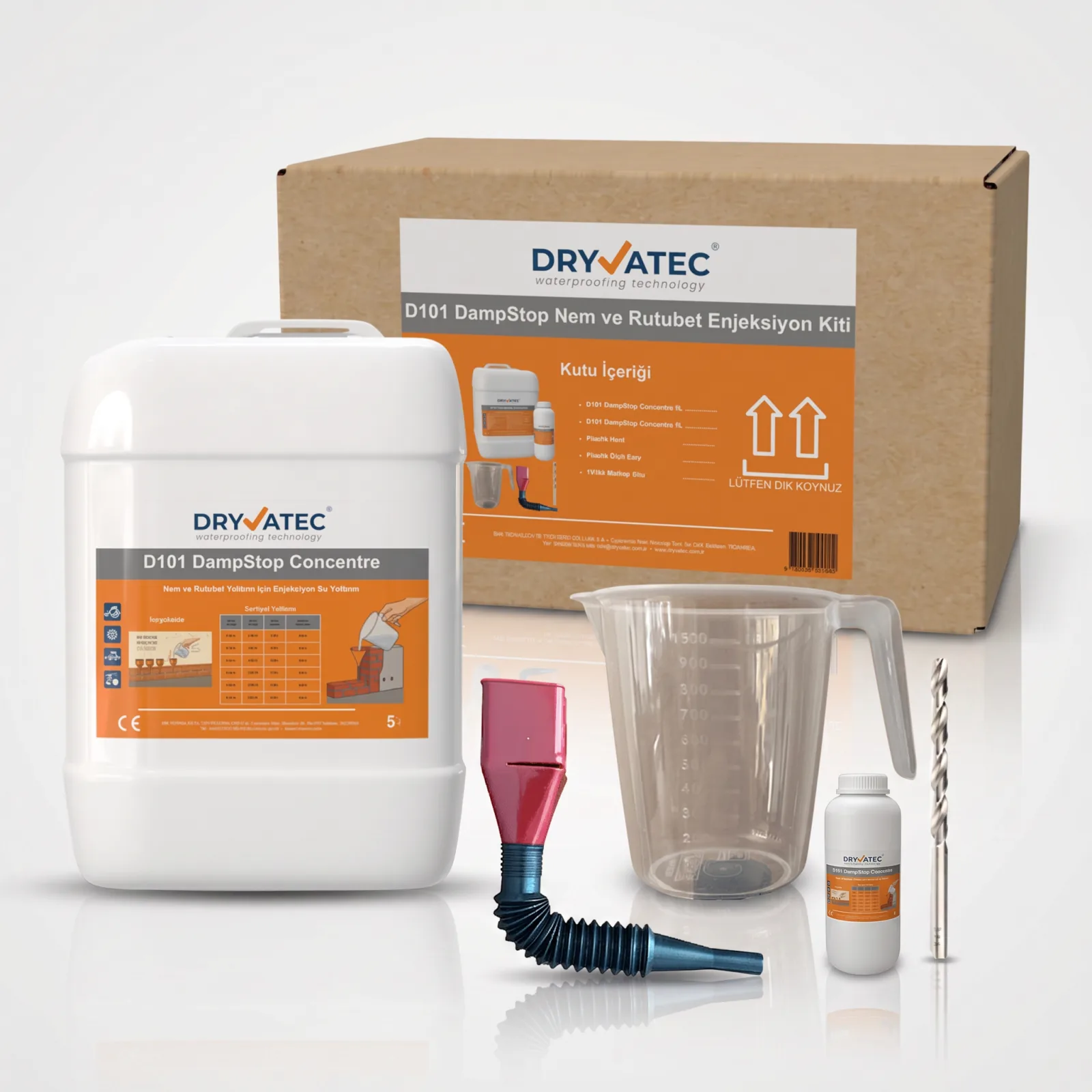
DampStop Complete Kit
DampStop 5 L concentrate + funnel, measuring jug and 14 mm drill bit. Everything you need for the injection in one box.
8.700₺ View Product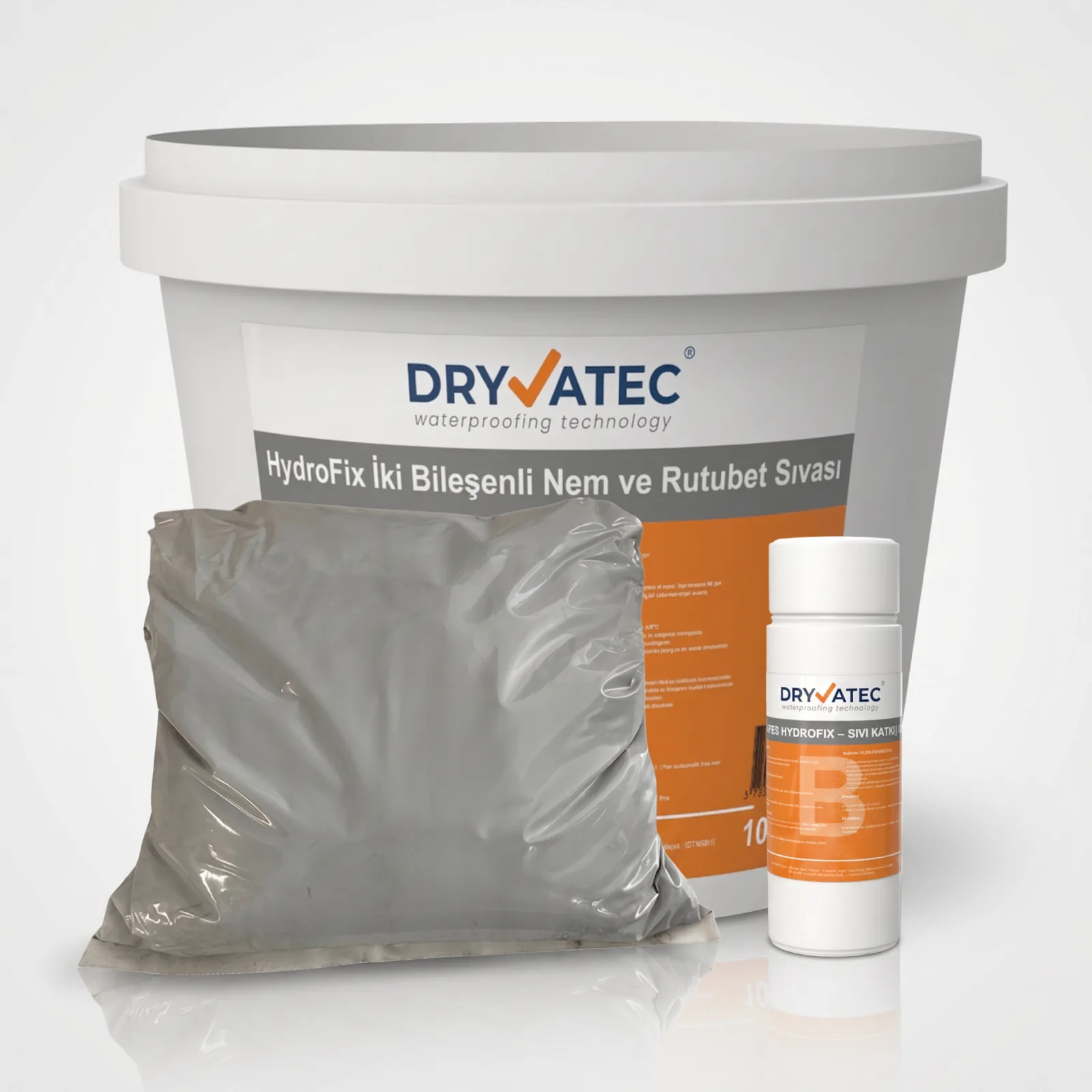
HydroFix 10 kg Damp-Proofing Plaster
Applied before the injection, in place of the stripped plaster; a breathable, salt-resistant repair plaster.
1.500₺ View Product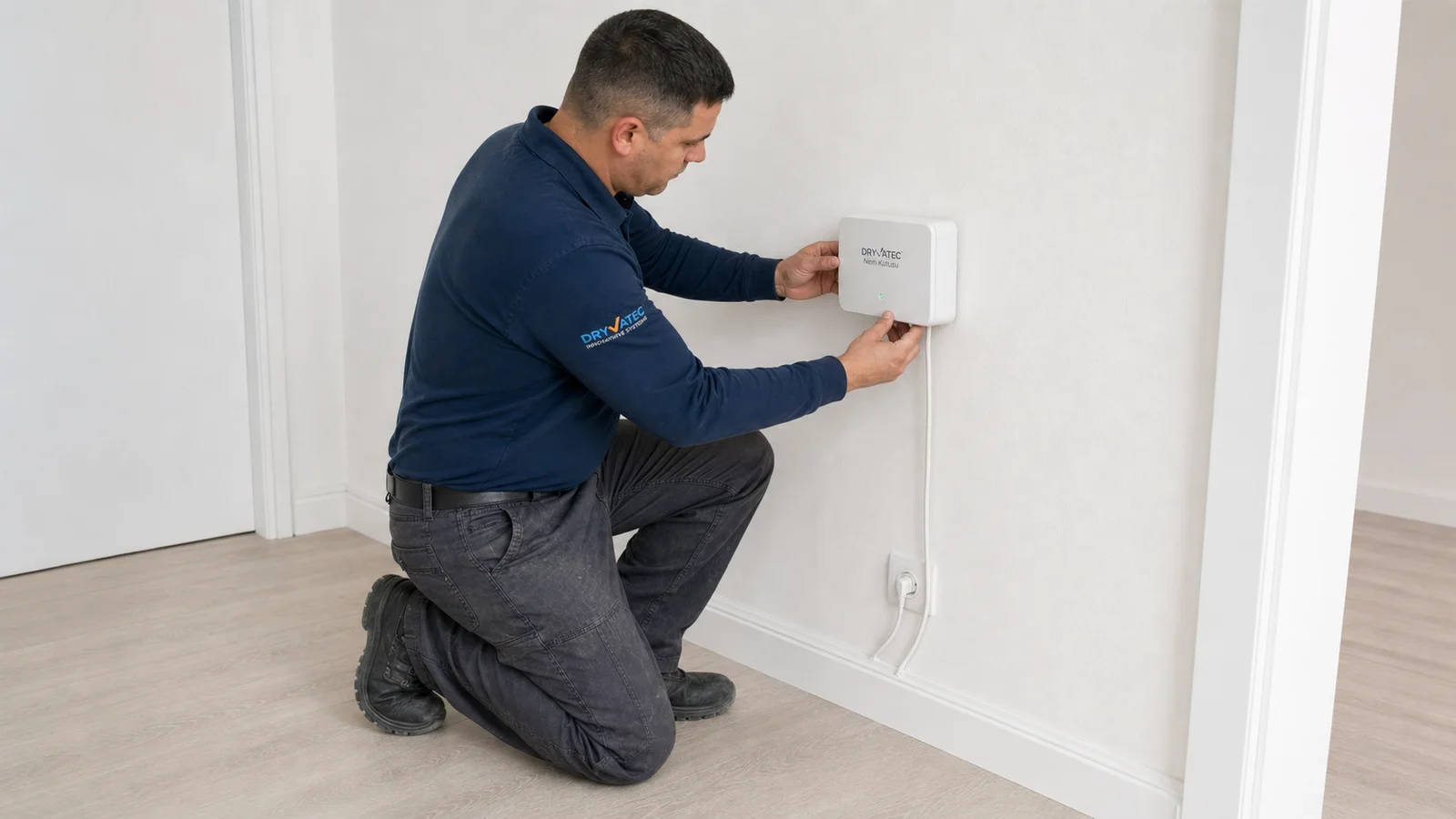
Damp Box — Wall Drying Device
Carries water reaching the foundation and rising in the columns back into the ground; for damp throughout the building or at the base of columns.
50.000₺ View ProductSee how the three products work together: The Triple System →
Frequently Asked Questions
How do I get rid of the musty smell in my basement?
The smell comes from mould and bacteria growing on damp surfaces; sprays and odour maskers do not deal with the source. The water entering the wall must be stopped (PU injection and crystalline waterproofing on a basement wall set into the soil; on the ground floor, the plaster is stripped and HydroFix applied first, then DampStop is injected once the plaster has dried), damaged surfaces renewed, and regular air exchange provided. Once the damp is gone, the smell goes with it.
Is excavating and waterproofing from the outside the only option?
Not always. External waterproofing requires excavation — and in terraced buildings and on narrow plots it is often simply not possible. In a basement, water can also be stopped from the inside: the cold joint where the concrete wall meets the floor slab is filled with PU injection, and the face of the concrete wall and the base of the wall are covered with crystalline waterproofing. These works are planned on the basis of an expert assessment. On a basement wall set into the soil, DampStop injection is not the solution.
What does the Damp Box do — does it really work?
The Damp Box is a drying device that works with a very low-frequency electromagnetic wave: it carries water reaching the foundation and rising in the columns back into the ground. For rising damp in wall elements (brick, aerated concrete, concrete block), DampStop and HydroFix do the work; together the three make up the triple system. In a basement the Damp Box is not a solution on its own: on basement walls set into the soil, PU injection and crystalline waterproofing are needed to stop the water ingress. The effect can be tracked with moisture measurements from the first weeks; complete drying takes 6-12 months depending on wall thickness.
Isn't a dehumidifier enough to dry out the basement?
A dehumidifier reduces the moisture in the air; that is a good supporting step, but it does not stop the water coming through the wall itself. As soon as the unit is switched off, humidity quickly returns to its previous level. For dryness, the water entering the wall must be stopped first; the dehumidifier is then used as an aid that speeds up the drying-out period.
Learn More: Related Guides
- How Is a Damp Problem in a Basement Solved?
- What Is the Damp Box and How Does It Work?
- Is Damp Harmful to Your Health?
Not sure? Send us a photo and we will tell you
Send photos of the problem area; our technical team will assess the cause as soon as possible and recommend a solution tailored to you. Free of charge, with no obligation to buy.