
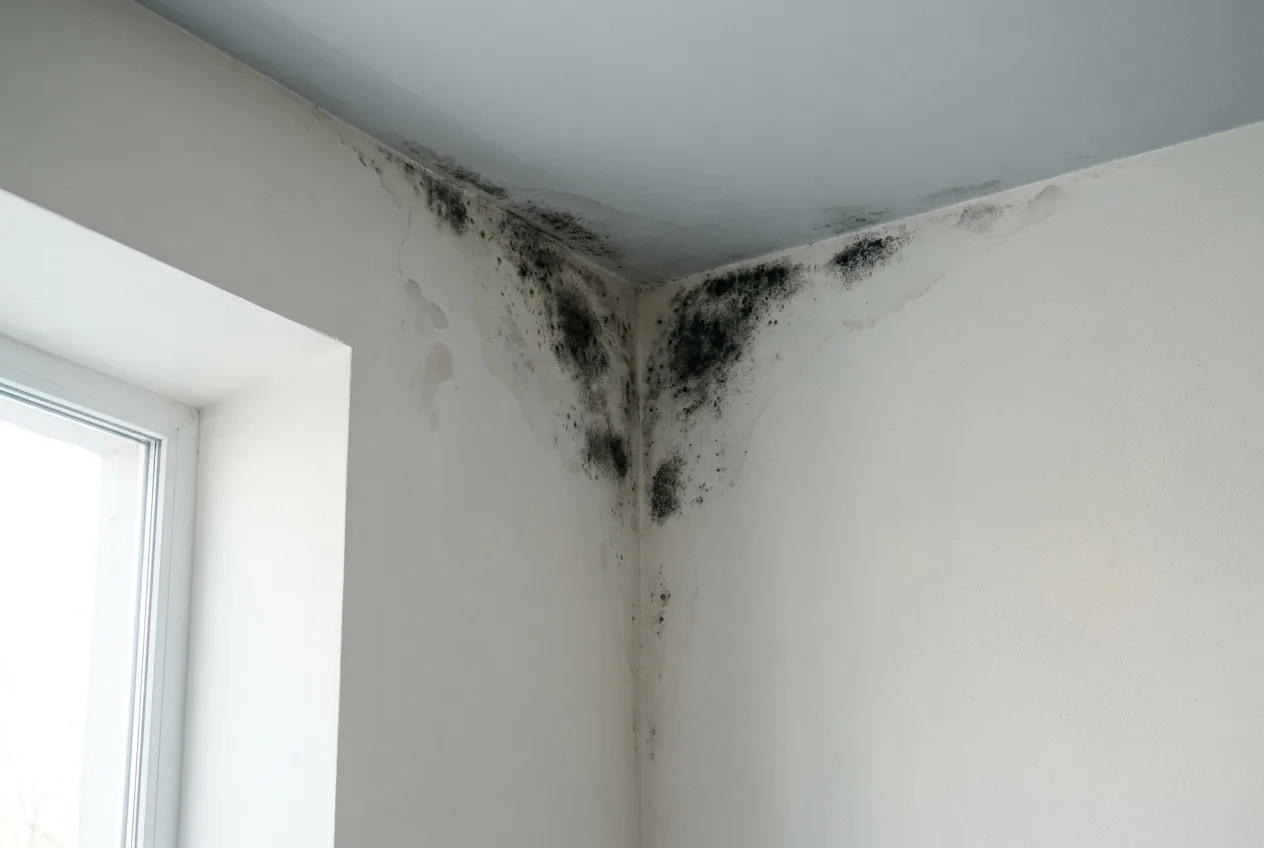
Short answer: Damp on a ceiling has two sources: condensation (moist indoor air turning into water on the cold ceiling surface) and leaks (water coming from the flat above, the roof or a terrace). Rising damp does not occur in ceilings; water from the ground cannot climb all the way up to the ceiling. The definitive solution depends on the source: for condensation, ventilation, balanced heating and insulation of the cold surface; for leaks, repairing the point where water gets in. Anti-damp ceiling paint only works as a final coat once the source has been dealt with.
Grey-black darkening that starts in a ceiling corner, mould spots spreading across the bathroom ceiling, yellow stains that appear after rain… All of these are called "a damp ceiling", but their causes are very different. In this article we explain how to tell where the damp on your ceiling is coming from and the lasting solution for each source. For damp on the lower part of walls, see our guide to a definitive solution for wall damp.
What causes mould on the ceiling?
Mould is a fungus that grows on surfaces that stay damp; its spores are always present in the air. If mould is appearing on your ceiling, the ceiling surface has been staying damp for some time. This moisture comes in two ways:
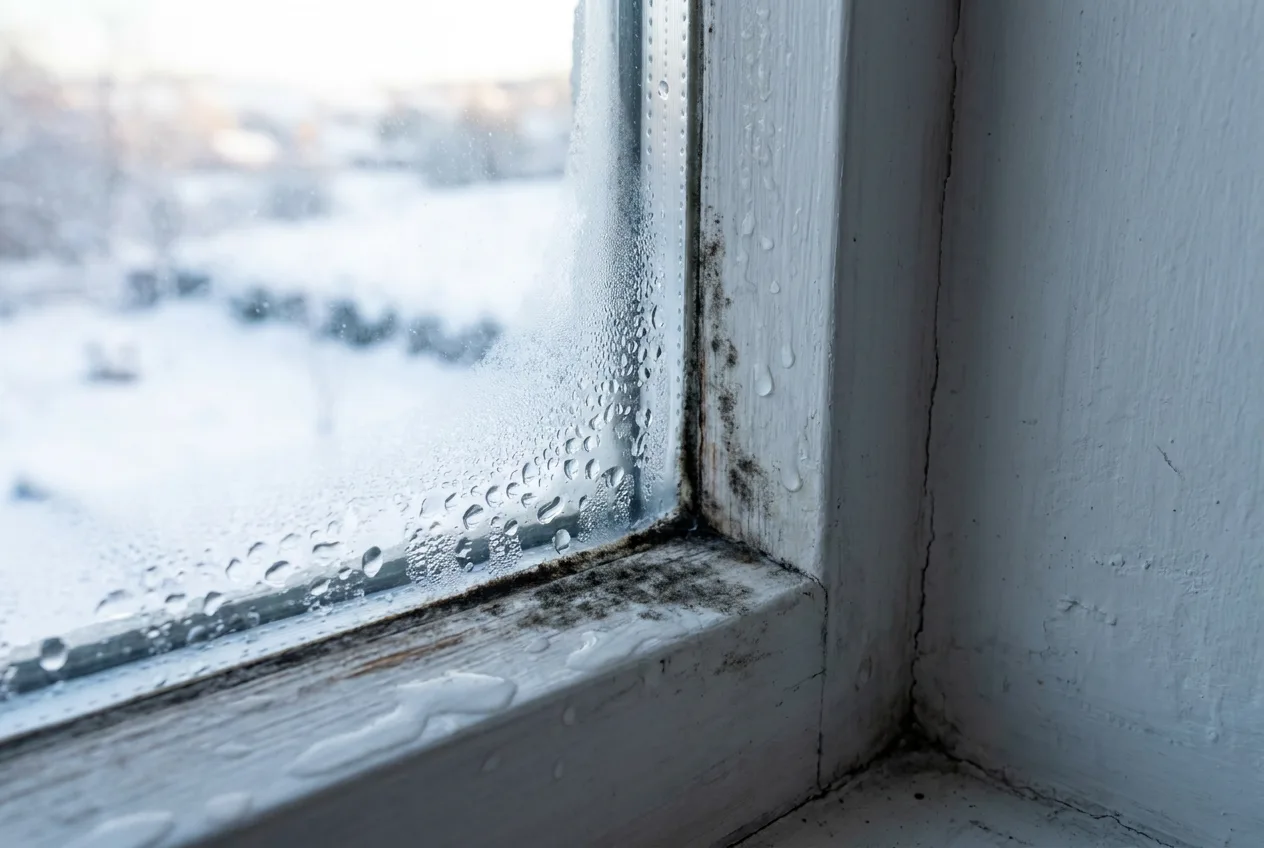
- From the air (condensation): Warm air rises and carries the water vapour in the room up to the ceiling. If the ceiling surface is cold, this vapour turns into water there. Cooking, showering, drying laundry and breathing constantly add moisture to the air. For the basics: What is condensation damp?
- From inside the structure (leaks): A leak in the bathroom or kitchen plumbing upstairs, a broken roof tile, failed waterproofing on a terrace or a blocked drain lets water into the ceiling.
Can rising damp occur in a ceiling?
No. Rising damp is water from the ground being drawn up through the pores of the wall by capillary action, and it usually climbs no more than 1–1.5 metres from the base of the wall. It cannot reach the ceiling. For this reason, rising damp solutions such as injection into the base of the wall or the Damp Box (Nem Kutusu) are not used for damp on the ceiling; if they are, the problem on the ceiling will not change.
If in the same room you see both blistering paint and white salt marks at the base of the wall and mould in the ceiling corner, there may be two separate problems: rising damp below and, most often, condensation above. They must be dealt with separately.
Dark ceiling corners: cold corners and thermal bridges
Darkening most often starts in the corner where the ceiling meets the exterior wall. The reason is that this point is the coldest surface in the room:
- Thermal bridge: A reinforced concrete beam and the edge of the floor slab lose heat faster than a brick wall. If there is no external wall insulation, or it is incomplete, this corner stays noticeably cold on the inside in winter.
- Ceilings under a roof or terrace: Above the top-floor ceiling is the outside air. If the loft or the terrace slab is uninsulated, the whole ceiling stays cold and condensation appears over a wide area.
- Bathroom ceiling: Humidity in the air rises sharply during a shower; if there is no extractor fan or it is inadequate, the steam condenses on the ceiling.
- Corners with little air circulation: Moisture does not disperse in corners hidden behind curtains, wardrobes or closed doors.
This type of darkening usually gets worse in winter, eases in summer and appears as scattered black dots.
Condensation or leak? How to tell them apart
| Sign | Condensation | Leak |
|---|---|---|
| Appearance | Scattered black-grey dots, darkening in the corner | Yellow-brown, ring-shaped stain with clear edges |
| Location | Corner next to an exterior wall, above windows, bathroom ceiling | Below a wet room upstairs, under a roof or terrace, along a plumbing line |
| When does it get worse? | In winter, with the heating on and windows shut | After rain or when water is used upstairs |
| To the touch | The surface is slightly damp and cold | The stained area is wet; plaster may blister and there may be dripping |
| Other signs in the room | Window condensation, a heavy damp smell | The stain grows quickly, ceiling paint flakes off |
If you are still undecided, monitor the indoor humidity for a few days with a hygrometer (humidity meter); if it stays high throughout the winter, condensation is a strong candidate. For the right range: What should indoor humidity be? More methods: Detecting damp in buildings.
A definitive solution for a damp ceiling: step by step
- Identify the source. Use the table above to tell whether it is condensation or a leak. If you are not sure, send photos of the ceiling and the room using the Request a Quote form; our technical team will assess them online and get back to you within 24 hours.
- If there is a leak, stop it first. Have the plumbing checked together with your upstairs neighbour; on the roof, the tiles, valleys and gutters, and on a terrace, the waterproofing and drains should be inspected. The ceiling will not dry until the water ingress is stopped.
- With condensation, lower the moisture in the air. Open windows on opposite sides 2–3 times a day for 5–10 minutes; run the extractor fan after showering and cooking; avoid drying laundry indoors if possible.
- Balance the heating. Do not leave any room completely cold; a closed-off room becomes the place where the home's moist air condenses. Move wardrobes and curtains in the corner a little away from the wall.
- Insulate the cold surface. External wall insulation in corners with thermal bridges, and loft or terrace insulation on the top floor, provide a lasting improvement. Because this work concerns the outside of the building, it is often planned together with the building management or the neighbours.
- Clean off the mould and dry the surface. Work with gloves, a mask and goggles; do not mix cleaning products. Detailed and safe method: how to clean mould on walls.
- Paint last. Once the surface is completely dry, apply a breathable interior paint with anti-mould additives.
Does anti-damp ceiling paint work?
Anti-mould or anti-damp ceiling paints delay mould growth on the surface for a while thanks to their additives. They do not, however, remove the source:
- With condensation: If ventilation and heating have been corrected, anti-mould paint applied to a cleaned ceiling is a good final coat. If the indoor humidity stays high, mould will start again on top of the paint after a while.
- With leaks: Paint is of no use at all; because water keeps coming from behind, the stain soon reappears and the paint blisters.
Waterproof coatings that seal the surface completely also make it harder for the ceiling to dry out. Breathable products should be preferred. More on the subject: Does anti-mould paint work? and How to paint a damp wall
Which products are not suitable for a damp ceiling?
Dryvatec products are for damp rising from the base of walls. DampStop injection cuts off the path that moisture from the ground takes through the wall, and the Damp Box carries water reaching the foundation and rising in the columns back into the ground; they have no effect on condensation or leaks on the ceiling. HydroFix damp-proofing plaster is likewise designed for capillary moisture and salt damage in walls; it does not change the cold surface and moist air that cause condensation on the ceiling. That is why we do not recommend these products for a damp ceiling. If there is also damp on the lower part of your wall, see our damp remover comparison for that problem.
Frequently Asked Questions
What is the definitive solution for a damp ceiling?
It depends on the source. With condensation, the definitive solution is ventilation, balanced heating and insulating the cold ceiling corner or the roof/terrace slab. With leaks, the plumbing upstairs or the roof or terrace waterproofing must be repaired. Painting without solving the source will not last.
What causes mould on the ceiling?
The ceiling surface staying damp for a long time. This moisture comes either from water vapour in the room condensing on the cold ceiling or from a leak from the flat above, the roof or a terrace.
Why do ceiling corners turn dark?
The corner where the ceiling meets the exterior wall is the coldest point in the room because of the reinforced concrete beam and the edge of the floor slab (a thermal bridge). Moist air condenses there and mould starts as dark patches. It gets worse in winter and eases once ventilation and heating are improved.
Can rising damp occur in a ceiling?
No. Rising damp is water from the ground being drawn up from the base of the wall by capillary action, and it does not reach the ceiling. Damp on a ceiling is caused by condensation or leaks; that is why injection into the base of the wall does not solve a ceiling problem.
Is anti-damp ceiling paint enough?
Not on its own. If condensation has been brought under control with ventilation and heating, anti-mould paint applied to a cleaned ceiling is a good final coat. If there is a leak, the paint soon blisters and the stain comes back.
How can you tell water is coming from upstairs onto the ceiling?
A yellow-brown, ring-shaped stain with clear edges forms, usually below the bathroom or kitchen of the flat above. If it grows after water has been used upstairs, a plumbing leak is a strong possibility.
Related Guides
- What is condensation damp? How it differs from rising damp
- How to remove mould stains from walls
- Does anti-mould paint work?
- What should indoor humidity be?
- What is damp and what causes it?
Not sure where the stain on your ceiling is coming from?
Send us photos of the ceiling and the room; our technical team will assess them online and tell you free of charge whether it is condensation or a leak, and what you need to do.