
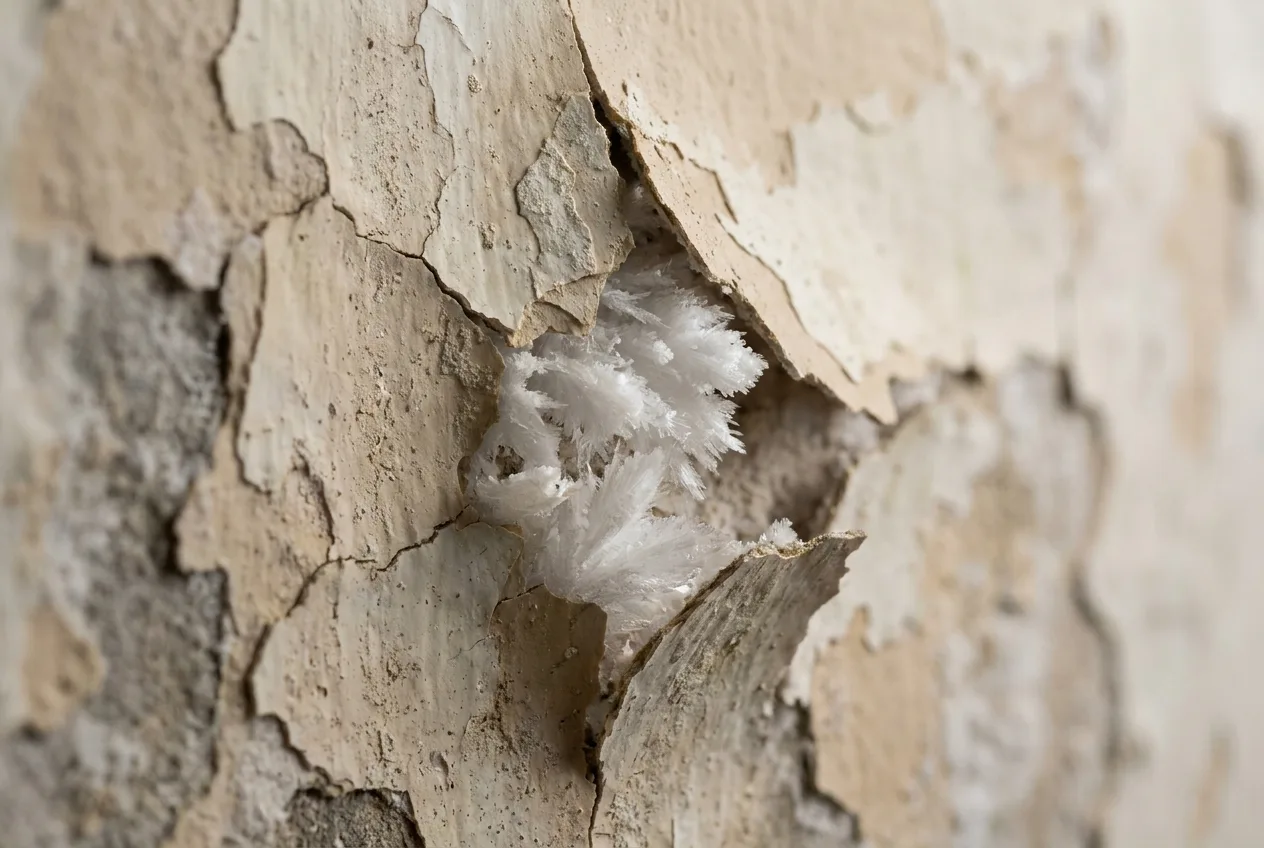
Short answer: Mould and salts on a damp wall can be cleaned off the surface; but yellow-brown damp stains and blistered plaster do not go away by wiping, because the moisture inside the wall keeps carrying new salts and staining to the surface. Permanent cleaning follows this order: repair any leak → strip the damaged plaster → apply a breathable damp-proofing plaster → for rising damp, cut off the source with injection once the plaster has dried.
It is very common to wipe a damp stain on a wall with soapy water, bleach or vinegar and find the same stain again a few weeks later. The reason is that what gets cleaned is not the problem itself but its trace. In this article we explain, by type of stain, what can be cleaned, what needs to be stripped and how to dry out the wall.
First, identify the stain
| Appearance | What is it? | What should be done? |
|---|---|---|
| Black, green or brown spots | Mould | Clean it off; fix the source of the moisture |
| White, fluffy or crystalline powder | Salts (efflorescence, saltpetre) | Brush off dry; do not wash with water |
| Yellow-brown ring, wavy line | A damp stain left by substances carried by moisture | Does not wipe away; renew the surface and cut off the source |
| Blistering paint, plaster crumbling like sand | Salts and moisture breaking down the plaster | Strip the damaged plaster |
How do you clean mould?
Wear gloves, a mask and goggles, and ventilate the room. The mould is cleaned off by scrubbing with a suitable mould cleaner or undiluted white vinegar, and the surface is dried. Never mix bleach with ammonia-based or acidic cleaners; this releases toxic gas. Detailed methods: How to clean mould on walls
How do you clean salts (white crystals) off a wall?
The white, powdery crystals at the base of the wall are salts that water has carried out of the wall and left on the surface. Brush them off with a dry, stiff brush and collect them with a vacuum cleaner. Wiping with a wet cloth or washing dissolves the salts again and carries them back into the wall; when it dries, even more salt comes out. More detail: Salt efflorescence (saltpetre).
Why doesn't a damp stain wipe away?
The yellow-brown rings are substances that build up at the boundary where water coming from inside the wall evaporates. A stain-blocking primer and paint cover this mark for a while; but because water keeps coming, the stain returns in the same place. For permanent cleaning, the source of the stain must be cut off and the damaged plaster renewed.
How do you dry out a damp wall?
- Repair any leak: The wall will not dry while water keeps coming in. If water is coming from plumbing or through the façade, the leak is repaired first.
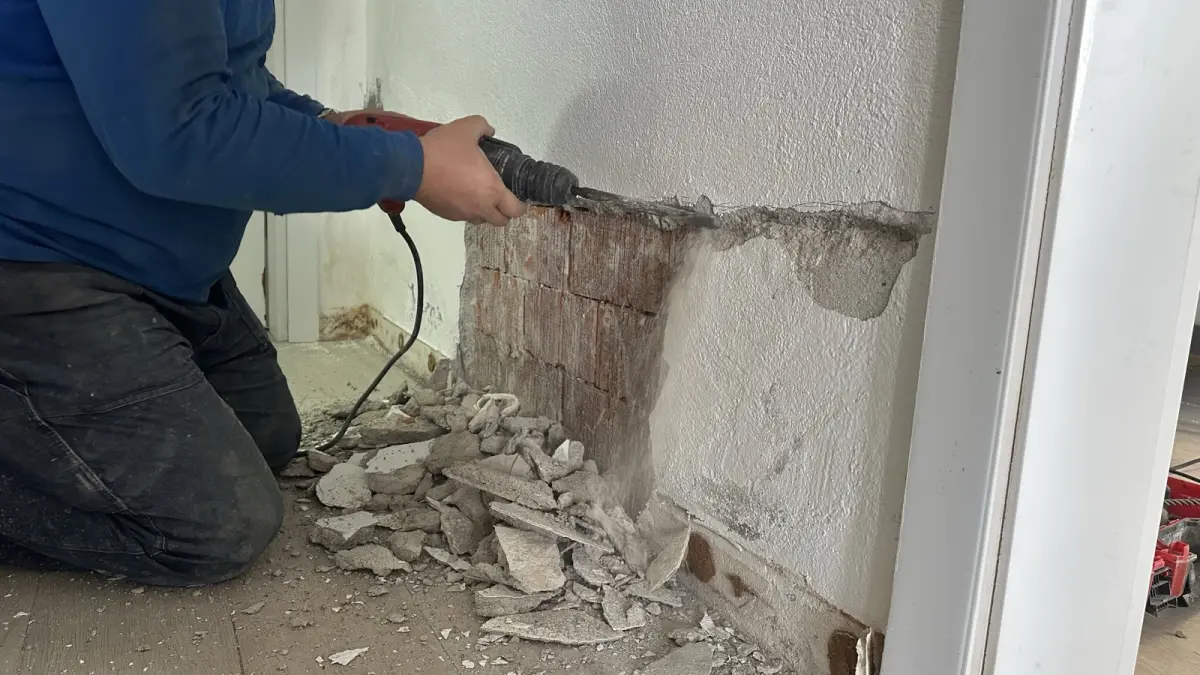
- Strip the damaged plaster: Old plaster full of salts holds moisture; once it is stripped, the wall dries faster.
- Finish the surface with a breathable plaster: Because HydroFix lets water vapour escape, it does not prevent drying. Painting comes last, with a breathable paint, once the plaster has dried for at least 3 days.
- For rising damp, cut off the source with injection: For rising damp from the ground, once HydroFix has dried (24–48 hours), an injection damp-proof course is applied at the base of the wall; the holes are closed after at least 48 hours. This is why the order matters: stripping plaster can break open the cells of the bricks; if you inject first, the solution runs out through those breaks. If the plaster goes on first, the injection stays inside the brick without overflowing.
- Ventilate and heat: During the drying period, ventilating the room regularly and heating it evenly carries away the moisture coming out of the wall. A dehumidifier helps during this process by keeping the room air dry.
- Be patient: Once the source has been cut off, it takes from a few weeks to a few months for the moisture inside the wall to come out, depending on wall thickness.
"There's a hand's-width strip of crumbling plaster on the wall at the building entrance — can I fix it myself?"
The picture described in this question to our chat assistant was plaster crumbling at the base of a ground-level wall up to a height of about 20 cm; this is a typical sign of rising damp. Yes, you can do it yourself: strip the damaged plaster and renew the surface with HydroFix; once the plaster has dried (24–48 hours), inject the base of the wall with DampStop 1 L and close the holes after at least 48 hours. For small areas, 1 L (2.200 TL) and one bucket of HydroFix (1.500 TL) are often enough; for the exact quantity, enter the wall length and thickness into the Consumption Calculator.
To keep the stain from coming back after cleaning
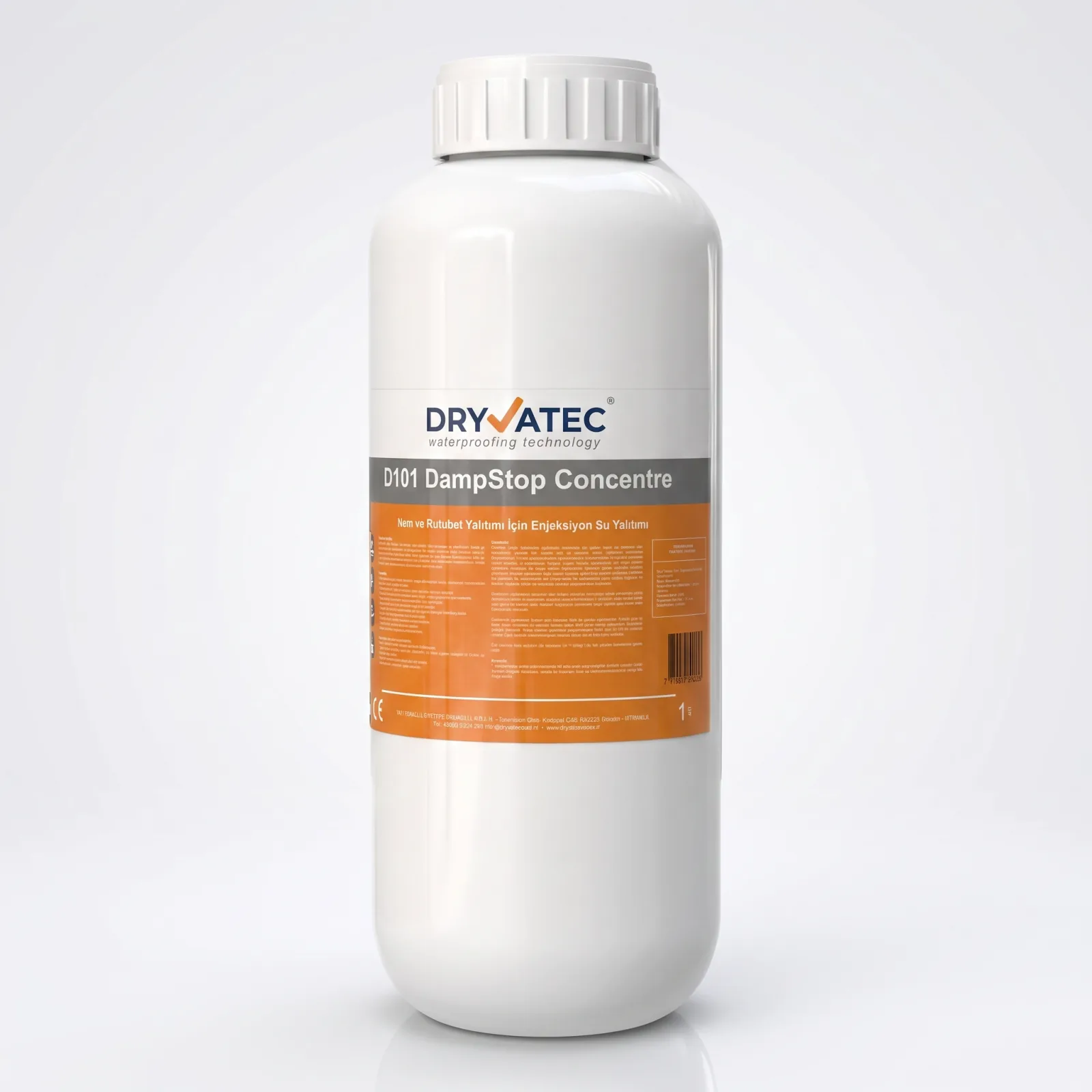
DampStop 1L Injection
Rising damp injection for a single wall, a building entrance or a small section; 1 litre makes 10 litres of solution.
2.200₺ incl. VAT View Product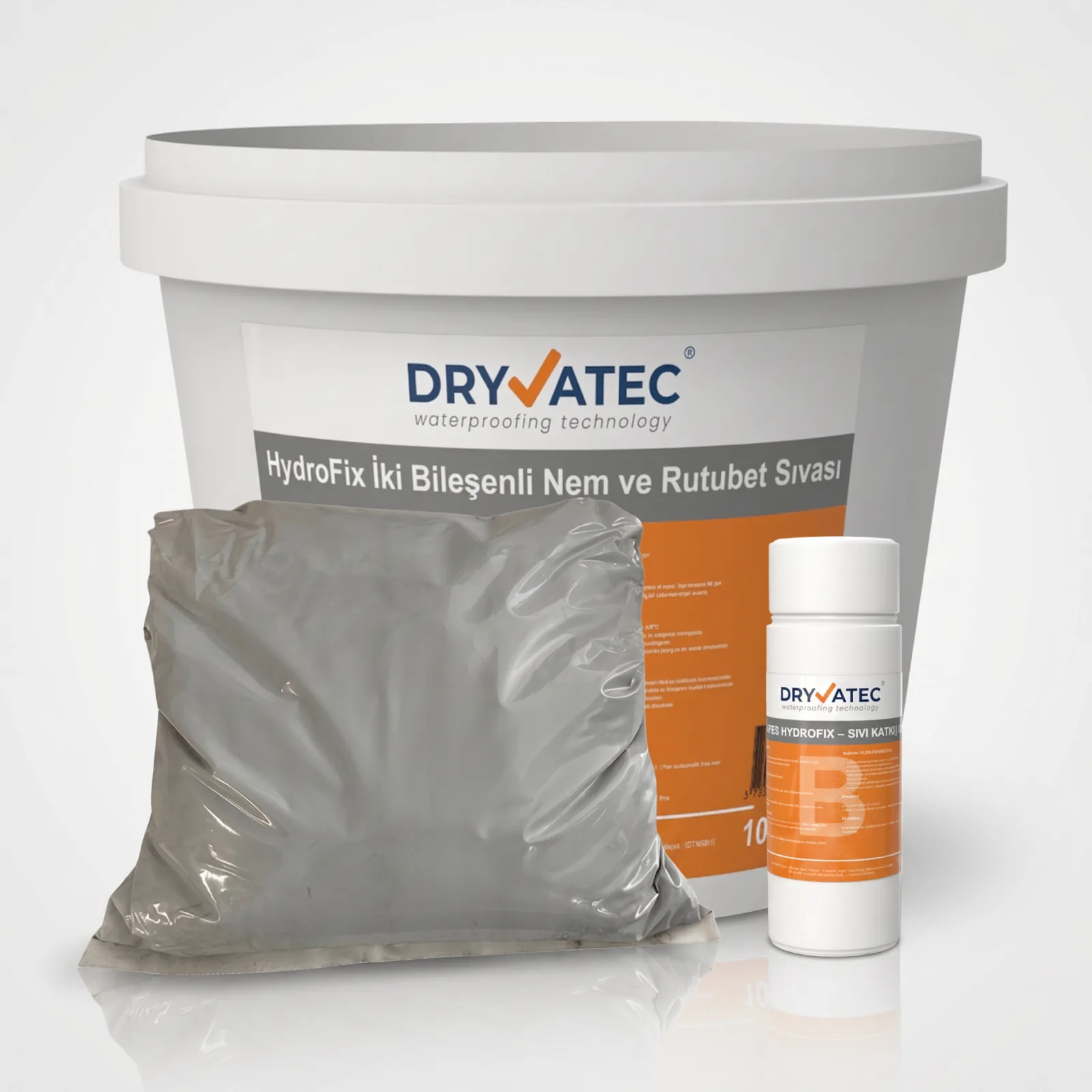
HydroFix 10kg Damp-Proofing Plaster
To replace the plaster you have stripped: a salt-resistant, breathable damp-proofing plaster.
1.500₺ incl. VAT View Product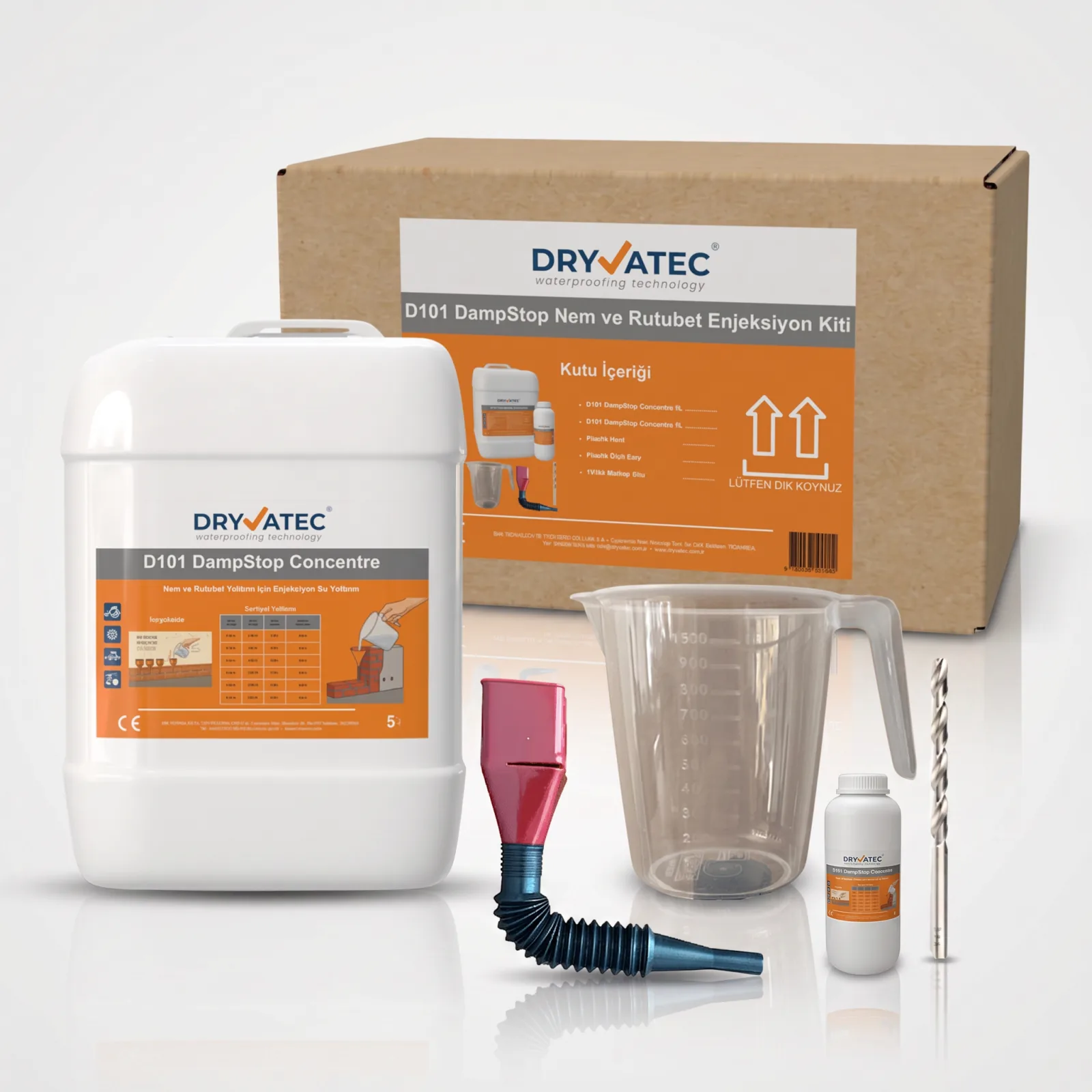
DampStop Complete Kit
Injection concentrate + application equipment in one box for more than one wall.
8.700₺ incl. VAT View ProductPay by card (Ziraat 3D Secure) or bank transfer/EFT — for bank transfer call +90 850 532 6 999 · No cash on delivery or instalments · Free shipping within Türkiye · 14-day right of return · Work out the quantity with the consumption calculator.
Frequently Asked Questions
How do you remove a damp stain from a wall?
A yellow-brown damp stain does not come off permanently by wiping; a stain-blocking primer and paint cover it for a while. For a permanent fix, the damaged plaster is stripped, the surface is renewed with a breathable damp-proofing plaster and the source of the damp is cut off; for rising damp, the injection is done once the plaster has dried.
How do you clean white salts off a wall?
Brush them off with a dry, stiff brush and collect them with a vacuum cleaner. Wiping with a wet cloth or washing dissolves the salts again and carries them back into the wall.
How do you dry out a damp wall?
If there is a leak, it is repaired first. The damaged plaster is stripped and the surface is renewed with a breathable damp-proofing plaster; for rising damp, an injection damp-proof course is applied once the plaster has dried. The room is ventilated regularly and heated evenly. A dehumidifier helps during this process by keeping the air dry.
How long does a damp wall take to dry?
Once the source has been cut off, it takes from a few weeks to a few months for the moisture inside the wall to come out, depending on wall thickness. It takes longer in thick stone and brick walls.
Will a damp stain go if I wipe it with bleach?
Bleach can clean mould, but it has no effect on the source of the damp stain; the stain comes back. Never mix bleach with ammonia-based or acidic cleaners.
Related Guides
- Can I do damp injection myself?
- What causes "damp bugs" and how to get rid of them
- How to clean mould on walls
- How to paint a damp wall
- How to get rid of a damp smell at home
- Salt efflorescence (saltpetre)
- Damp lines and moisture on walls
Stop the stain coming back
Send a photo of your wall; we will tell you the source and the quantity of product you need free of charge.